New Doors · Ringwood
Commercial Sectional Door Repair in Ringwood
One busy service-bay door has become louder than the matching doors beside it.
In plain words
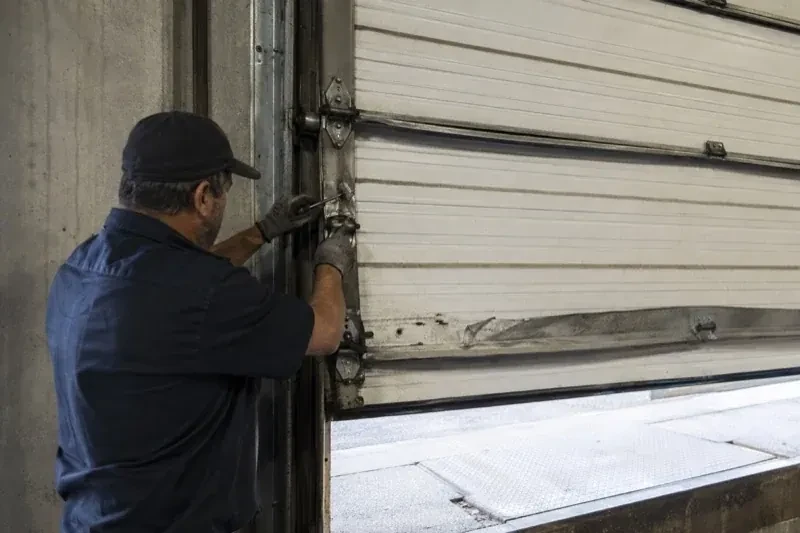
Weather-related repair focuses on the lower part of the opening as well as the moving door. Ice at the threshold, slush, salt, a torn bottom seal and corrosion around lower fixtures can change how the door lands and how long components last. The technician clears the travel path, checks the bottom section and retainer, examines cables and brackets for deterioration, and corrects the seal or alignment issue. The result is an opening that closes squarely and manages drafts and moisture more effectively through changing seasons.
How the visit goesThe operator runs and the drive chain moves, yet the sectional door hesitates near the floor. It feels unusually heavy during manual operation, pointing to a counterbalance problem rather than a simple control-station fault.
Commercial Sectional Door Repair
How the visit goes
Following sound to its source
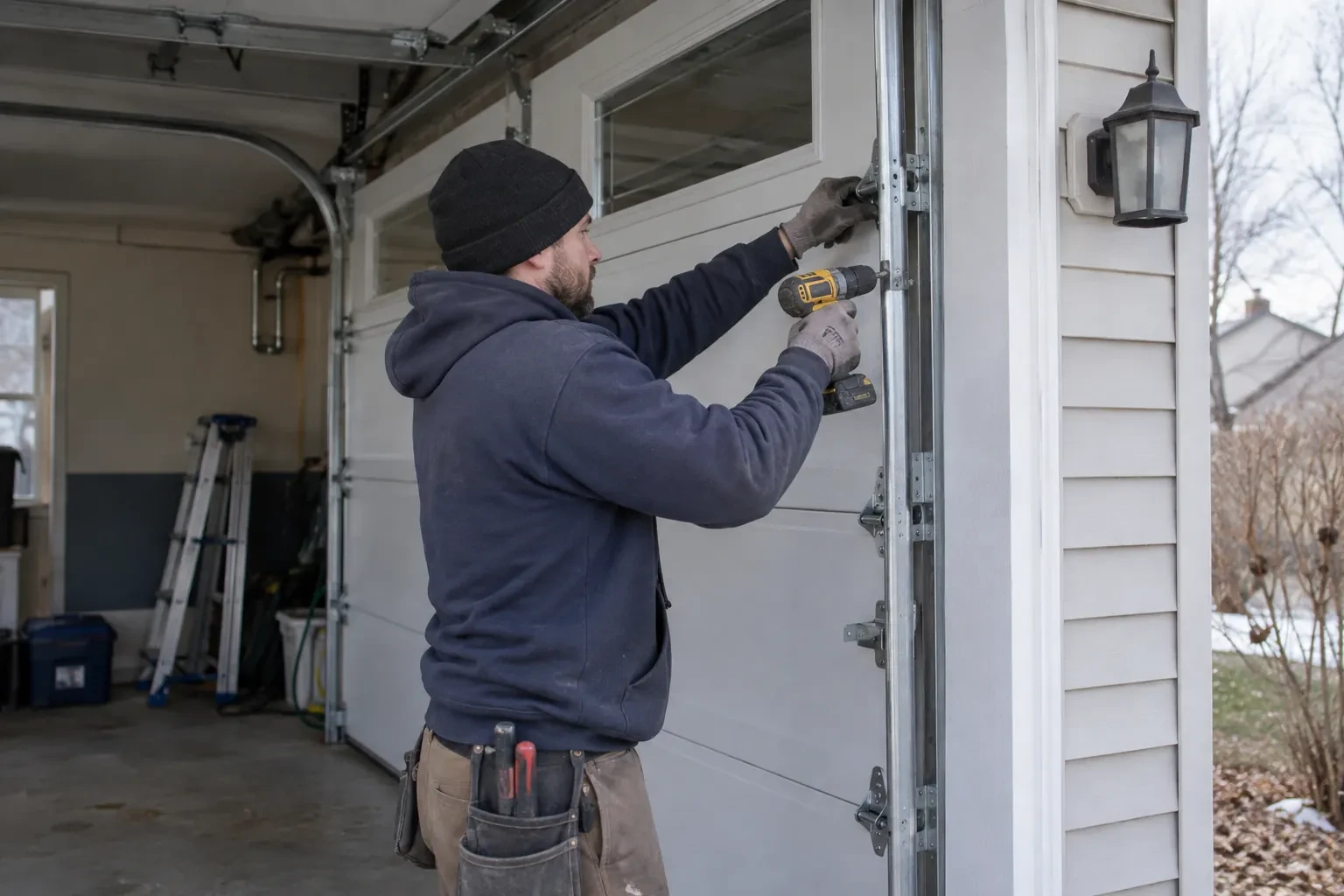
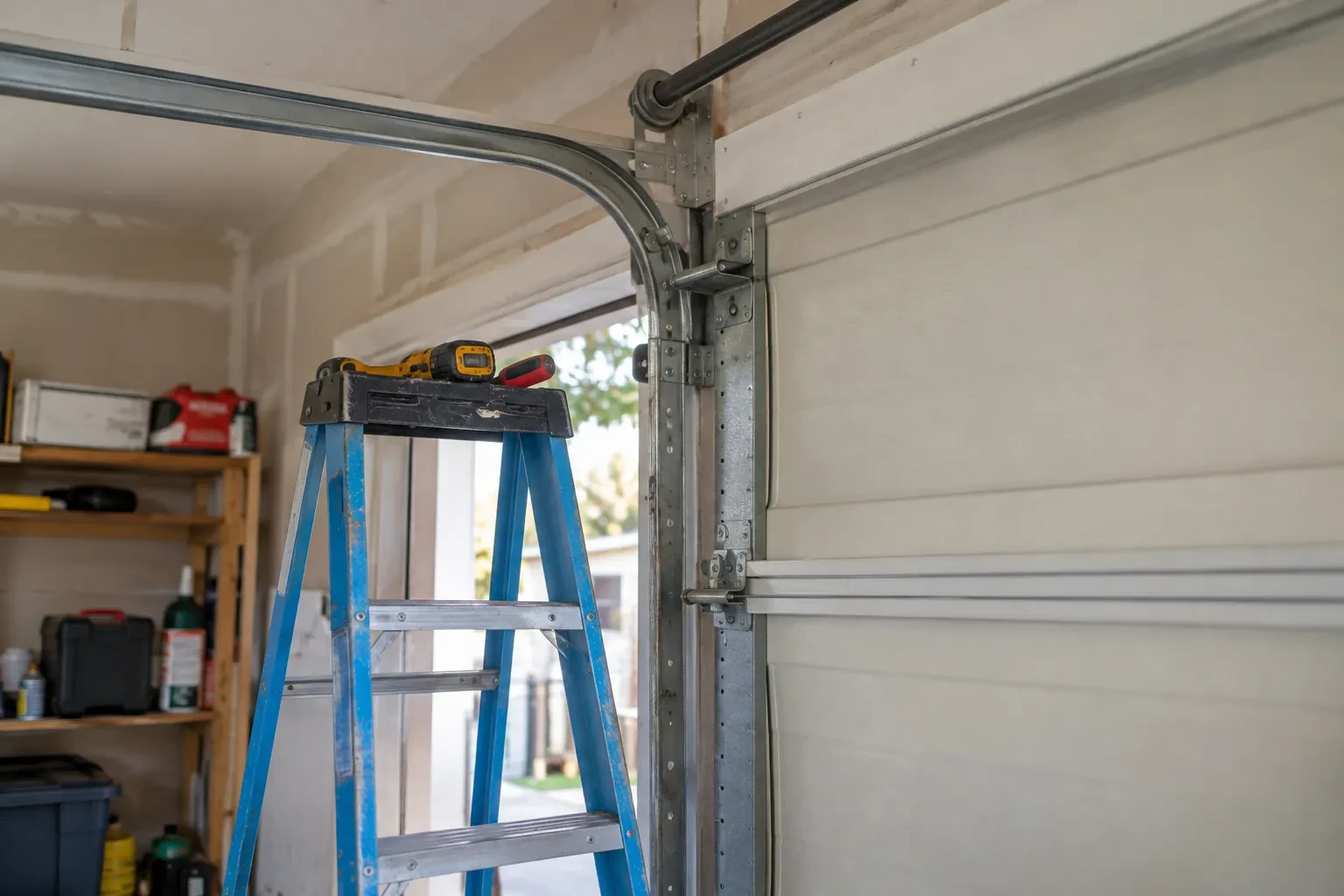
Noise is assessed by location, timing and character. A controlled cycle shows whether a knock occurs at a hinge, a roller entering the curved track, a bearing on the shaft or the operator drive. The technician watches for metal dust, polished rub marks, loose fasteners, roller play and track movement while listening. Door speed and vibration are compared through the vertical and horizontal portions of travel. This approach keeps several sounds from being treated as one problem and identifies the component producing each repeatable rattle, scrape or growl.
Controlling the door before repair
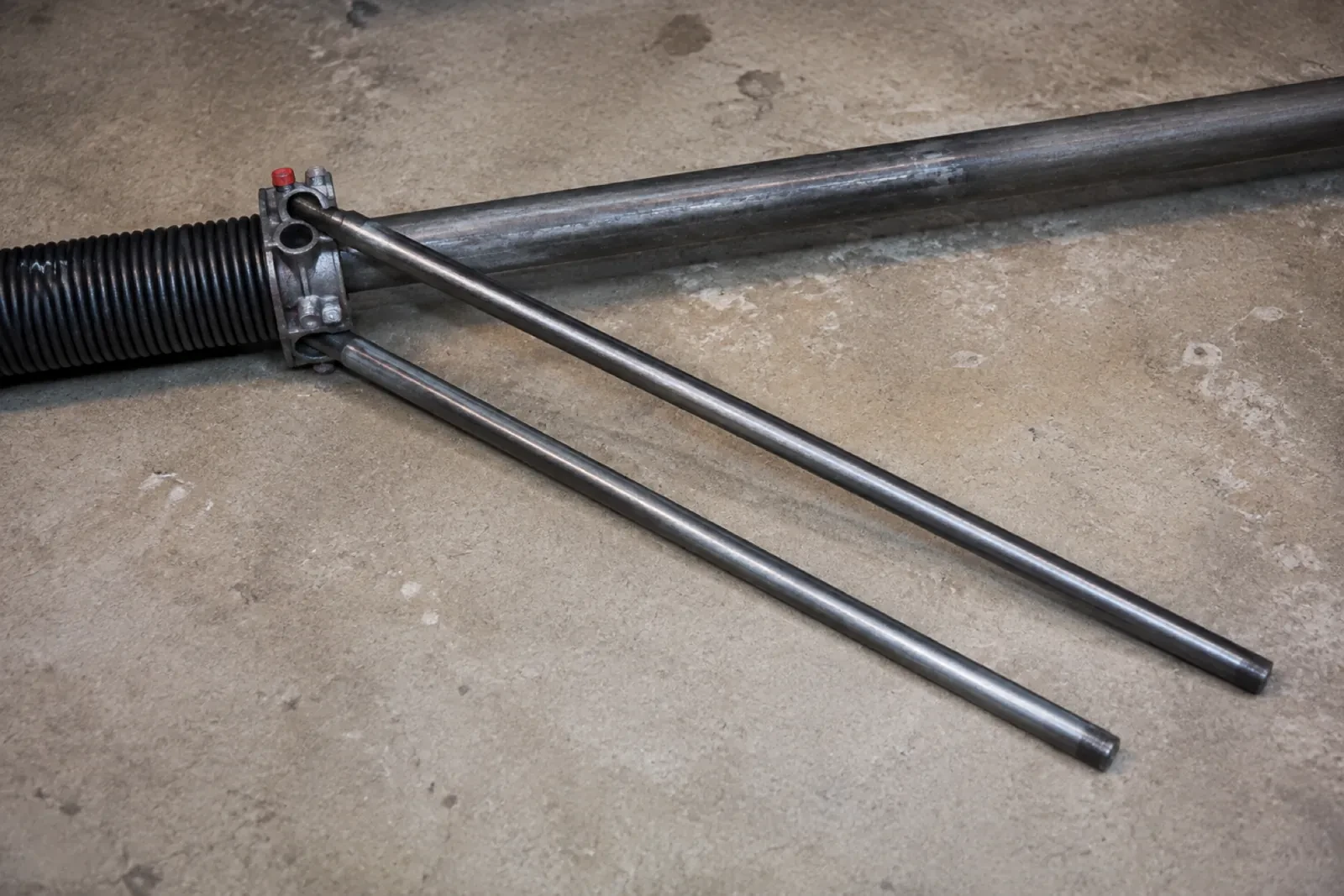
Work begins by separating the bay from normal traffic and placing the door in the safest workable position for the identified fault. Electrical controls are isolated where the task calls for it, and the assembly is held with clamps, locking pliers or rated supports suited to its weight and track type. Stored spring force is managed with proper winding tools and a planned sequence. With movement controlled, hardware can be removed without letting a crooked section, slack cable or broken spring shift the rest of the system.
A clear opening and shared operating habits
Repair restores the equipment, while everyday habits help preserve it. Marked stand-off areas give vehicles room to clear the bottom section and vertical tracks. Loads are staged beyond the door path, control stations remain visible, and staff wait for the opening to reach its operating position before passing through. The threshold is kept free of packaging, ice and debris. When everyone knows which sound, movement or sensor indication to report, small changes are documented clearly and the door can be assessed with useful evidence rather than a vague description.
Commercial Sectional Door Repair
In the van
Track brackets and back hangs
Commercial rollers
Reinforcement struts
Lift cables and drums
Torsion springs
Commercial Sectional Door Repair
What affects the quote
Weather-seal work
Bottom rubber alone is different from a bent retainer, uneven landing, damaged perimeter seal or drainage issue that also needs correction at the opening.
Documentation or rated-assembly needs
Door labels, fire-safety records, site procedures and required test documentation can add coordination and component-verification steps to work on a regulated closure.
Door size and moving weight
Opening dimensions, panel construction, reinforcement and overall door weight determine component ratings, handling methods and how much support is required during the repair.
What to have ready
- Was there a vehicle, forklift or load impact?
- Are any cables visibly loose, crossed or frayed?
- Can traffic use another opening during the work?
Commercial Sectional Door Repair: questions
QuestionsWhy does the door reverse near the floor?
A reversal can start with a blocked or misaligned photoelectric sensor, a distorted sensing edge, resistance in the track, an incorrect close limit or a control-circuit issue. Inspection covers the clear opening, sensor alignment and wiring, bottom edge and mechanical travel. The source is corrected first, then the protective response is tested through several complete cycles.
Should the operator be adjusted when the door feels heavy?
The mechanical door should be assessed before operator force, clutch or travel settings are changed. Extra resistance can come from spring imbalance, cable trouble, worn rollers, track contact or an engaged lock. Once the door moves freely and is correctly balanced, the operator can be set to that sound baseline and its limits and protective devices can be checked.
What information helps identify replacement parts?
A clear photo of the interior label, model and serial details, opening width and height, panel thickness and the affected component are useful. For springs or cables, door weight and lift configuration also matter. Photos showing the entire inside of the opening help reveal standard, high-lift or vertical track. Existing service records can confirm earlier component changes.
Related services
- Insulated Steel Garage Door InstallationYou want windows for natural light without turning the garage into a cold glass wall.
- Wind-Rated Garage Door ReplacementThe current double door shudders when pressure changes outside, and daylight appears briefly along one edge.
- Carriage-House Garage Door InstallationTraditional swing-out coach doors have the look you like, but the driveway needs to remain clear as the door opens.