Springs · Whitchurch-Stouffville
Garage Door Track Repair or Replacement
Halfway up, the door lurches and one roller rides onto the lip of the channel.
In plain words
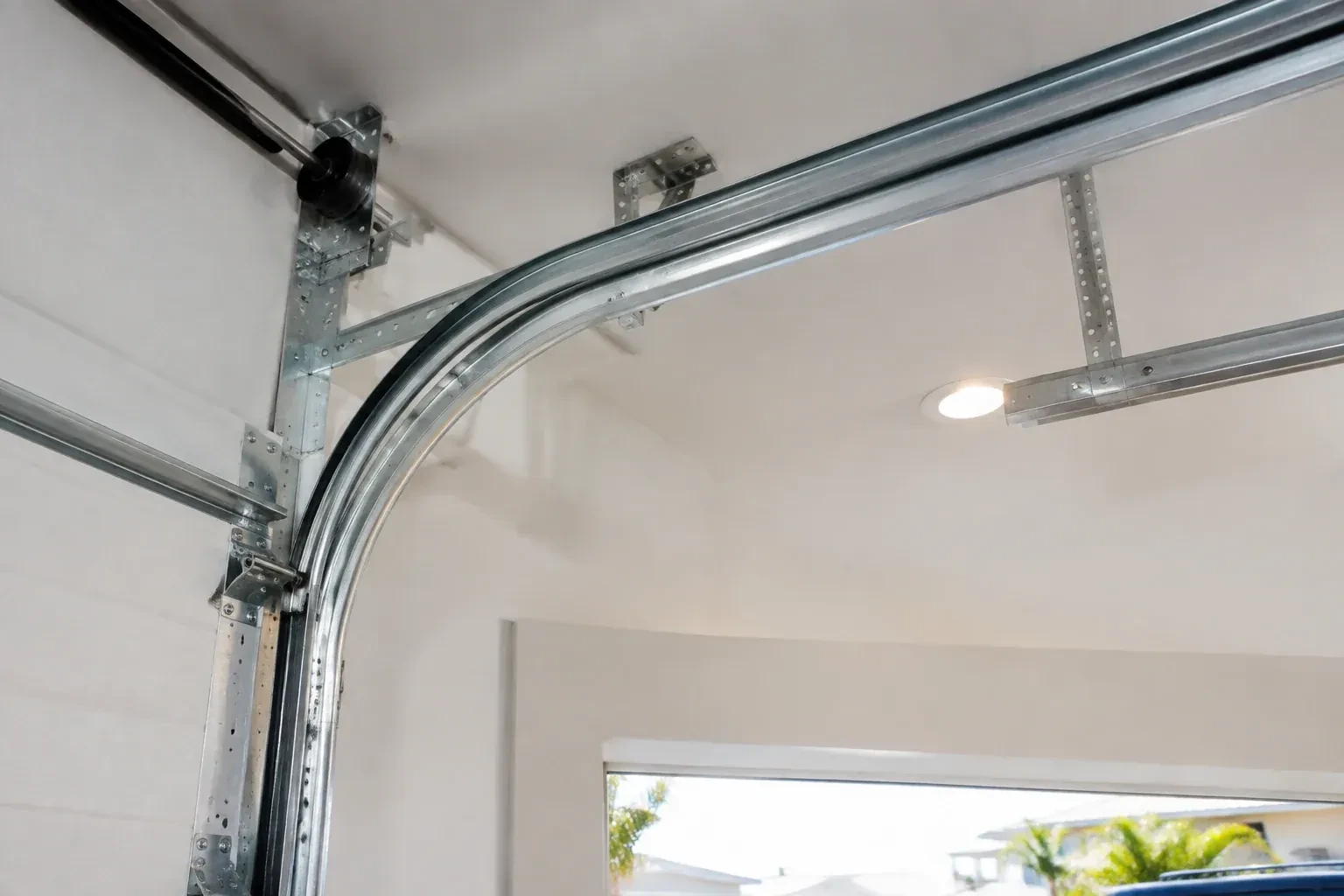
Track has to be in the right place, not merely straight. Each vertical run is set plumb with a slight taper away from the jamb at the top, so the door presses against its stop when closed and swings clear as it opens. The gap between track and door edge is equal on both sides. The horizontal runs are level with each other, square to the vertical runs and matched in radius so the door turns the curve without twisting. Track repair measures all of this and resets whatever has drifted, because a door is only as smooth as the path it is given.
How the visit goesThe door climbs crooked, one side clearly ahead of the other. Nothing looks broken, but the two tracks sit different distances from the door, and one leans in toward the opening near the top.
Garage Door Track Repair or Replacement
How the visit goes
The horizontal run and its hangers
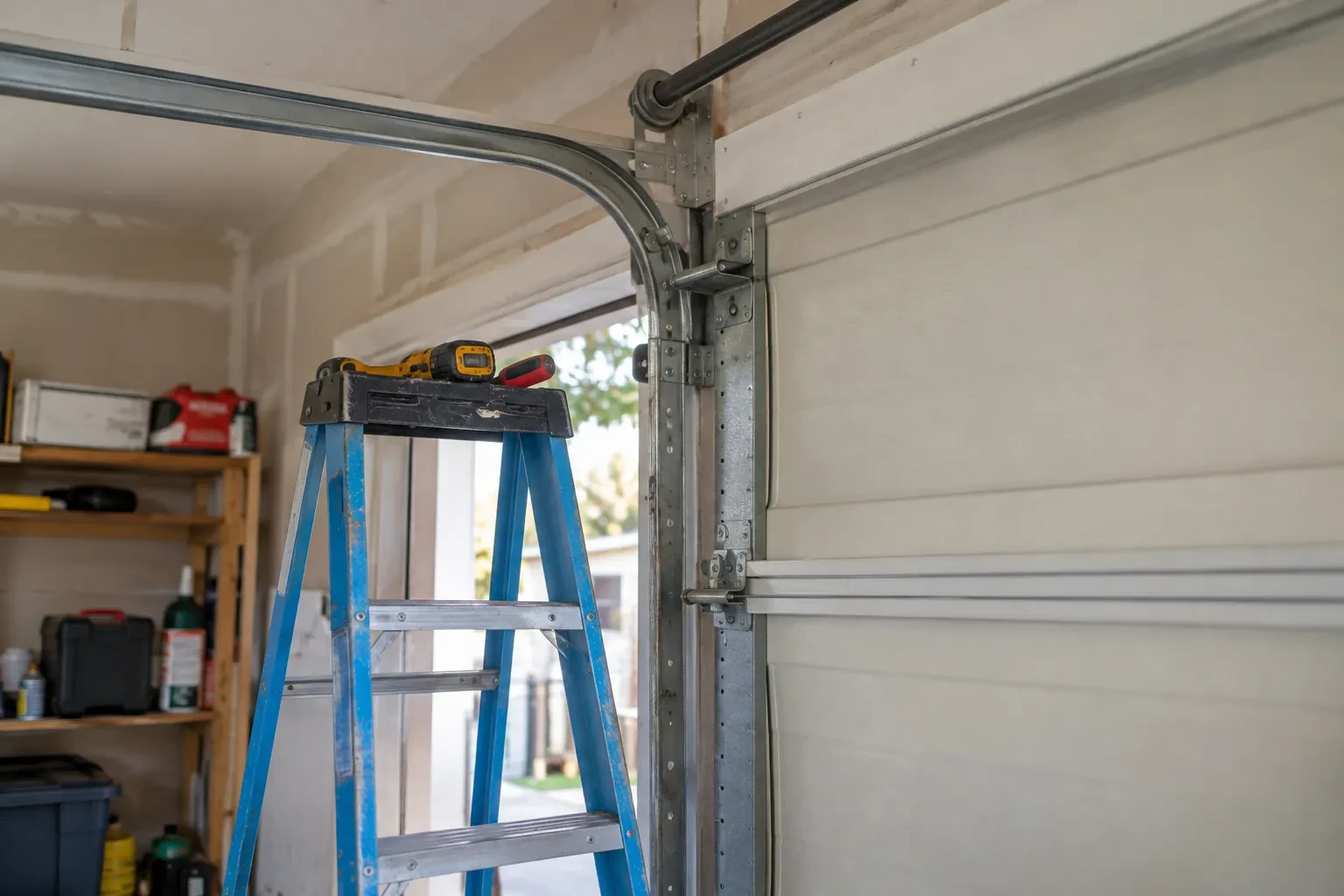
Overhead, the horizontal tracks should be level with each other, or set to the same pitch, held from the ceiling by back hangs of perforated angle screwed into joists. The technician sights along each run for sag, twist or a spread channel, checks the stiffening angle riveted to the track is intact, and puts weight on each hanger to check for flex. A run that droops at the rear slopes the wrong way rather than level or its intended pitch; one knocked sideways by a ladder or stored goods twists the top section as it travels. A door drifting back toward the opening once raised points to balance instead. Any hanger anchored into drywall alone is flagged for a joist.
Setting the geometry
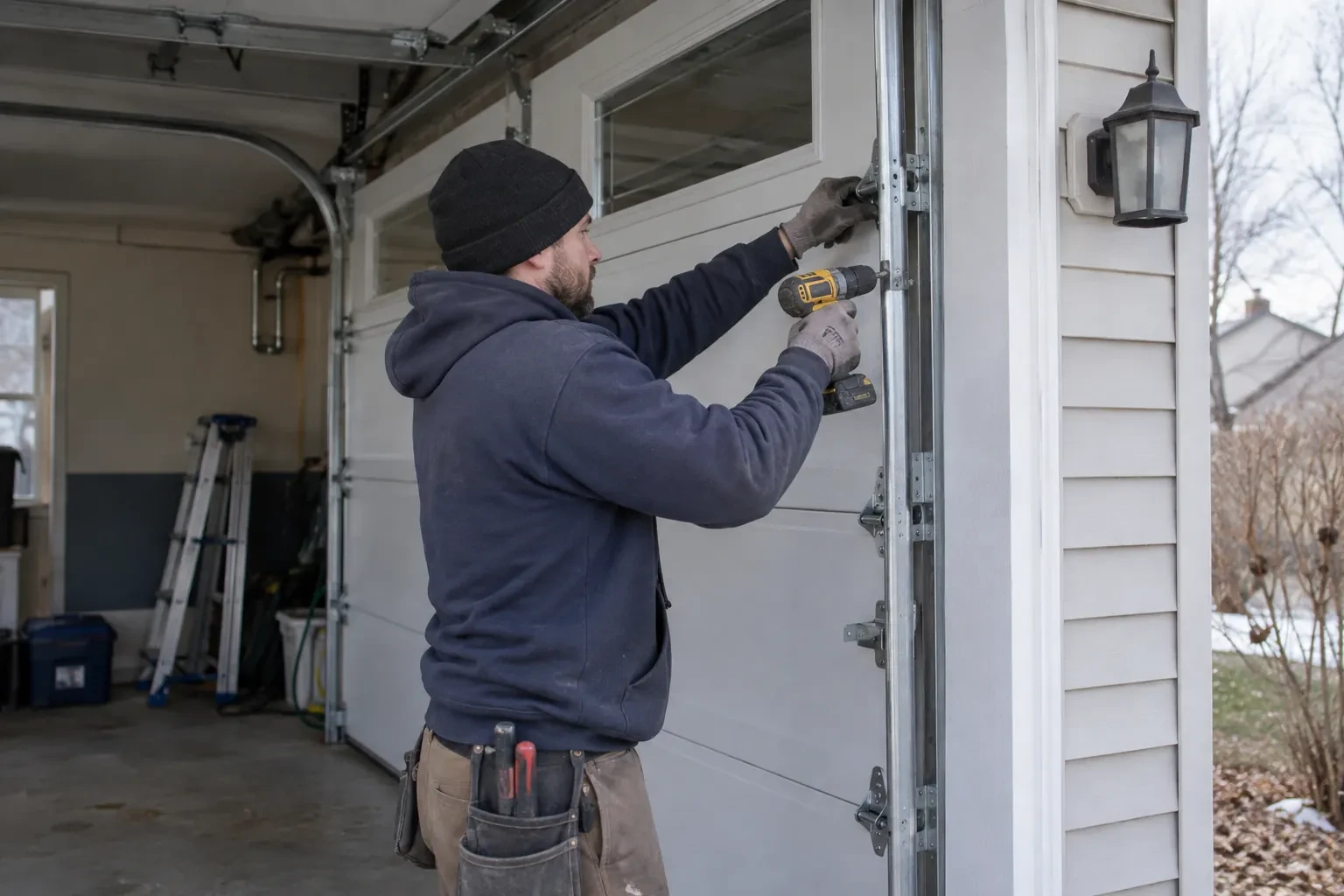
With the pieces in place, the technician sets the track to the door rather than to the wall. Each vertical run is plumbed, the gap to the door edge is matched side to side, and the top of each run is eased away from the jamb by the small amount that lets the door seal at the stop when closed and release on opening. The horizontal runs are levelled to each other and squared to the verticals, and the distance between the two tracks is checked at the floor, at the curve and at the rear so the door is neither pinched nor loose anywhere in its travel. Every bracket is then tightened in that position.
Jamb wood that will hold a screw again
If the visit included repairing the jamb, you now have sound timber behind every bracket, and the small habits that keep it that way are simple. Keep the bottom of the jamb dry: slush pushed clear, a bead of exterior caulk where the trim meets the slab, and paint or stain kept up on the exposed face. Look once a year for the tell-tale dark, soft patch at floor level and for screws that seem to have moved. A jamb that stays dry holds lag screws for decades, and with the track now fixed into good wood, the alignment set today has something solid to rest on.
Garage Door Track Repair or Replacement
In the van
Top fixtures
Track pliers and dead-blow hammer
Lag screws and track bolts
Jamb brackets or continuous angle
Vertical track, two-inch or three-inch
Garage Door Track Repair or Replacement
What affects the quote
Condition of the jamb wood
Where the jamb is soft or split at the floor, sistering or replacing the lower length is carpentry added to the track work, and the lumber and fasteners are listed on their own line.
Opener adjustment afterwards
A door running on a freshly aligned track often needs the opener's travel limits and force reset and its reversing tested. That short adjustment is named when it is needed.
How the door is sitting
A door resting closed is straightforward. One jammed partway on a bent section, or with rollers out of the channel, has to be supported and freed before the track can be measured.
What to have ready
- Where is the damage: near the floor, at the curve, or on the overhead run?
- Is the wood beside the door soft, split or discoloured at the floor?
- Is there one spring above the opening, or springs along the tracks?
Garage Door Track Repair or Replacement: questions
QuestionsWhat happens during the visit?
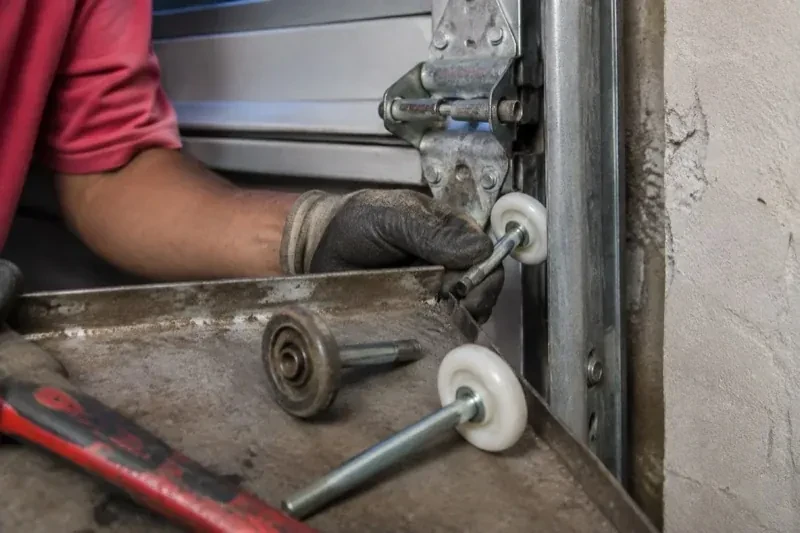
The opener is disconnected and the door clamped. The technician identifies the track type and layout, checks each vertical run for plumb, spacing and fixing, looks at the jamb wood, the curve, the flag brackets, the horizontal runs and their hangers, and how each roller sits. Damaged pieces are dressed or replaced, brackets refixed into sound wood, the geometry reset, rollers reseated, springs re-tensioned if they were unloaded, and the door balanced and the opener tested.
My door rubs the frame on one side. Is that a track problem?
Often, yes. The vertical track is meant to stand a fraction further from the jamb at the top than the bottom, so the closed door seals on its stop and swings clear as it rises. If a bracket has loosened or the track was set flat to the wood, the door drags along the stop moulding every trip. Resetting the spacing and taper, and tightening the brackets into sound wood, usually ends the rub.
How do I keep road salt from rusting the track?
Salt does its work in the bottom foot of each vertical track, where slush drips off the car and sits. Push slush clear of the door's inside edge rather than letting it pool, and on a mild day wipe or rinse the brackets and the lower channel. A little silicone spray on the bracket fasteners in autumn helps them shed water. Keeping the threshold free of ice also stops the door being pulled against a stuck bottom section.
Related services
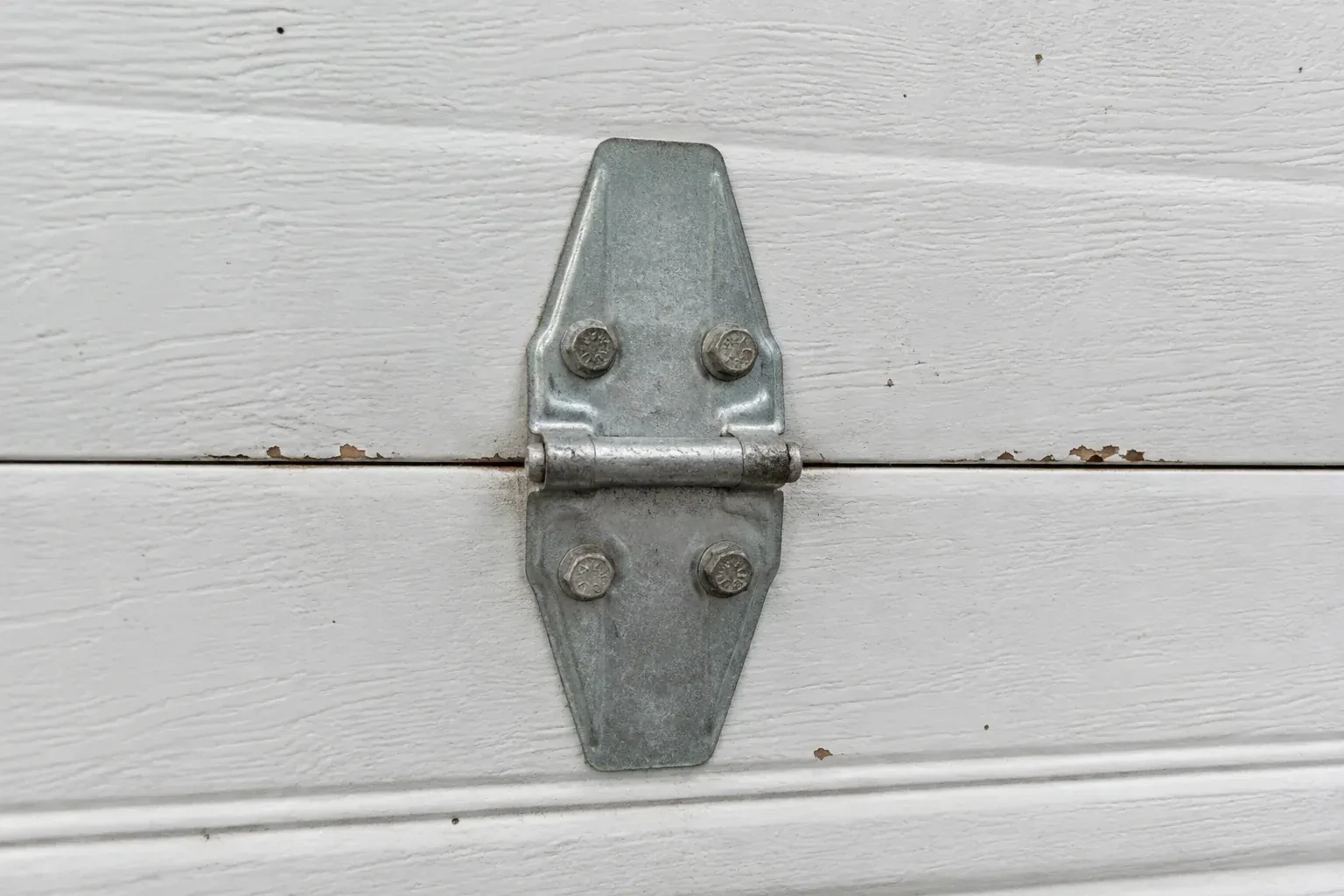
- Garage Door Hinge ReplacementWatching from inside as the door opens, you can see the gap between the second and third panels open up on one side as they turn the corner into the ceiling, then close again.
- Garage Door Cable ReplacementAfter years of slushy winters the cables look thinner near the bottom brackets, with rust streaks running down the door where they attach.
- Torsion Spring ReplacementLooking up at the coil above the door, you can see a clean split with a gap of several centimetres between the two halves.