Garage Doors in Ballantrae, OntarioSmall adjustments.Long life.
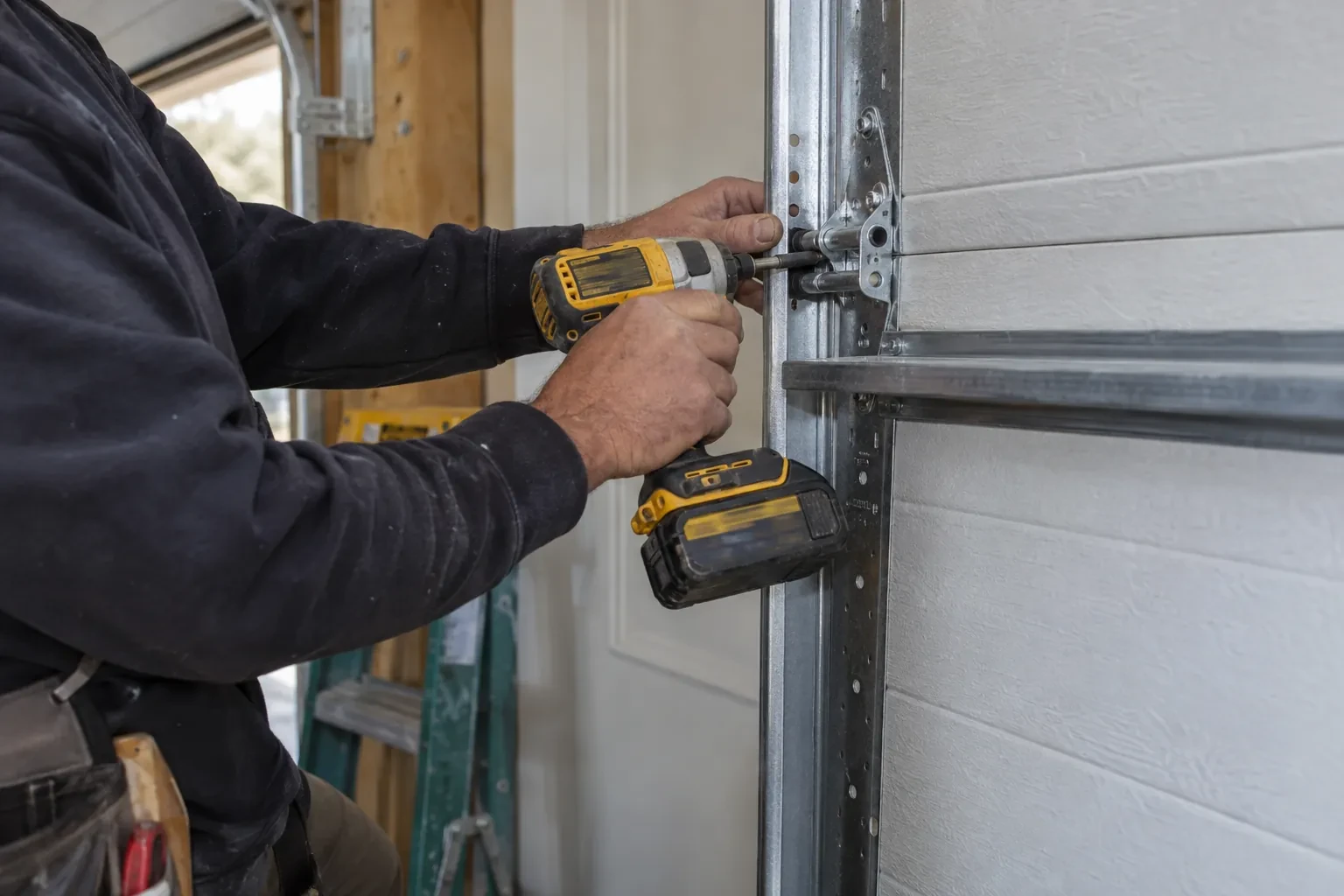
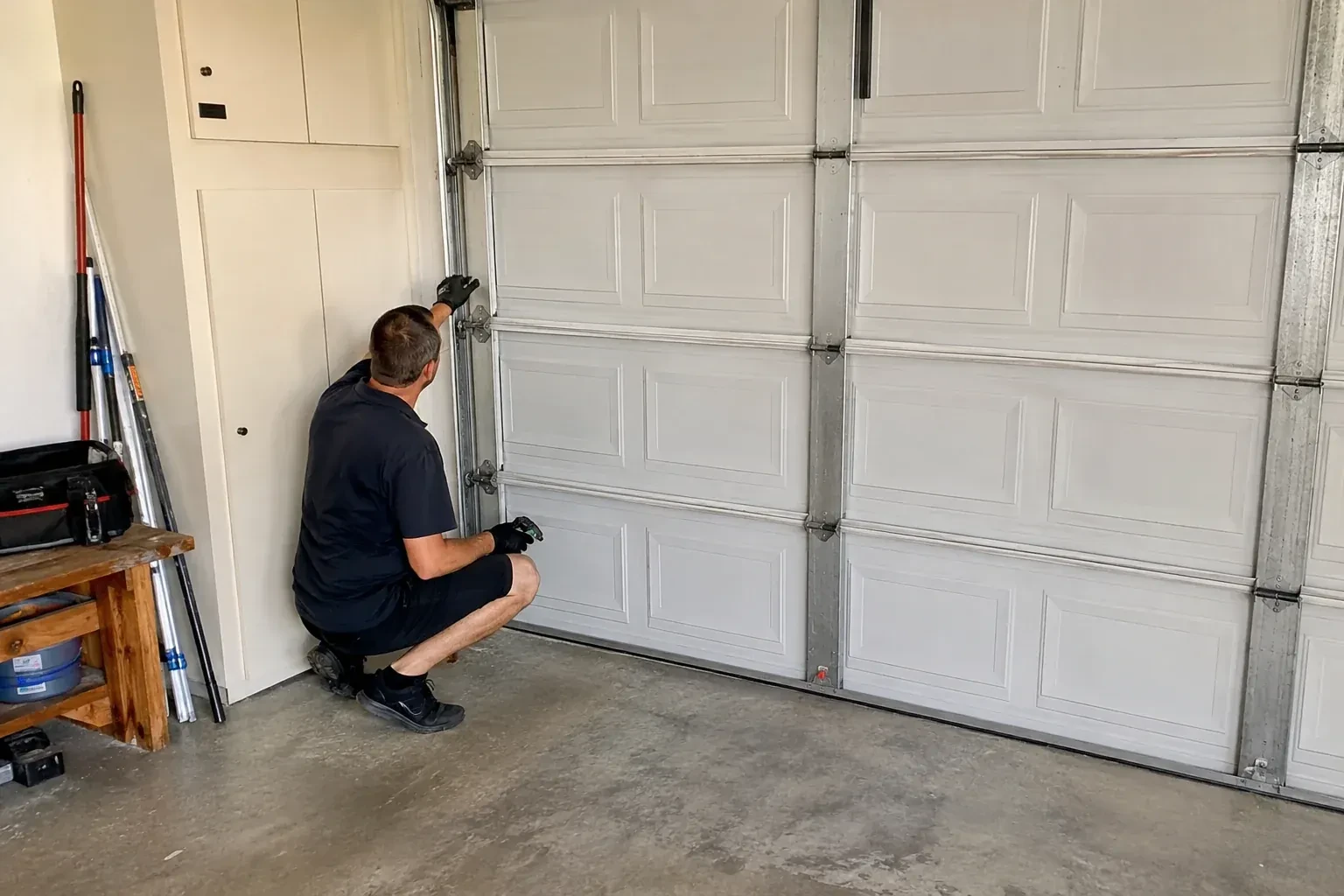
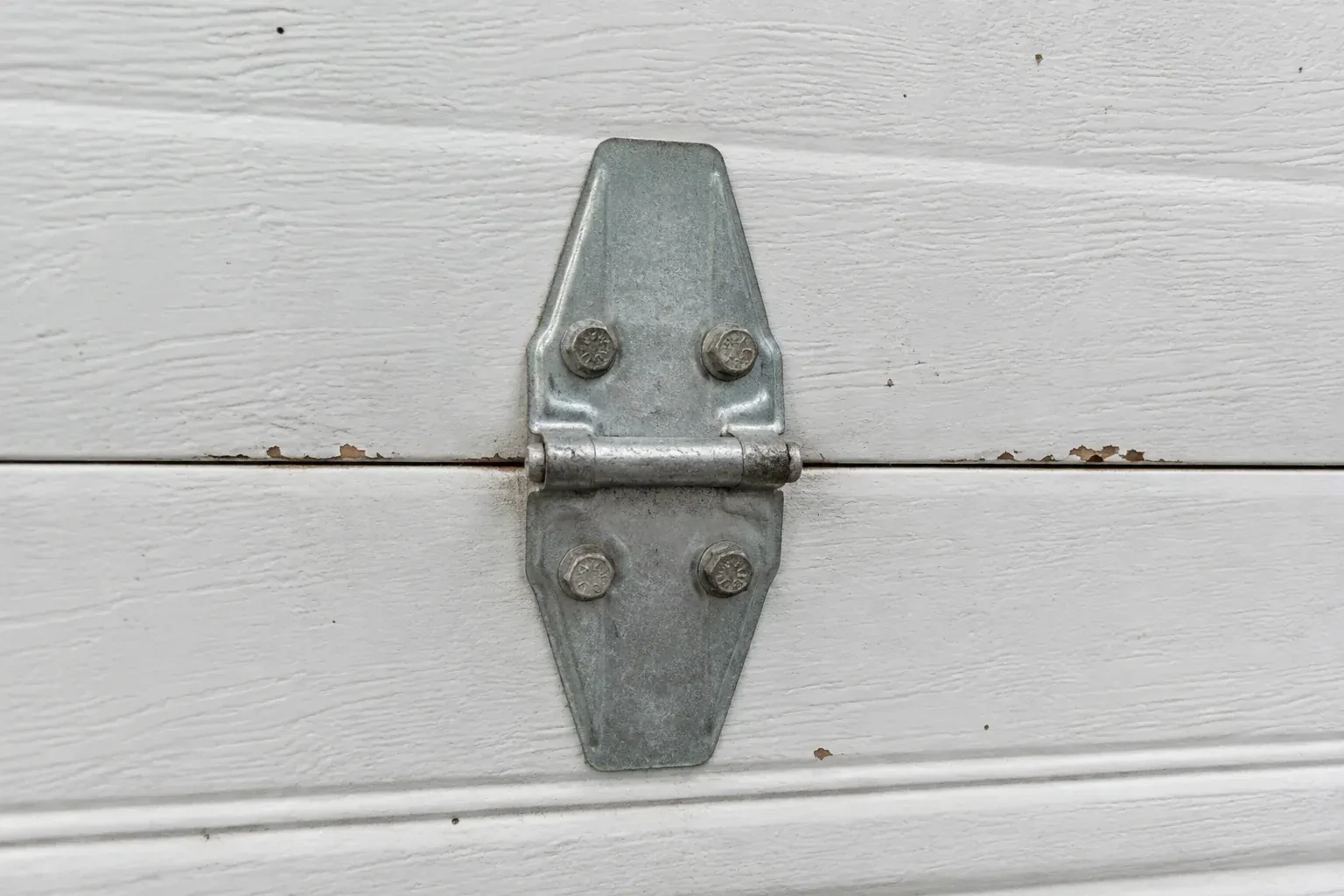
A tune-up is not glamorous: tightening hinges and brackets, lubricating rollers and bearings, resetting spring tension, checking the opener force and travel. Together those steps keep a garage door in Ballantrae running for years and catch the one part that would have failed on the coldest morning of the winter. The same crew covers Cedar Valley, Musselman's Lake and Vivian.
A tune-up is not glamorous: tightening hinges and brackets, lubricating rollers and bearings, resetting spring tension, checking the opener force and travel. Together those steps keep a garage door in Ballantrae running for years and catch the one part that would have failed on the coldest morning of the winter. The same crew covers Cedar Valley, Musselman's Lake and Vivian.
Plain answers about your garage door.
A phone call to us from Ballantrae gets a real conversation, not a script. We ask about the door, suggest what might be going on, and arrange a visit. What we hold back is the number: that comes after the technician has stood in front of the door and measured what it needs.
Our approach in Ballantrae is the same one that built the company: look at the whole door, explain what was found in ordinary words, offer sensible choices and do the work carefully. Whether the visit is a single roller or a complete new door with a new opener, the household ends up with a door that works and a clear understanding of what was done.
17years in business
24/7open every day
Talk before tools. The visit begins with a conversation about what you noticed and ends with one about what we did. The work sits in between.
Tidy job, tidy garage. Loose hardware collected, packaging taken away, tracks wiped. We judge our work partly by how the garage looks when we leave.
Options with honest trade-offs. A basic part, a heavier-duty one, or a new door: we describe how each will behave over time and let you weigh it.
Households in Ballantrae mostly need three things from us over the life of a door: a tune-up now and then, a spring or cable when one lets go, and a new opener or door when the old one is finished. Every one of those, plus the smaller jobs between, is covered below.
About 22% of homes in Whitchurch-Stouffville were built in 1980 or earlier, according to the 2021 Census.
Newer homes
A newer door still under its first set of springs is a good candidate for preventive work: lubricating the torsion spring, checking the cable ends at the drums and confirming balance before the spring reaches its cycle limit, so the replacement is planned rather than forced by a broken spring.
Single-detached houses make up about 74% of homes in Whitchurch-Stouffville (2021 Census).
Mostly houses
A detached house with its own garage is a natural fit for upgrades that need space: a jackshaft opener to free the ceiling, a high-lift door for a car hoist, or a wider door when a bigger vehicle arrives. The technician measures the opening and headroom and says what fits.
You moved in a few months ago and have no idea when the garage door was last looked at. The previous owners left the remotes on the counter and no paperwork, and the door works, but it works loudly and unevenly.
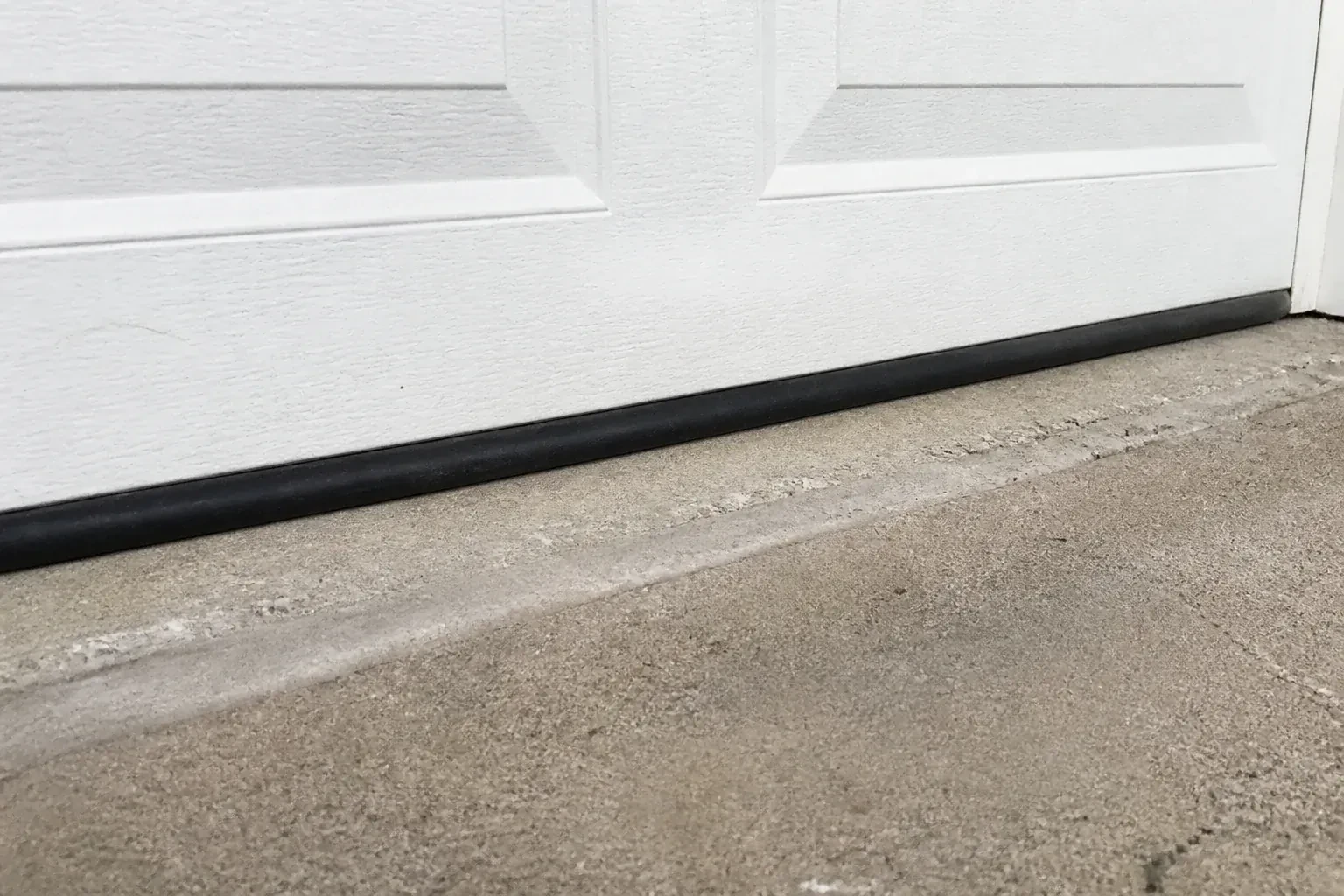
After a spring rain there is a puddle inside the door that reaches the tires. The driveway slopes toward the garage, the slab has a low corner, and the flattened old seal is not making up the difference.
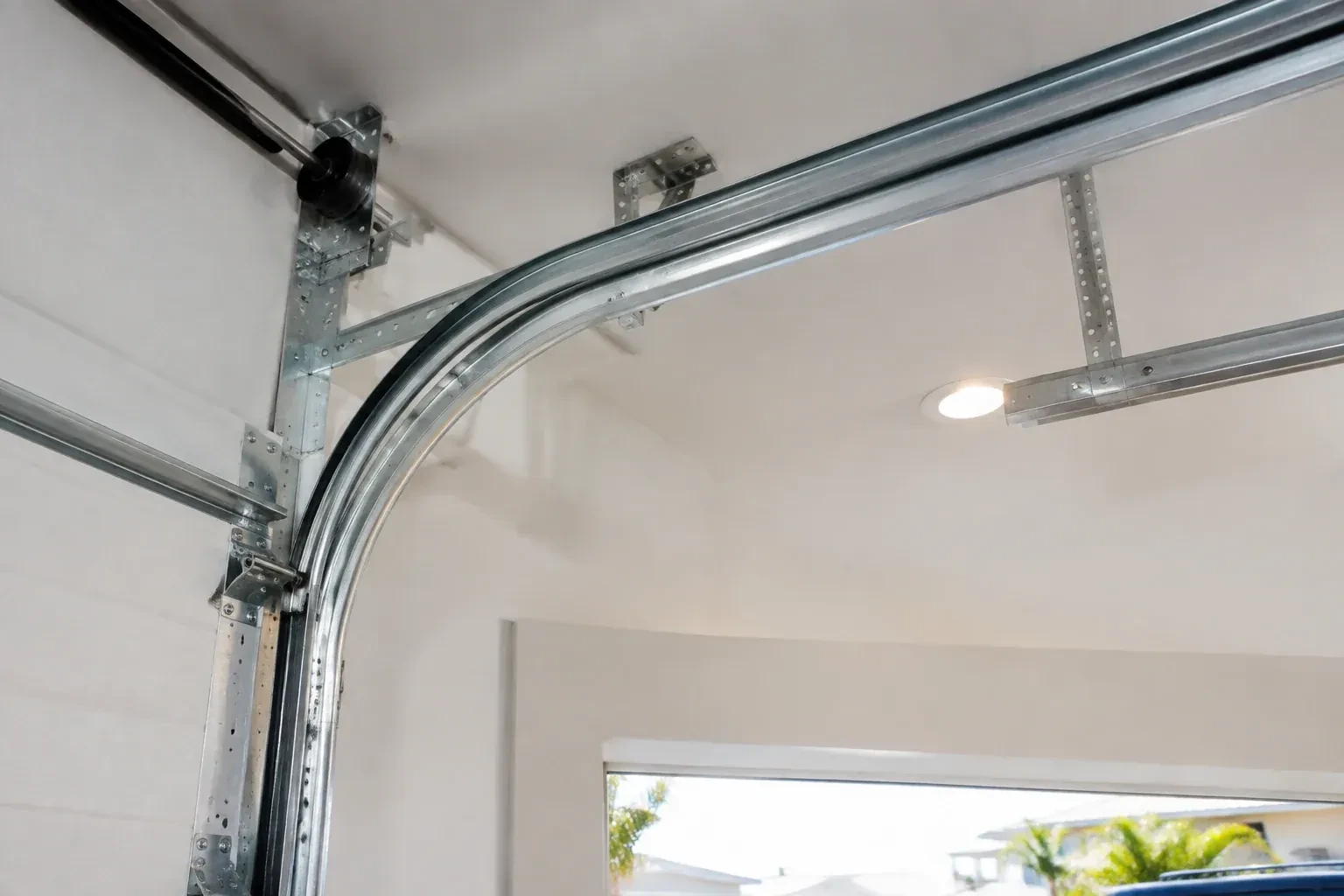
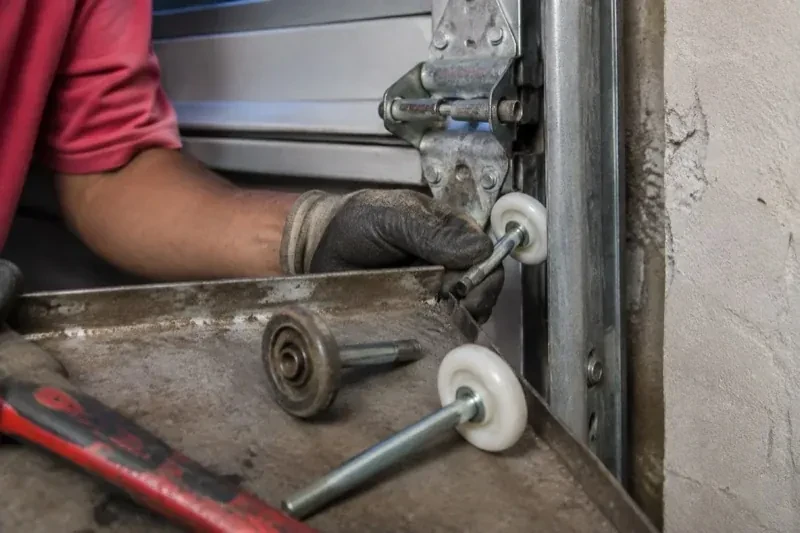
Halfway up, the door lurches and one roller rides onto the lip of the channel. Near the curve the track looks wider than the rest, and the door hesitates in the same place on the way down.
Since the storm the door behaves oddly: it reverses halfway down for no reason, the light flickers, and the travel limits drift so it either slams or stops short. The board inside is discontinued and the last repair only bought a few months.
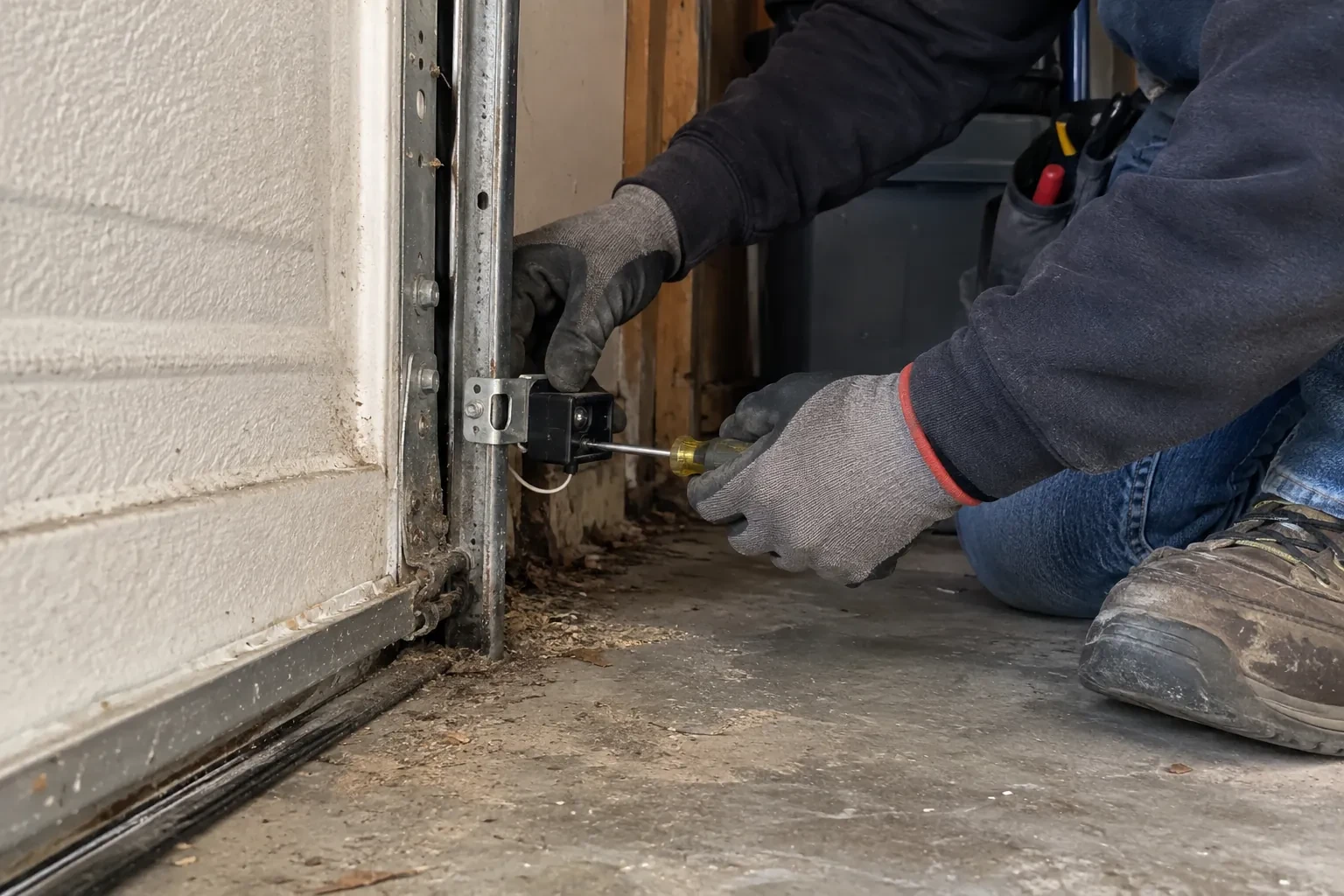
Someone backed the car in a little too far, a bin or a bicycle brushed the track, and since then the door starts to close and comes back up. One sensor now sits at a slightly different angle from the other.
One remote lives in a car you sold last spring. The other needs three presses from the driveway and its battery cover is taped on. Your phone is already in your hand when you pull in, and it would make a better opener.
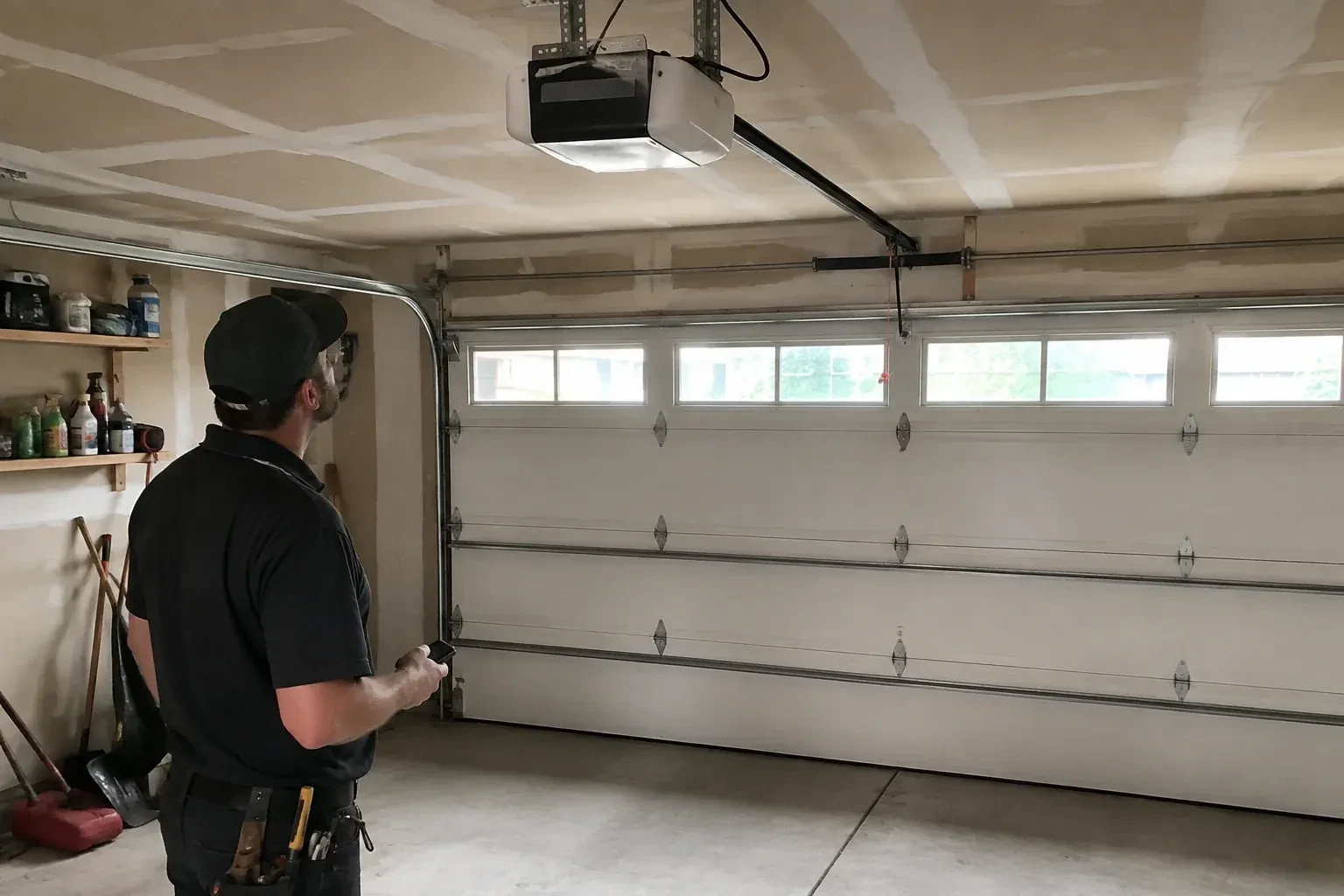
You are adding an automatic opener to an older, very heavy door. Before pairing equipment, you want sections, reinforcement, balance hardware and track chosen together for predictable manual and powered movement.
Your garage door works, yet its broad plain panels feel disconnected from the brick, gables and entry details around them. You want the opening to contribute the warmth and character of the home's exterior.
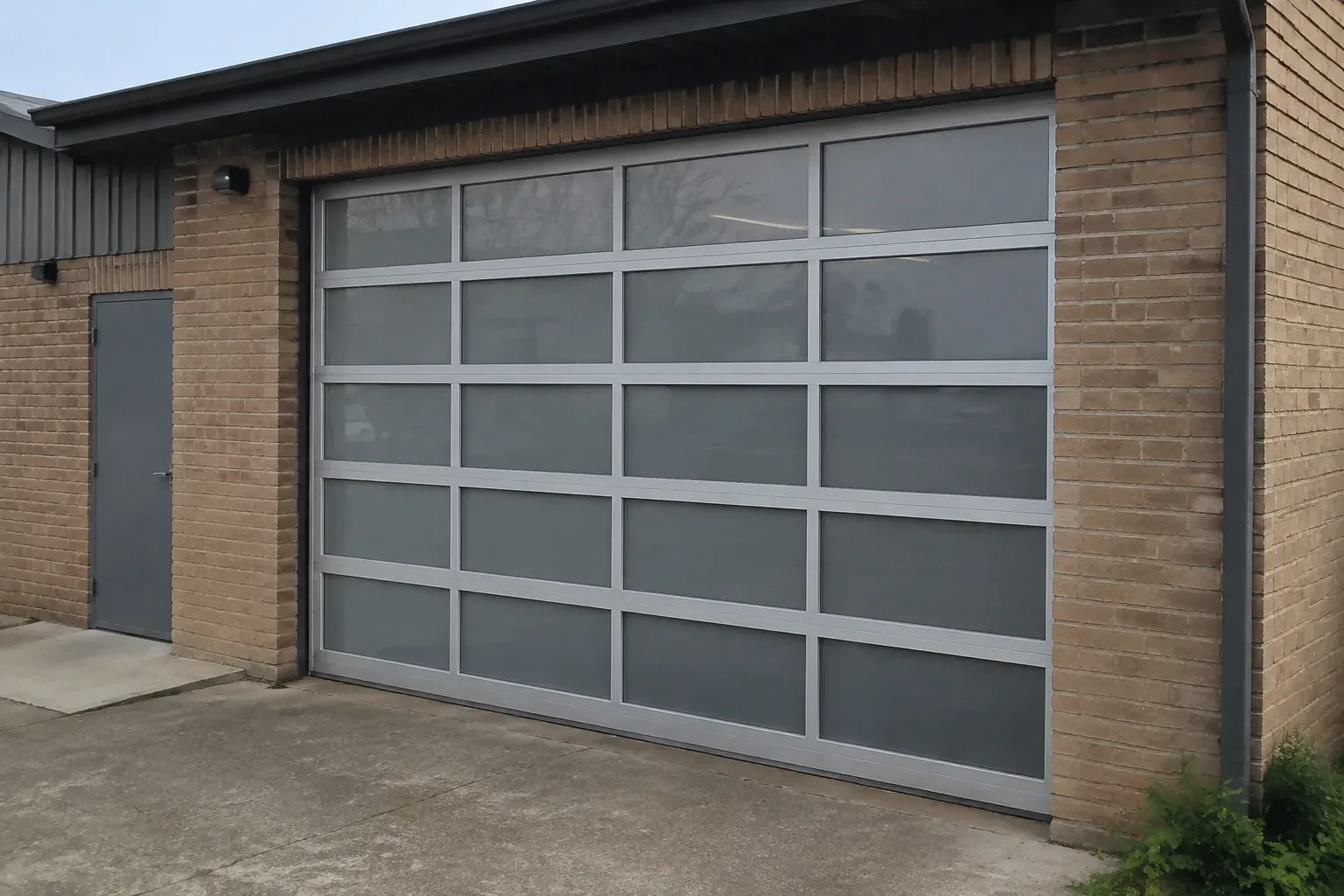
The current door is due for replacement, and this is the opportunity to change the whole character of the opening. Glass, frame finish and hardware need to be planned as one working system.
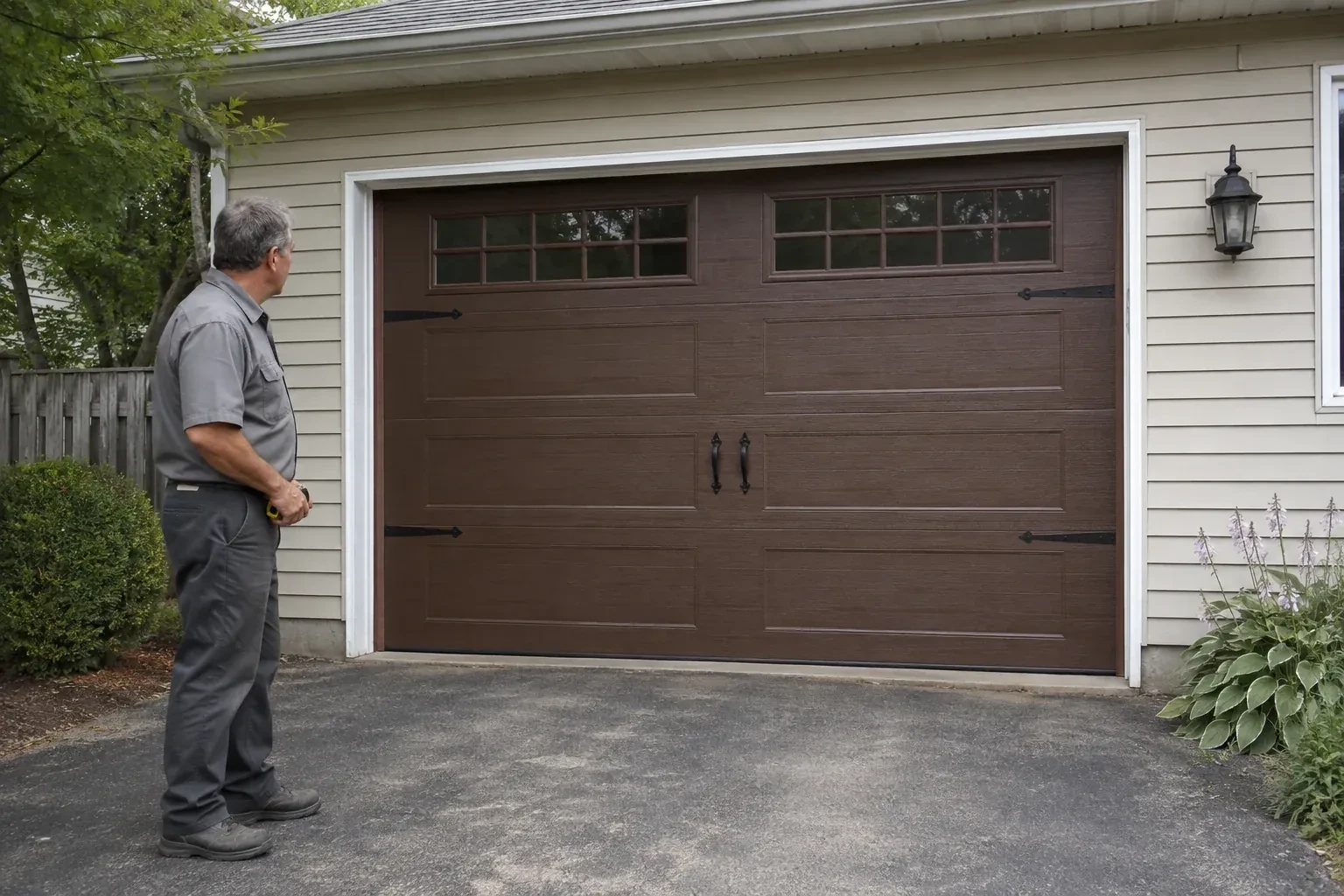
The front elevation calls for a garage door that belongs with the windows, masonry and trim. Panel design, colour, glazing and hardware all need to come together in one working overhead system.
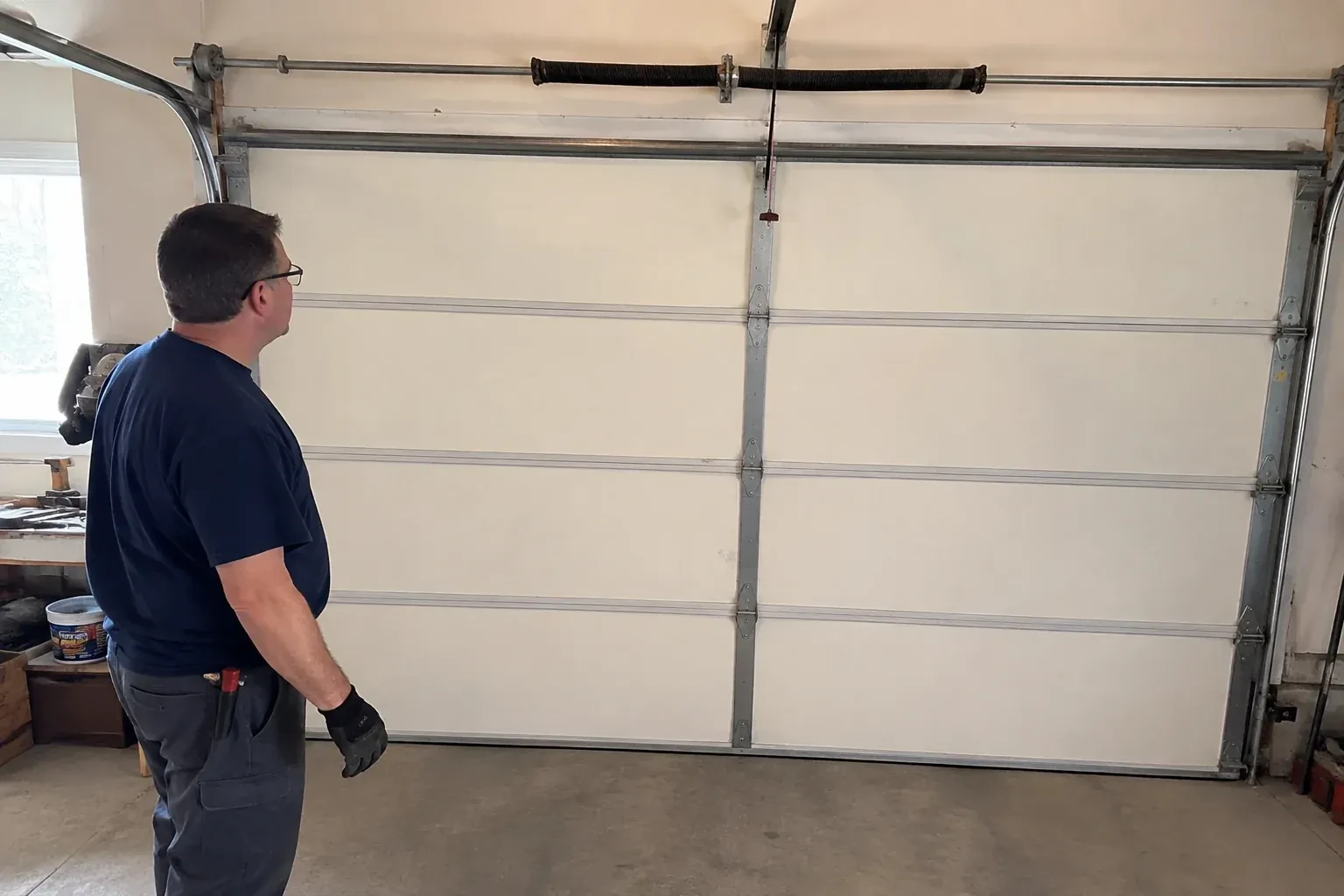
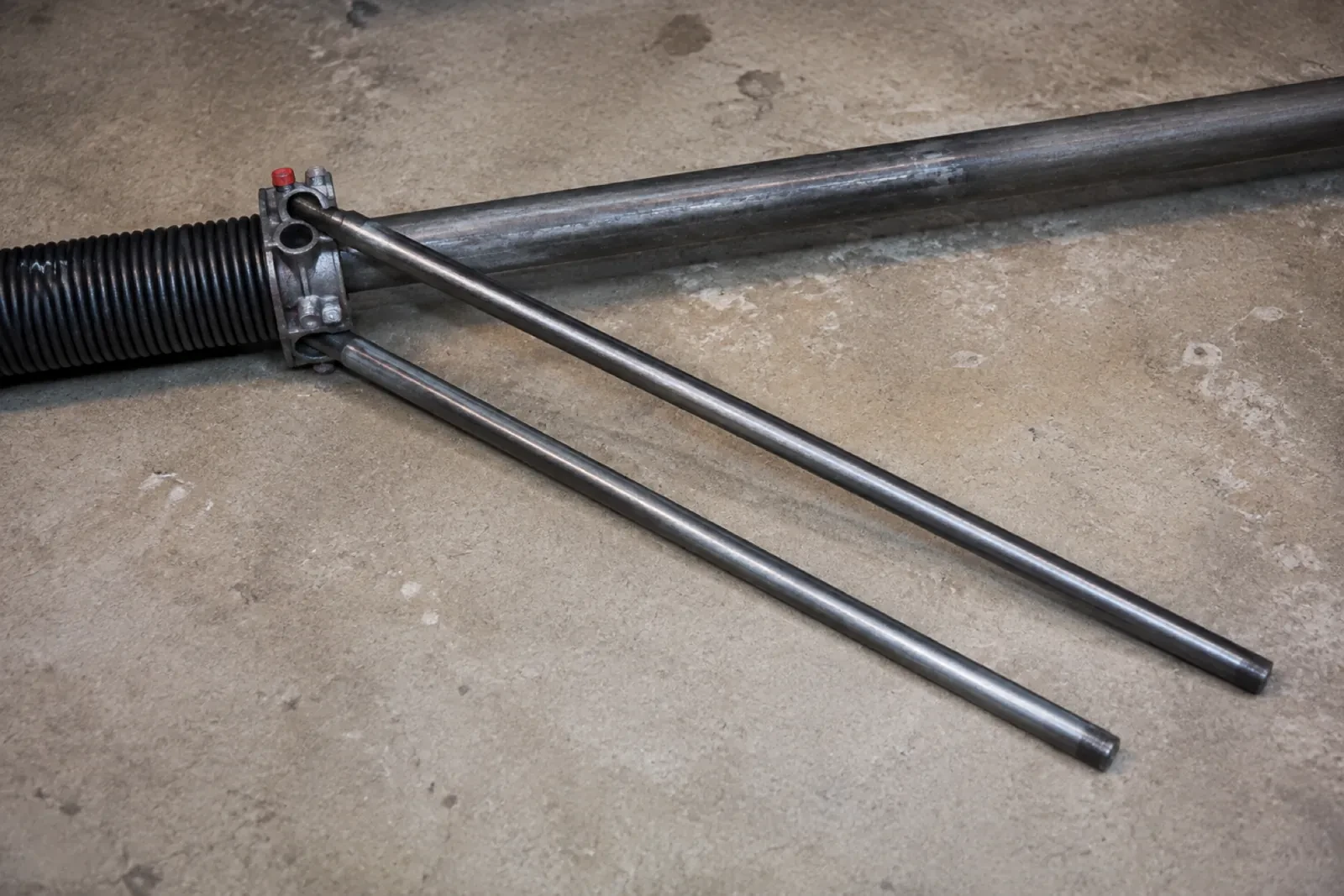
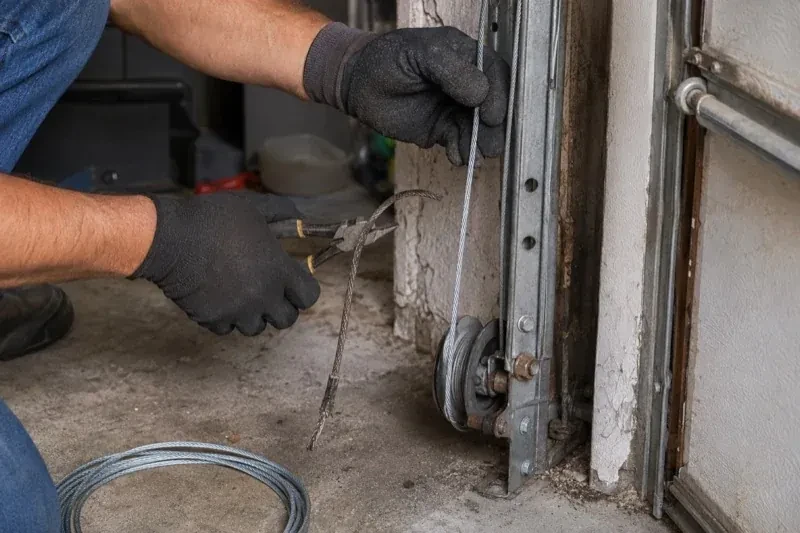
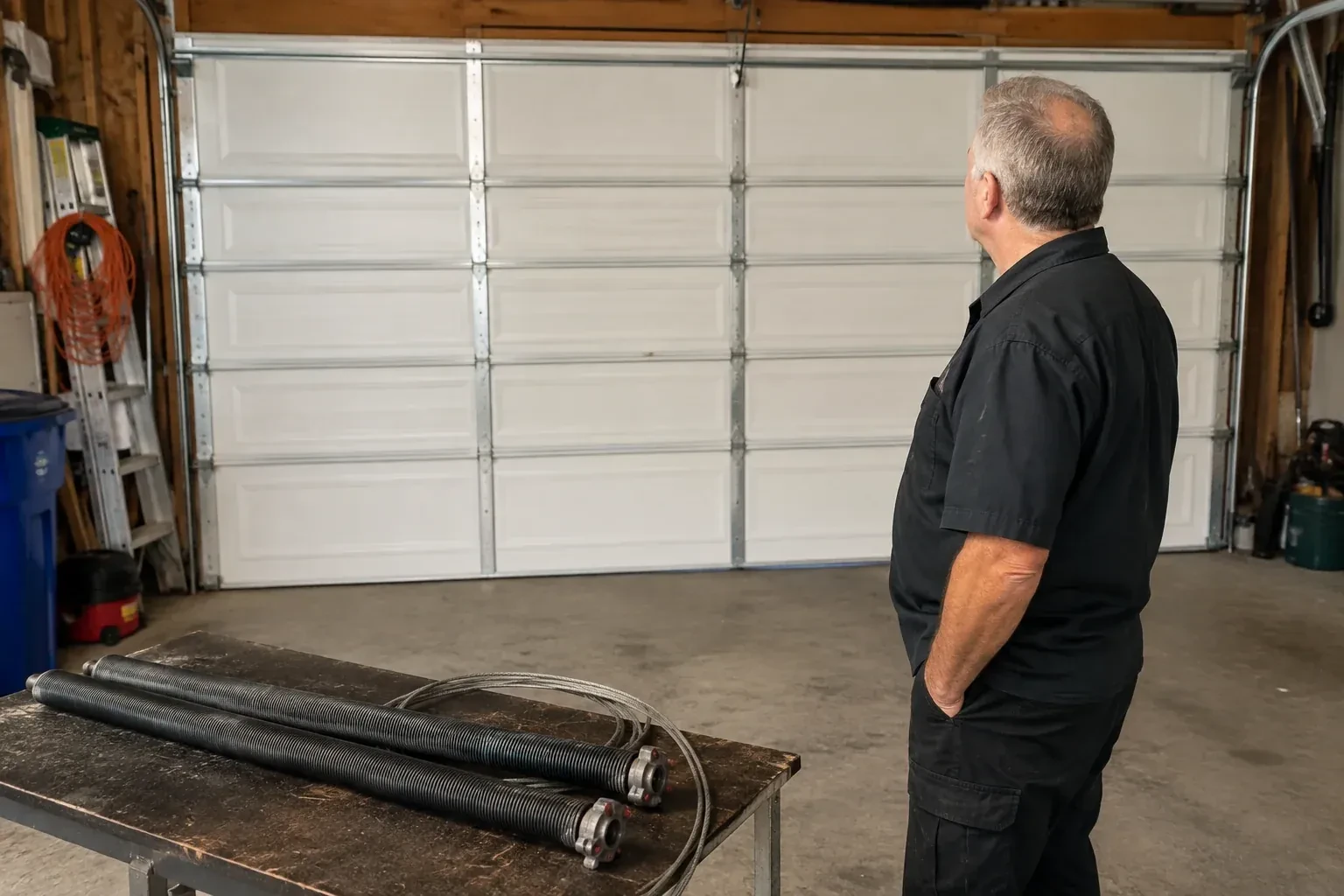
The counterbalance system is the part of the door people never see and rely on completely. Springs, cables, drums, bearings and brackets share one load, and this group covers keeping that load carried safely.
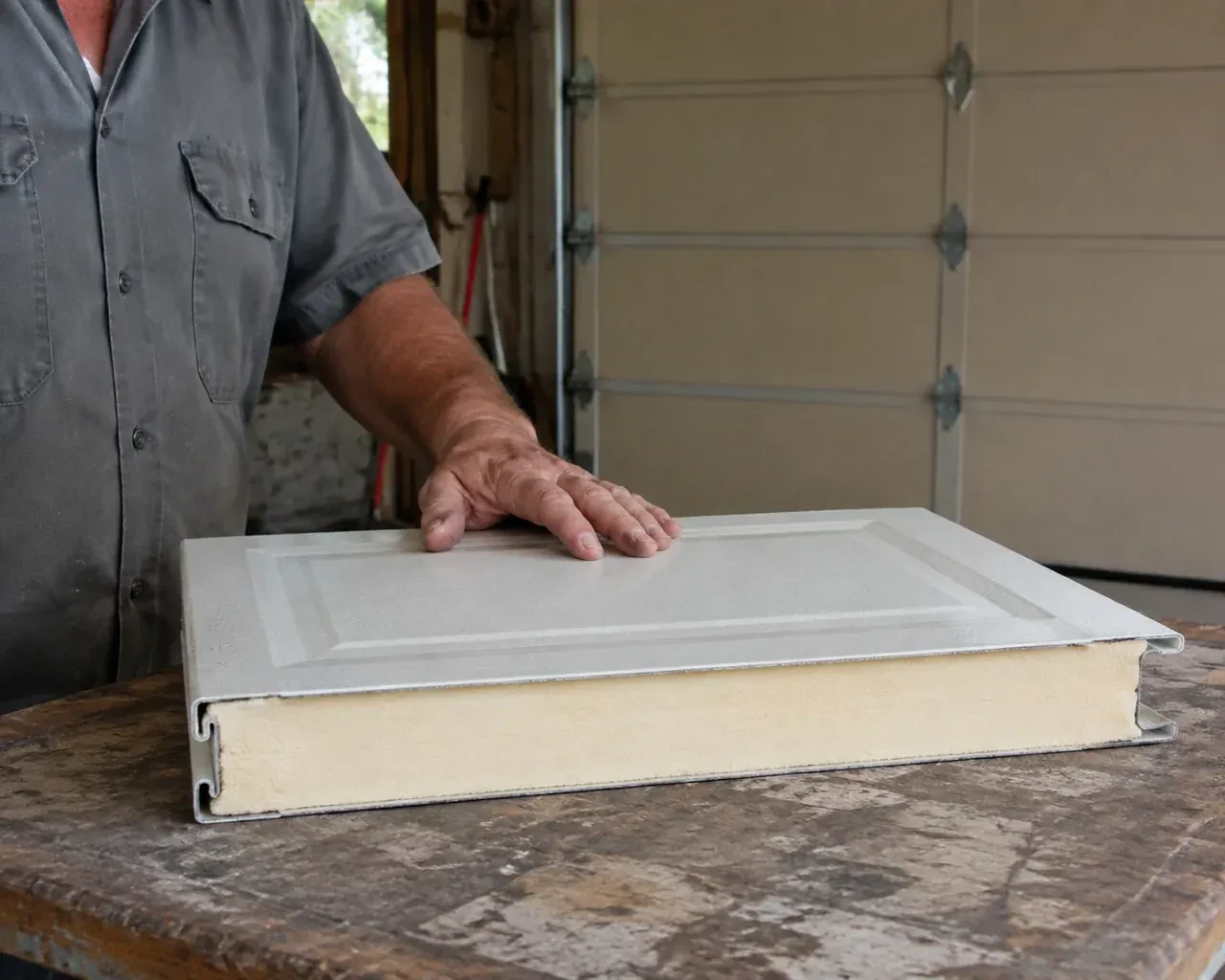
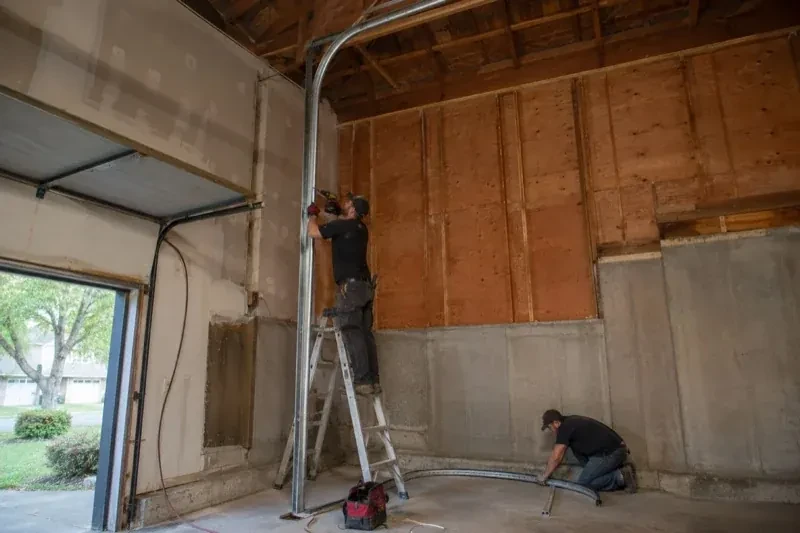
Replacing a door is a chance to fix everything at once: insulation that keeps the garage warmer, panels that suit the house, a quieter opener and fresh tracks and springs sized to the new weight. This group covers the whole job.
WhyThe bottom seal, called an astragal in the trade, is the flexible strip along the underside of the lowest door section that squashes against the floor when the door closes.
Halfway up, the door lurches and one roller rides onto the lip of the channel.
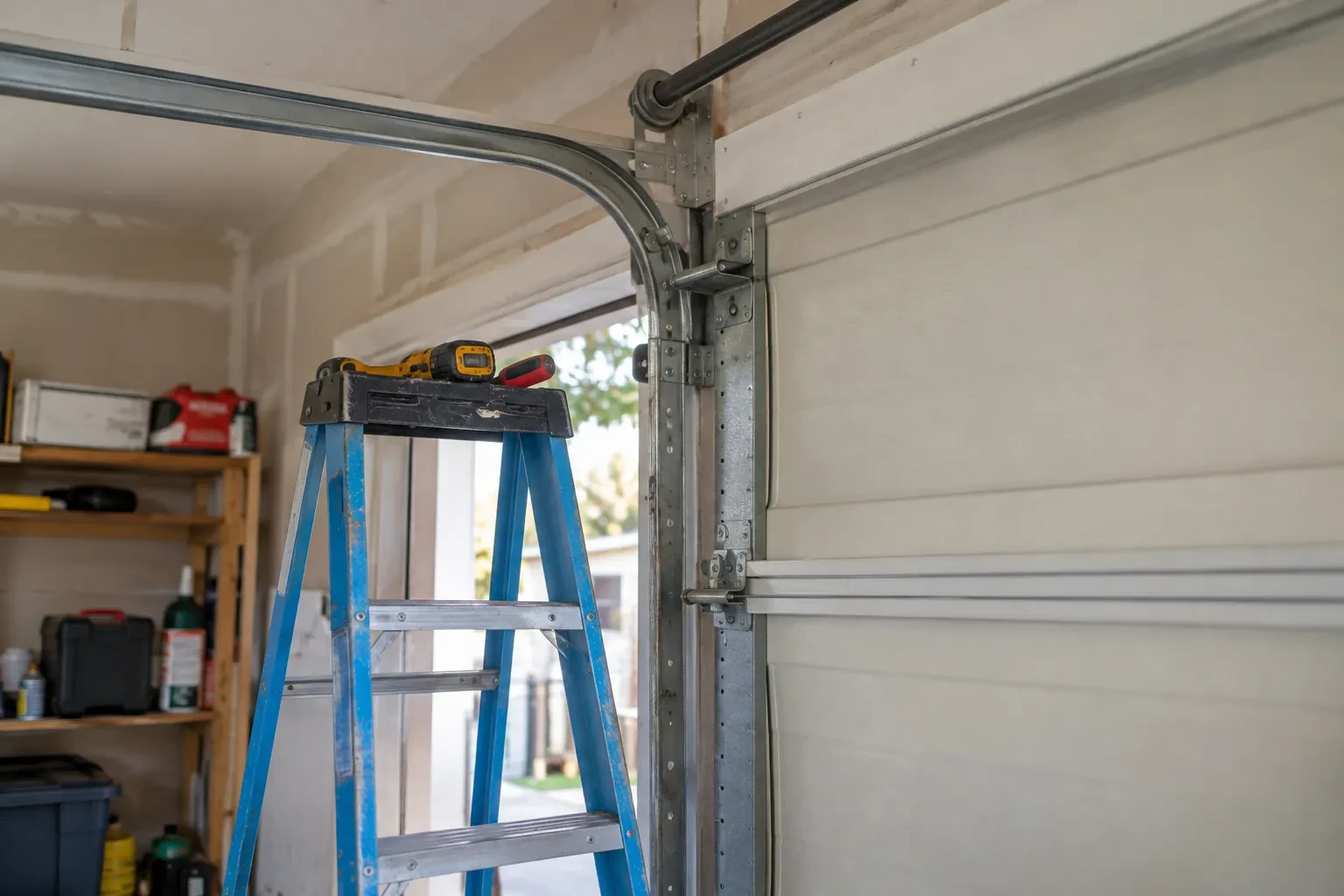
WhyVertical track is fixed to the jamb in one of two ways, and the assessment begins by reading which one your door has.
Since the storm the door behaves oddly: it reverses halfway down for no reason, the light flickers, and the travel limits drift so it either slams or stops short.
WhyBy the end of the visit you have a door that closes from every control and reverses the instant the beam is broken, a sensor pair mounted level at the right height with steady indicator lights, wiring that is secured and out of harm's way, and a written note of what was found and what was changed.
WhySmart garage controller setup gives your garage door a place in your phone: open, close, see whether it is up or down, and hear about it when something changes.
You are adding an automatic opener to an older, very heavy door.
WhyCarriage-house garage door installation gives a home the visual rhythm of old coach doors without requiring the panels to swing across the driveway.
The current door is due for replacement, and this is the opportunity to change the whole character of the opening.
Cold affects several things at once. Old lubricant thickens into a drag on every hinge and bearing. Steel contracts slightly, so a track that was snug becomes tight. Rubber seals stiffen and the bottom seal can freeze to the slab. The opener then reads all this extra resistance as an obstruction and stops or reverses. A fall tune-up with a low-temperature lubricant, silicone on the seals and correctly set force goes a long way toward smooth winter mornings.
How can I tell that the bottom seal needs replacing?
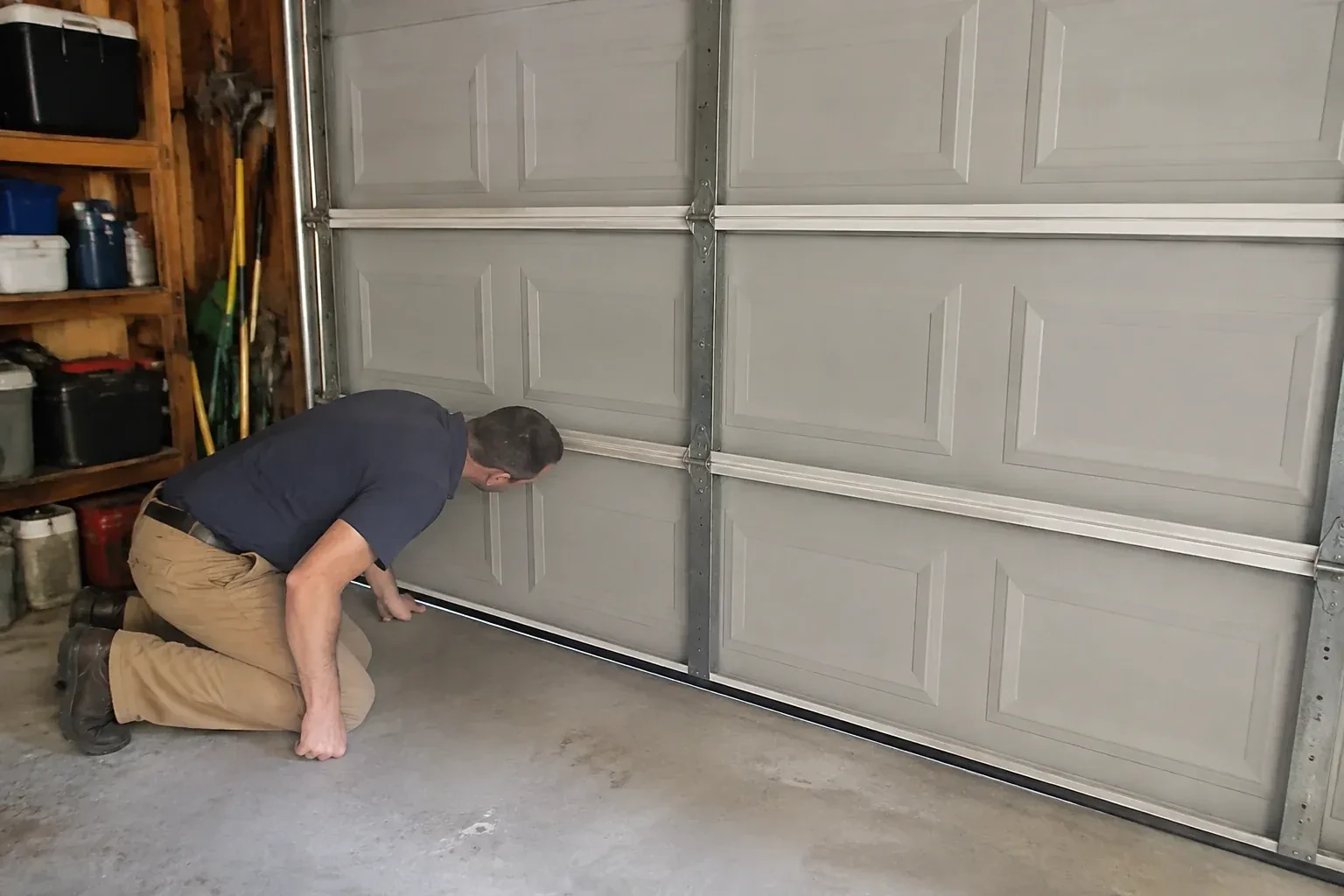
Close the door, turn off the lights and look along the floor from inside. Daylight showing, a strip that feels hard or cracks when pressed, a bulb that has flattened and stays flat, an end hanging out of its channel, chew marks or missing pieces are all signs. So are leaves, snow or a puddle inside the door after weather. Any one of these means the seal has stopped doing its job.
My door rubs the frame on one side. Is that a track problem?
Often, yes. The vertical track is meant to stand a fraction further from the jamb at the top than the bottom, so the closed door seals on its stop and swings clear as it rises. If a bracket has loosened or the track was set flat to the wood, the door drags along the stop moulding every trip. Resetting the spacing and taper, and tightening the brackets into sound wood, usually ends the rub.
Will a new opener make the door quieter?
A belt or direct drive with a soft-start DC motor removes most of the operator's own noise, and a level, well-tensioned rail removes the rattle. The door contributes its own sound through rollers, hinges and springs, so the technician looks those over during the balance check and can fit nylon rollers or fresh hinges at the same time. Together the two changes turn a morning rumble into a hum.
Can any sensor pair be used with my opener?
Not any, no. Sensors are matched to the opener's make and generation, and a board from one era may ignore sensors from another even when the wires fit. The technician reads the model from the head unit label and fits the pair listed for it. Some operators accept a documented universal pair, and those are used where the maker lists them as suitable; on a very old unit with no compatible pair, a modern operator is the way forward.
Can I give a contractor or cleaner access for a day?
Most apps allow guest or scheduled access: a user invited for a set window, or a one-time code, that expires on its own. That is a better arrangement than lending a remote or sharing the family keypad code, because there is nothing to chase back afterwards and the history shows exactly when the door was used. The technician shows you how to create and revoke such access during the visit.
How is the correct spring system selected?
Counterbalance parts are chosen from the new door's actual size, completed weight, track arrangement and hardware configuration, using the door system's specifications. Torsion and extension layouts use different components and space. Once installed, controlled adjustment and manual balance checks confirm how the spring system supports the door through its travel.
May the new door use my existing tracks?
Only when the new door instructions and field assessment establish compatibility. Track spacing and curves relate to section thickness, roller position, door weight, headroom and opener layout. A track that suited the former door may place the new sections incorrectly. Treating tracks and sections as one designed system provides a clearer basis for alignment, balance and future parts identification.
Will my current garage door opener work with the glazed door?
Possibly, after its model, condition, mounting arrangement and compatibility are checked against the selected door. Door size and weight, top-section reinforcement, travel path and control requirements all matter. The counterbalance system carries the door weight; a compatible operator then controls a balanced door. Settings are established for the new assembly and its safety functions are tested during commissioning.
What electrical preparation does a garage door operator need?
Preparation commonly includes a receptacle near the planned operator, a suitable mounting location and routes for the wall control and photoelectric sensor wiring. Exact electrical requirements follow the chosen equipment and project electrical design. Coordinating locations before drywall helps keep wires clear of tracks, springs and moving sections. The electrical trade and door installer should also agree who completes connections and when power becomes available for commissioning.
Request a visit
A phone call to us from Ballantrae gets a real conversation, not a script. We ask about the door, suggest what might be going on, and arrange a visit. What we hold back is the number: that comes after the technician has stood in front of the door and measured what it needs.