Garage Doors
Care and common sense
Understanding the why behind a repair makes the fix easier to trust. Our advice pages explain how each part works, what happens when it wears, and how the repair restores it.
What people ask us
What information helps when I call to book?
Whether the door is single or double and roughly how tall; whether there is a spring on a shaft above the opening or springs along the tracks; the opener make if you can see it; how many doors need looking at; what prompted the call and when it began; and whether anything happened to the door lately. A photo of the opener label and of the spring area is a useful extra.
Should I lubricate the tracks?
No. Tracks should be clean and dry. Rollers are meant to roll along the track on their own bearings, and a film of lubricant on the track collects grit, thickens in the cold and makes the rollers slide and drag instead. Wipe the tracks with a rag and put the lubricant where it belongs: on the hinge pins, the roller bearings, the spring coils and the bearing plates at the ends of the torsion shaft.
Will the door be as good as it was before?
In most cases it comes back better, because the reset includes truing the track, replacing worn rollers and correcting the misalignments that had been building unnoticed. The exception is a section creased by an impact: it may work perfectly well after the reset yet keep a visible dent, and the technician will tell you whether it is sound or worth replacing at some point. You are shown the door running before the visit ends.
Can a wood garage door section be replaced?
Yes, though wood doors are more often site-built or made in small runs, so a matching section may be made up by a door shop rather than ordered from a catalogue. The new section is primed and finished to match, the hardware is transferred, and the technician looks closely at the neighbouring sections for rot or splitting, since wood sections tend to age together. Where several are failing, a new door is discussed.
What happens during the visit?
The technician maps the gap with the door closed, checks the door is level and the bottom section straight, and identifies the retainer and profile. The opener is disconnected and the door clamped at working height. The old seal comes out, the channels are cleaned, a new seal is cut and fed in, and any retainer work is done. The door is then closed under power, the opener reset, and the reversing and photo-eye tests run.
Should I choose a fin on the wood stop or a one-piece vinyl stop?
If the wood stop is sound, straight and not buried in paint, a new fin nailed to its face is the simpler choice and keeps the look of the trim. If the stop is cracked, soft or has been painted many times, a one-piece vinyl stop replaces it entirely, needs no paint and cannot rot. The technician checks the stop and recommends one or the other on site.
My key will not turn in the cold. What is happening?
Meltwater has run down the door face into the keyway during a thaw and frozen overnight, or cold has stiffened old lubricant inside the cylinder. Lock de-icer or gentle warmth frees it; hot water is avoided because it refreezes and can crack cold metal. Afterwards the cylinder is dried and given a dry graphite or PTFE lubricant that sheds moisture instead of trapping it.
Should I replace rollers when the springs are replaced?
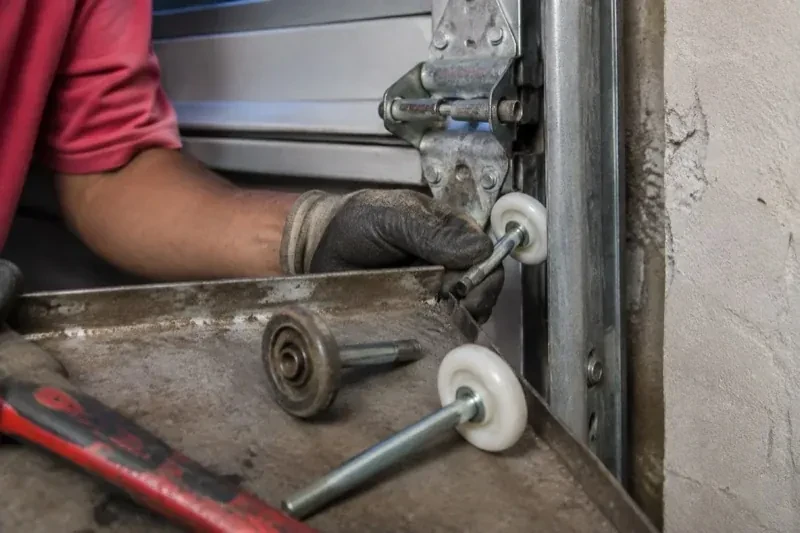
It is a common and sensible pairing. Rollers and springs are the two most frequently replaced parts on a door and wear on similar timelines, so a door that has used up its springs has usually worn its rollers too. Doing both in one visit means the door is secured and the opener disconnected once, and the bottom brackets, which are handled for spring work anyway, receive new rollers while they are accessible. Ask for the rollers to be checked whenever spring work is booked.
Should every hinge be replaced, or only the broken one?
It depends on what the inspection finds. Hinges age at similar rates, so a cracked one is often the first of several, especially on the lower joints where salt and moisture collect. The technician checks each hinge and tells you which are cracked, worn at the pin or bent, which are loose and only need tightening, and which are sound. Replacing the worn group in one visit saves the door a run of separate call-outs.
What happens during the visit?
The opener is disconnected and the door clamped. The technician identifies the track type and layout, checks each vertical run for plumb, spacing and fixing, looks at the jamb wood, the curve, the flag brackets, the horizontal runs and their hangers, and how each roller sits. Damaged pieces are dressed or replaced, brackets refixed into sound wood, the geometry reset, rollers reseated, springs re-tensioned if they were unloaded, and the door balanced and the opener tested.
Should I keep using the opener until the technician arrives?
It is better to leave the door where it is and use another way in and out. Running the opener against a crooked or cable-slack door tends to tangle the cable further, twist the top section and knock the door out of its track, which adds to the repair. Pull nothing and adjust nothing; simply keep the opening clear and let the technician take it from there.
What should I do before the technician arrives?
Keep the door closed and leave it alone, move any vehicle you can reach out of the way or at least clear the space in front of the door inside the garage, and make sure there is room for a ladder beneath the shaft. Note whether there is one spring or two and whether a cable is loose. A photo of the spring area, the drums and the opener helps the technician bring the right parts.
Why does the door slam down the last bit?
A door that drops the final stretch is telling you the springs are no longer holding it. As an extension spring loses its temper it gives less pull near the bottom of travel, where the door needs the most support, so the door falls that last foot. Fresh springs matched to the door's weight bring the door down under control and take that shock off the bottom section and the opener.
What information helps when I book the visit?
Whether the door drifts up, sinks, or hangs crooked when released; whether there is one spring on a shaft above the door or springs along the tracks; whether it is a single or double door and roughly how tall; when the springs were last changed if you know; what has been added to the door; and whether the opener strains, reverses or stalls. A photo of the spring area is useful.
What is the balance test, and is it something I can do?
Yes, with care. Close the door, pull the red release handle, and lift the door by hand, keeping fingers away from the panel joints. It should rise easily and stay where you leave it around waist to shoulder height. A door that drops, shoots up, or feels heavy has a spring problem and should not be run with the opener until a technician has seen it. Reconnect by running the opener or lifting until the trolley clicks in.
Can my chain drive be made quieter without changing it to a belt?
Yes, a fair amount. Correct chain tension removes the slap. A new sprocket and chain remove the clack. Tight hangers, a level rail and a snug header bracket remove the rattle that travels through the framing into rooms above. Nylon rollers and lubricated hinges on the door quiet the door itself, which is often louder than the drive. A vibration isolator between the head and the hangers helps where the ceiling carries sound into a bedroom.
I pulled the red cord during a power cut. Could that have caused this?
It can, if the door was open or out of balance when it was released. The release itself disconnects the trolley from the belt, so a falling door does not throw its weight onto the drive; the real risk is the door itself crashing down and damaging the tracks, hinges or panels. Nothing about the cord itself is harmful; it is designed to be used. The habit to keep is to release the door only when it is closed.
Does a heavier door need a more powerful motor?
The door's springs carry its weight; the motor only guides it. A properly balanced door of any size moves with modest effort, which is why balance is tested first. That said, a large double door, an insulated steel door or a solid wood door is matched to a higher motor rating so the operator works well inside its range, and a top-section reinforcement bracket spreads the pull across a wide or flexible door.
Do sensors wear out with age?
They do, slowly. The infrared emitter and the receiver dim over many years, lenses craze or cloud from sun and salt, housings crack, and water finds its way in at floor level. A pair that needs re-aligning more and more often, or whose light drifts between steady and flickering with nothing touched, is usually ageing. Because pairs are matched to the opener, an older opener is worth identifying early so the right replacement is on hand.
Why does the outdoor keypad struggle in winter?
Small batteries lose output in sustained cold, so a keypad that was fine in autumn can light dimly and transmit too weakly when mornings drop below freezing. Frost and road salt also find their way into buttons and battery contacts over the years. Fresh cells fitted each autumn, clean contacts and a keypad with its slide cover closed carry most households through the season.
Where does the door sensor go, and what does it do?
It screws to the inside of the top door section and senses tilt: that panel stands vertical when the door is closed and lies horizontal once the door is open, and the sensor reports the change to the hub by short-range radio. It is placed clear of the opener arm, lock bar and handles, on a flat part of the panel, then paired and proven through full cycles under the maker's own setup procedure so the status in the app is reliable.
Why should the door be closed before I pull the handle?
Because once the trolley lets go, the door is held only by its springs. A well-balanced door will stay put wherever it is, but a door whose springs are tired can drop, and one that is over-tensioned can rise on its own. Even with the door already on the floor it can still move unexpectedly, so keep the opening clear whenever the release is pulled. The industry checklist and opener makers give the same instruction: disconnect with the door fully closed.
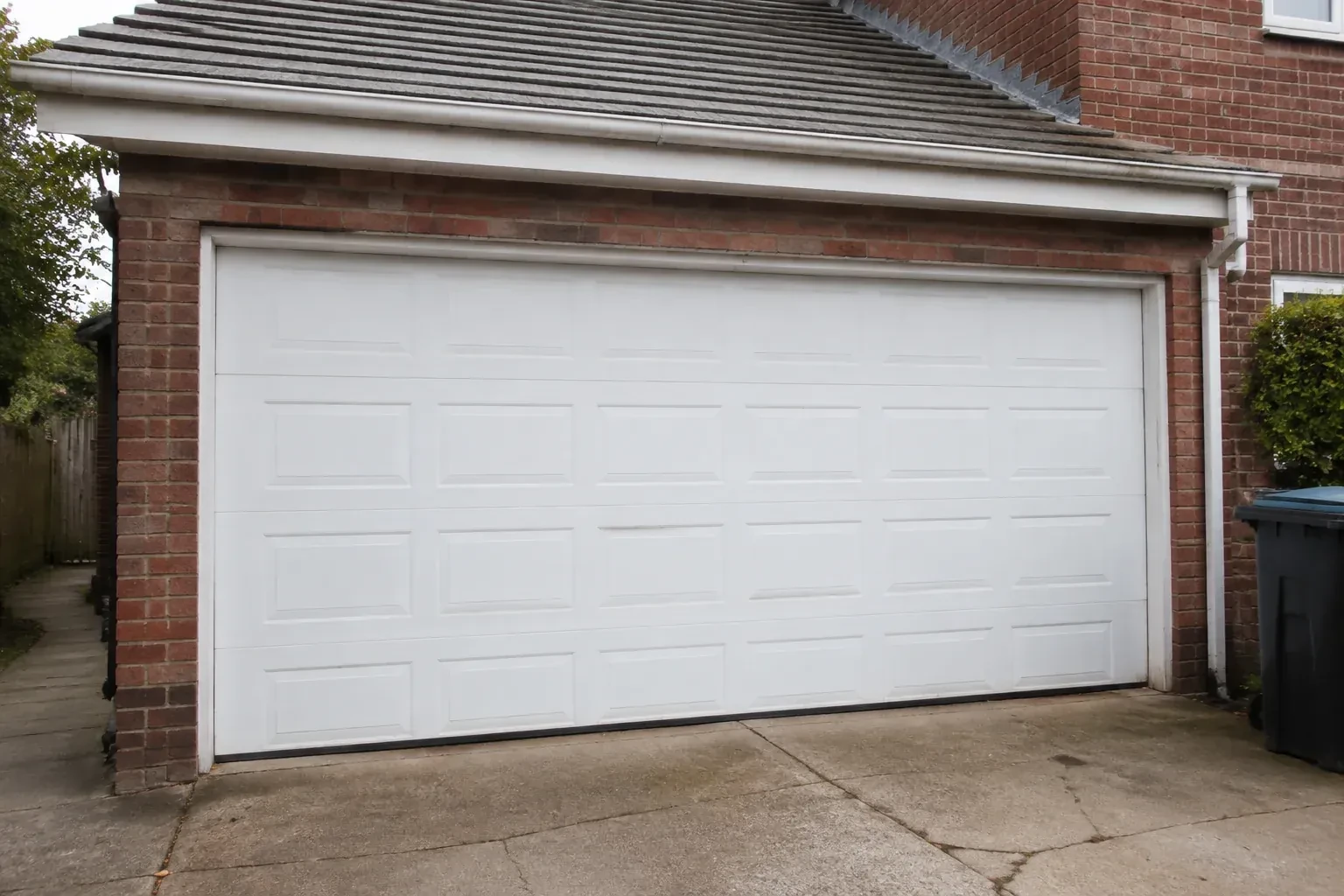
What maintenance can I do myself?
Keep the door path and seal contact areas clean, visually observe cables and rollers from a safe position, and use designated handles for occasional manual checks. Test operator safety functions as its instructions describe. Adjustments to springs, cables or bottom fixtures remain technician work because those components carry the counterbalance forces.
What maintenance can a homeowner handle?
Owners can keep the threshold clear, wash the sections, clean photo eyes, inspect seals and observe rollers, cables and hinges from a safe position. Manuals describe routine reversal, sensor and balance checks and identify suitable lubrication points. Spring tension, lift cables and bottom brackets are serviced professionally because those parts hold the forces that counterbalance the door's weight.
Can reinforcement be added to my current door instead?
Sometimes a door manufacturer provides a documented reinforcement arrangement for an existing model and size. Adding generic struts does not create a known rating by itself because tracks, rollers, hinges, anchors, sections, and jamb connections also share the load. The existing label and construction should be identified before deciding whether a supported upgrade path exists or replacement is more appropriate.
Why is spring and cable work handled by trained technicians?
Springs store the force that offsets the door's weight, and lift cables transfer that force through drums or pulleys. Installation requires the door to be secured, the correct components identified and tension applied with purpose-made tools. A trained method keeps the loaded system controlled while balance, cable seating and attachment points are adjusted together for the completed door.
Could permits or structural review be part of the project?
A straightforward replacement in an unchanged opening differs from work that widens the opening, changes the supporting header or forms part of a larger renovation. Commercial settings may add other project requirements. The assessment identifies visible structural and site conditions, while the proposal should state who confirms permit, design and electrical responsibilities that apply to the specific property.
What happens if the opening dimensions change during the build?
The revised finished width, height and surrounding clearances are measured and compared with the selected door package. A small framing change can affect section size, track position, seals or spring specification, so compatibility is confirmed before installation proceeds. The responsible project party decides how the building work is corrected or the selection is revised. Recording the accepted dimensions gives the builder, supplier and installer one shared basis for the next step.
Why does the door reverse near the floor?
A reversal can start with a blocked or misaligned photoelectric sensor, a distorted sensing edge, resistance in the track, an incorrect close limit or a control-circuit issue. Inspection covers the clear opening, sensor alignment and wiring, bottom edge and mechanical travel. The source is corrected first, then the protective response is tested through several complete cycles.
How should we prepare the loading area?
Move vehicles, pallets and loose packaging away from both faces of the opening, and identify an alternate route for staff and deliveries. Provide access to the control station, disconnect and any door records. A facility contact who understands normal operation and can authorise testing makes it easier to reproduce the complaint under controlled conditions.
What information helps assess feasibility from photos?
Useful photos show the full inside opening, both track sides, the wall above the header, the complete ceiling run, spring and shaft area, opener, beams, lights and other obstructions. Include a wider image showing the planned vehicle lift or equipment zone. Measurements remain necessary, but clear images help identify questions and prepare an efficient site assessment.