Repairs · Whitchurch-Stouffville
Garage Door Manual Lock Repair
The power is out in a storm, you pulled the red cord and lowered the door by hand, and now you want to lock it.
In plain words
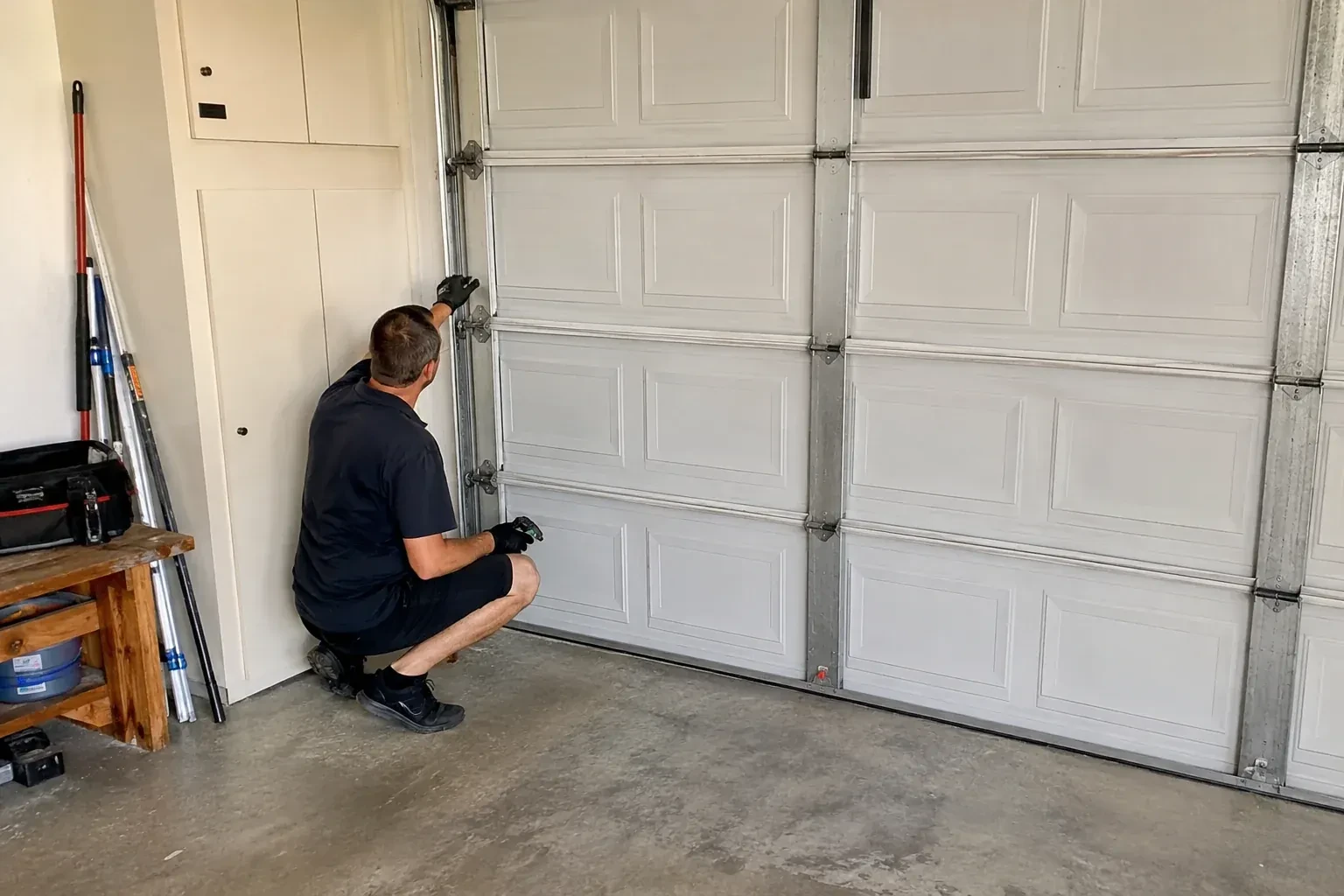
The visit runs in a settled order. On the phone you describe the lock, the door, whether an opener is fitted and whether the lock is currently jammed. On site the opener is disconnected, the door is closed by hand and checked for level. The lock is then examined piece by piece: handle, spindle, centre mechanism, bars, guides, cylinder, fasteners and the track slots. Adjustments are made first, worn parts replaced second, and the lock is cycled from both sides with the door shut. Finally the opener is reconnected, the door runs full cycles, and you are shown how the lock and the opener are meant to be used together.
How the visit goesIt is a February morning and the key goes only halfway into the garage handle. Yesterday's melt ran down the door face and into the keyway, and overnight it set like glass. The key flexes; the cylinder stays put.
Garage Door Manual Lock Repair
How the visit goes
Which lock the door actually has
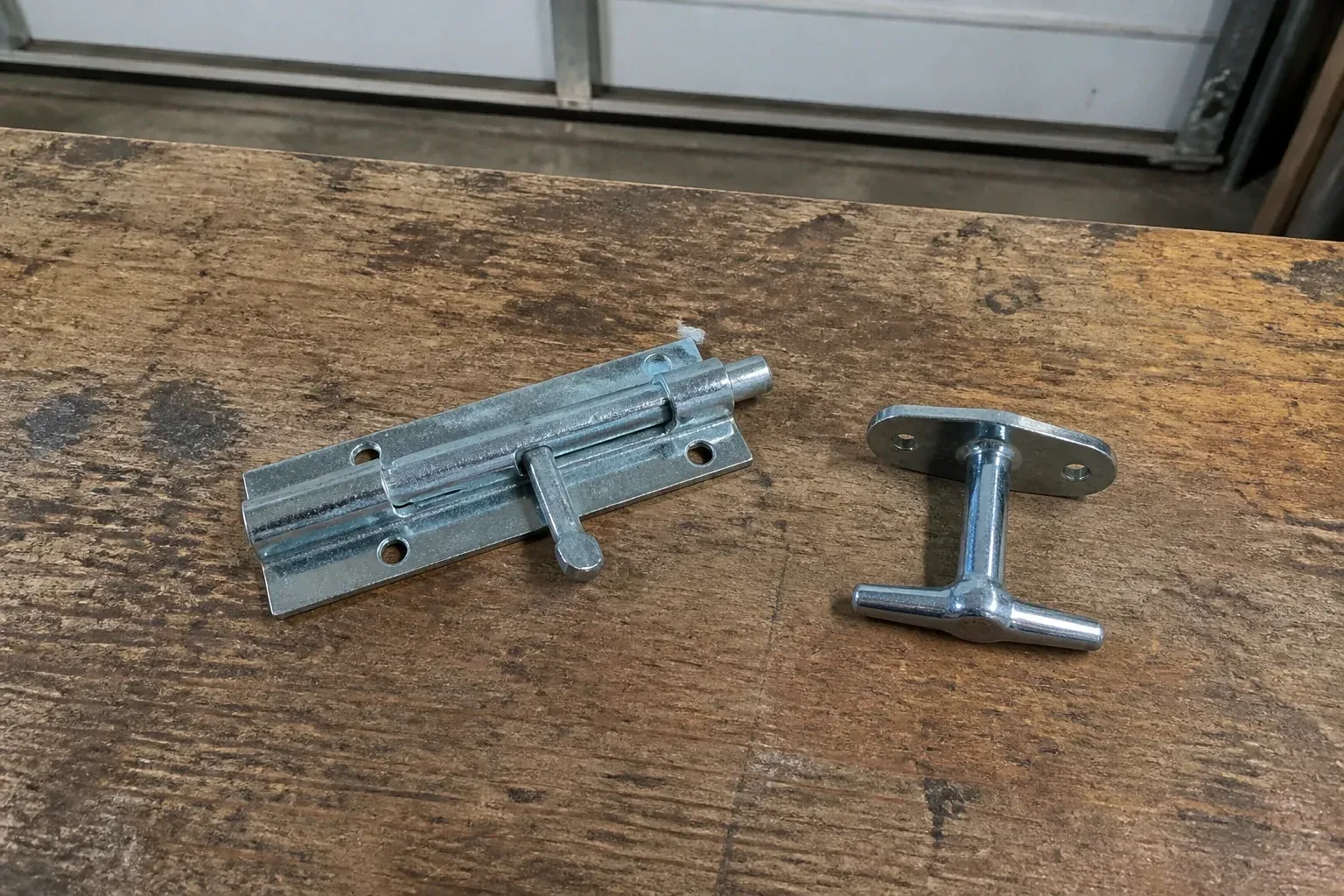
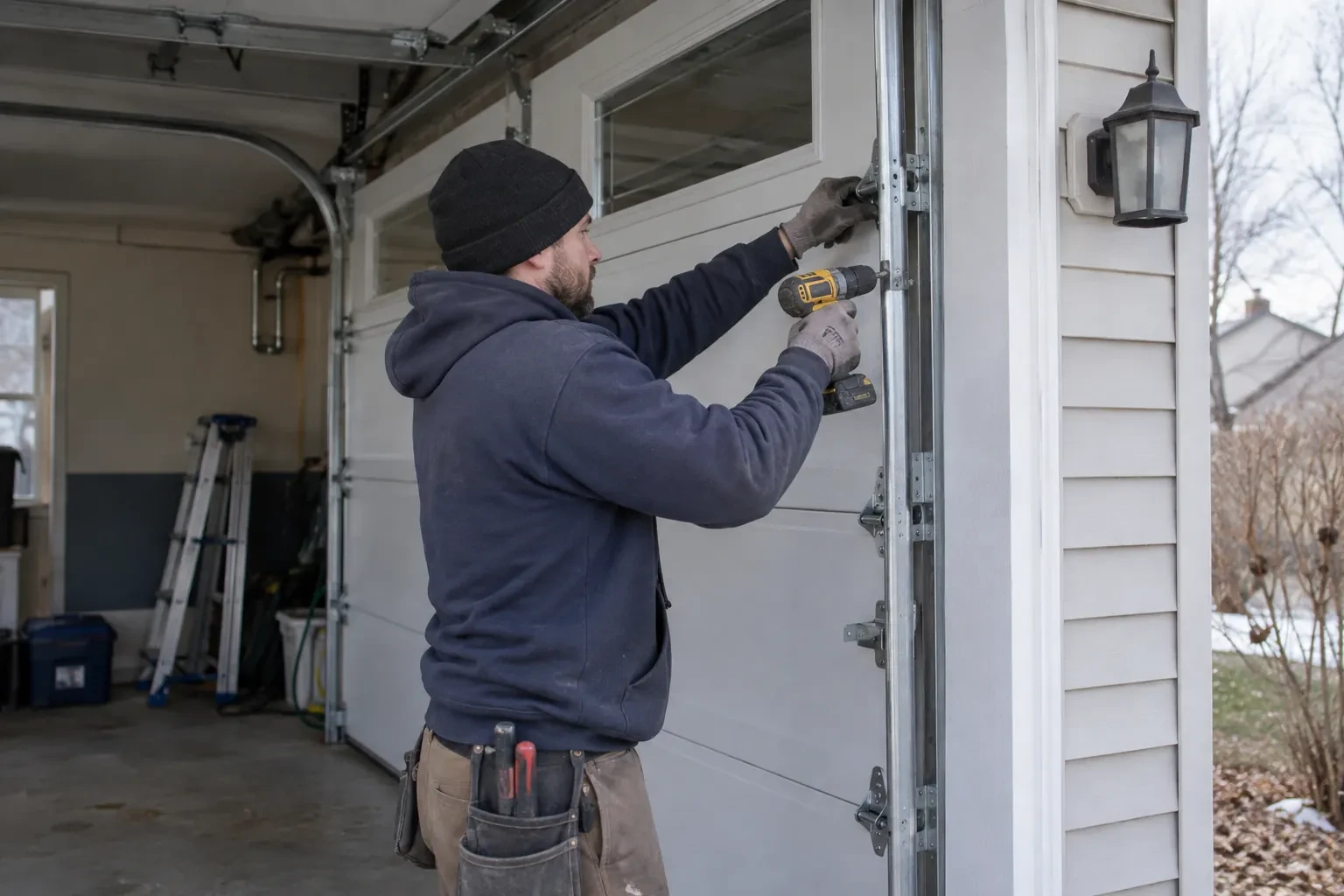
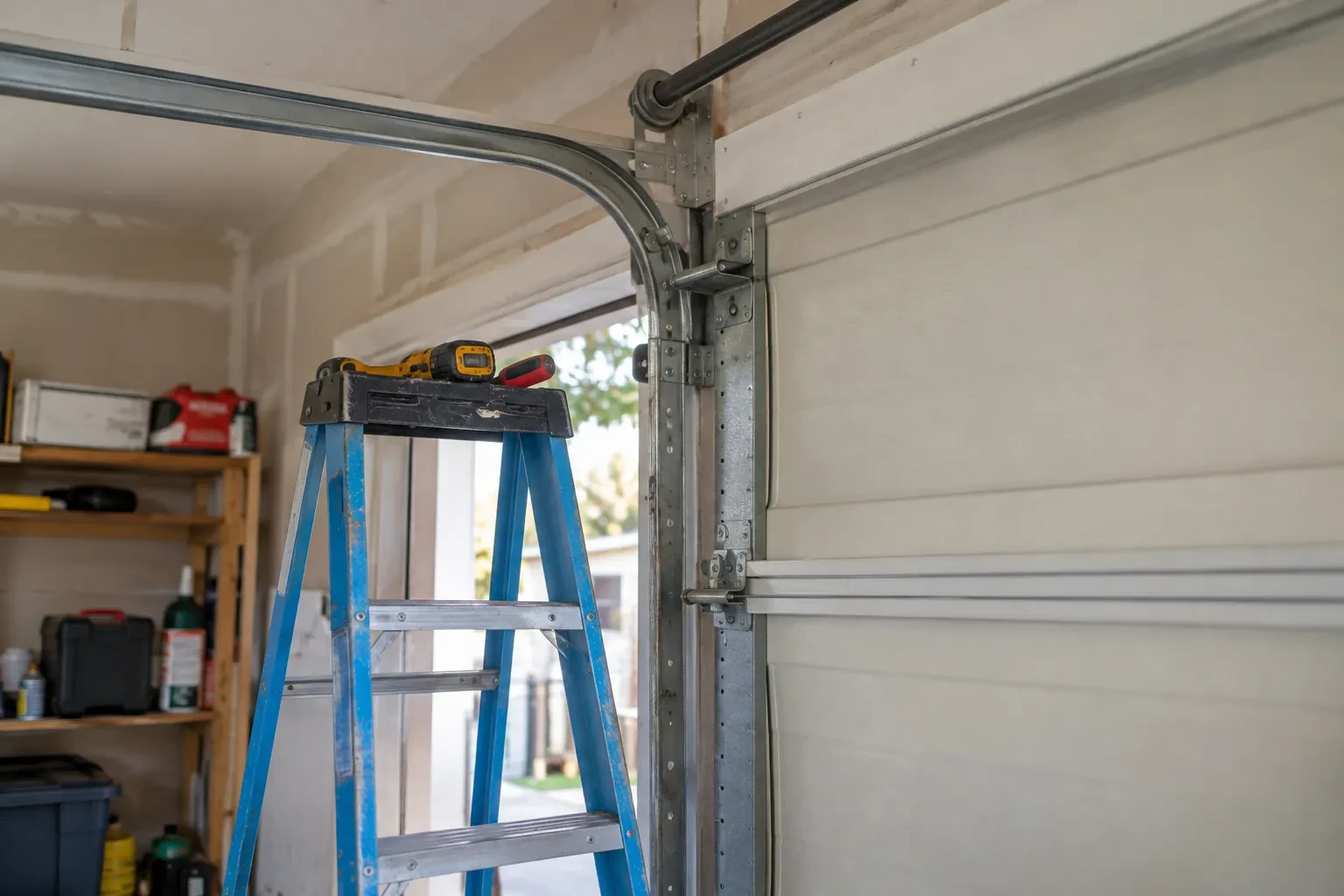
Garage doors carry a few different locks and the first job is to name the one in front of the technician. An inside slide bolt is a short bar on the door's edge that shoots through a slot in the vertical track; some are snap latches that lock on their own when the door closes. An outside keyed T-handle or L-handle works a centre mechanism that throws a bar into each track, or on some models pulls a cable to release a spring latch at each side. Some doors have a keyed cylinder on the side that operates the slide bolt from outside. Each has its own parts and failure points, so naming it correctly sets up everything that follows.
Fitting a new keyed handle set
When the outside handle is cracked, corroded through or of a pattern that no longer has parts, a complete T-handle set is fitted: exterior handle with cylinder, spindle, inside turn handle and the mounting hardware. The technician measures door thickness to choose spindle length and bolt length, and checks that the new handle's mounting holes match the existing cutout or dresses the opening to suit. On insulated doors a sleeve keeps the spindle centred through the foam. The set is tightened evenly so the handle turns without rubbing the door face, the cylinder is tested with its keys, and the connection to the bars is set so lock and release positions are definite.
A lock with a clean throw and a clear release
The finished lock feels definite. The slide bolt or handle moves with light effort, stops with a click as the bar seats in the track, and comes back just as readily. With the door shut and locked, a push from outside meets solid resistance at both sides rather than a wobble on one. Released, both bars sit back behind the track edge so the door rises with nothing to catch. The outside handle turns without rocking and the key goes in and out without a wiggle. Before leaving, the technician has you operate the lock yourself from inside and out, so the action is familiar and any stiffness is dealt with while the tools are still on the floor.
Garage Door Manual Lock Repair
In the van
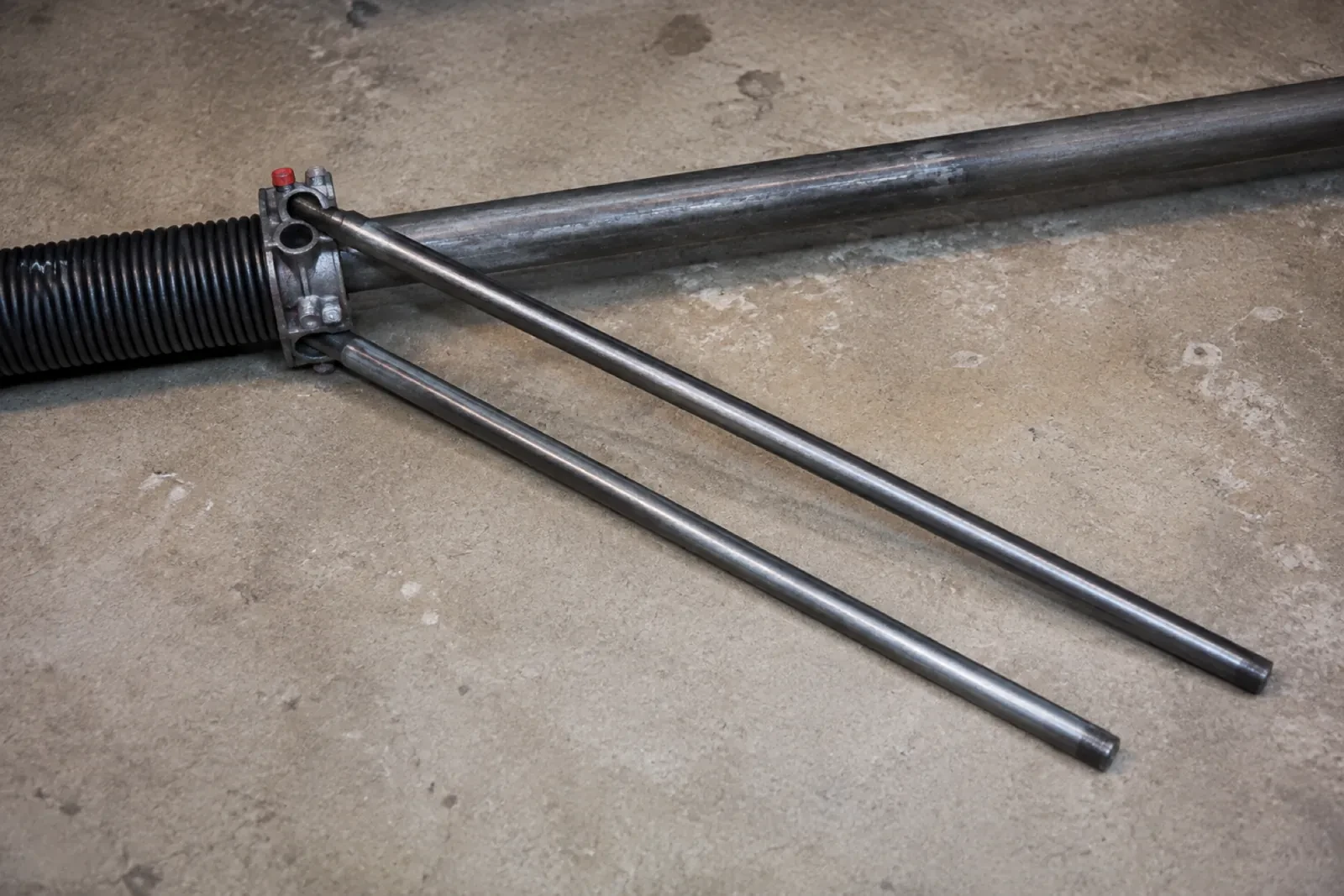
Lock cylinder with tailpiece
Inside turn handle and spindle
Carriage bolts and backing plates
Lock bar guides
Spring-steel lock bars
Garage Door Manual Lock Repair
What affects the quote
Whether an opener shares the door
A powered door adds the coordination step: removing or disabling the bars, demonstrating the console lock-out, or installing an automatic deadbolt if you choose one. Each is priced as chosen.
Condition of the bars and guides
Bars that are merely stiff are cleaned and lubricated; bars that are bent are replaced and cut to length, and rusted guides are renewed. The quote follows what the bars turn out to need.
Rekeying the lock to match your other doors
Some households want the garage's manual lock to turn with the same key as the house, rather than carrying a separate one. Matching a cylinder to an existing key, or cutting a fresh set for both, is arranged once the existing hardware has been looked at.
What to have ready
- Are the lock bars bent, rusty or hanging loose?
- Is the lock a sliding bar inside, a T-shaped handle outside with a key, or both?
- Would you like the garage lock keyed to match your house key?
Garage Door Manual Lock Repair: questions
QuestionsMy key will not turn in the cold. What is happening?
Meltwater has run down the door face into the keyway during a thaw and frozen overnight, or cold has stiffened old lubricant inside the cylinder. Lock de-icer or gentle warmth frees it; hot water is avoided because it refreezes and can crack cold metal. Afterwards the cylinder is dried and given a dry graphite or PTFE lubricant that sheds moisture instead of trapping it.
The handle turns but the bars stay put. What has broken?
Something in the short chain between the handle and the bars. The square spindle may have twisted or sheared, the set screw holding the inside knob may have let it spin free, the cam inside the centre body may have worn round, or the return spring may have snapped. The inside cover comes off to see which, and the failed part or the whole mechanism is replaced to suit.
Can the garage handle be keyed to my house key?
Often, yes. The cylinder in a T-handle is a small pin-tumbler lock, and if it shares a keyway with your house locks it can be pinned to the same combination. Where the keyways differ, a compatible cylinder can usually be fitted to the handle so the match is possible. Bring a house key to the visit and the technician will tell you on the spot.
Related services
- Garage Door Tune-UpOn windy nights the door rattles in its frame, there is a line of daylight along one side, and the bottom seal has gone hard and flat.
- Off-Track Garage Door ResetYou tapped the door with the bumper while backing in, barely a nudge, and now the bottom corner has swung inward.
- Garage Door Panel ReplacementAfter an overnight freeze the door stuck to the slab, the opener strained, and something gave.