Repairs · Stouffville
Garage Door Manual Lock Repair in Stouffville
The power is out in a storm, you pulled the red cord and lowered the door by hand, and now you want to lock it.
In plain words
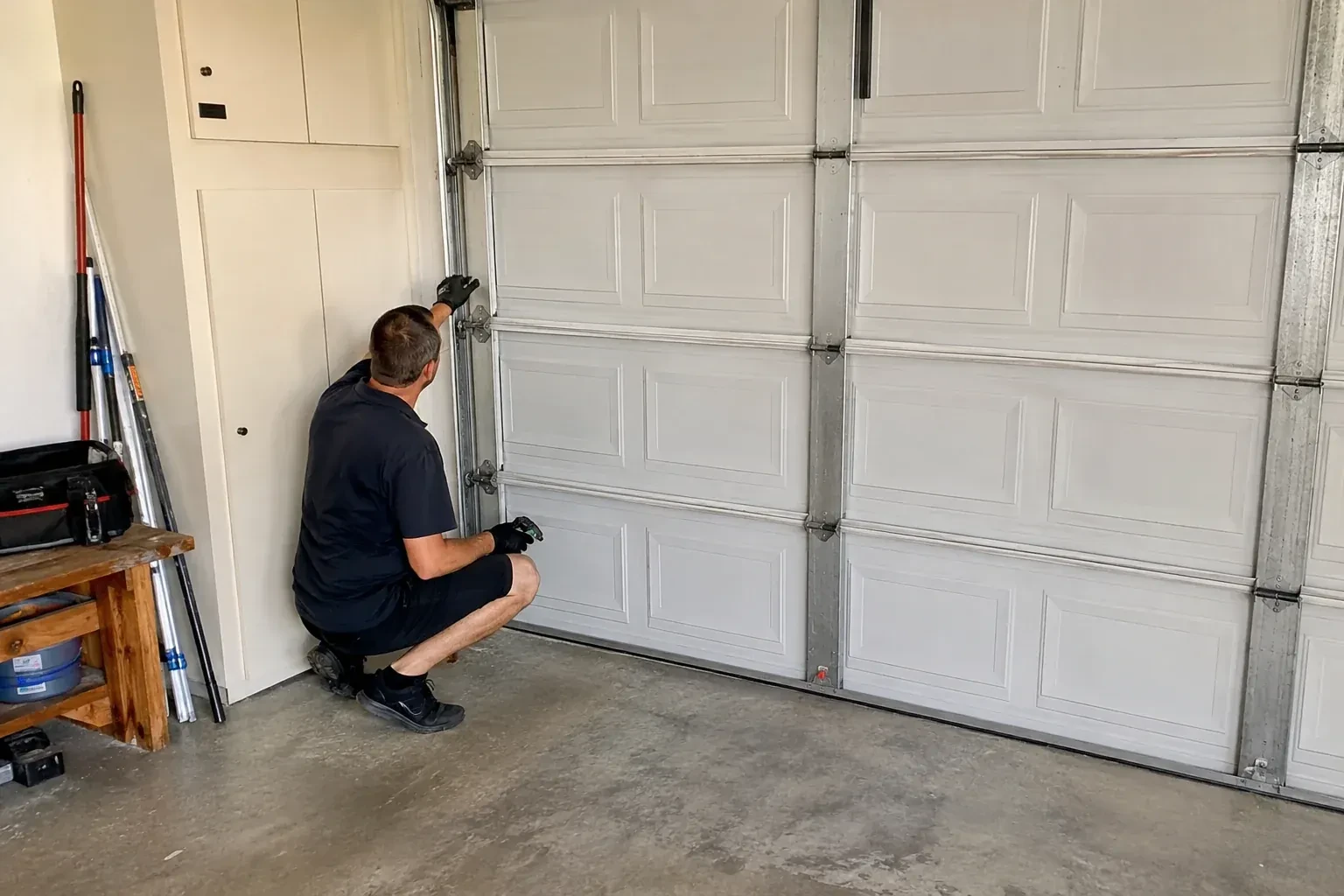
Many lock complaints turn out to be door complaints. The bar on a slide lock or a T-handle has to land in a small slot, and it only gets there if the door stops exactly where it stopped when the lock was fitted. A floor that has heaved, a track bracket that has loosened, a bottom seal that has flattened, or ice under the door all shift that landing point. The visit begins with the door: closed by hand, checked for level and for how it meets the floor and the tracks. With the door where it belongs, the lock often needs only a small adjustment to its guides.
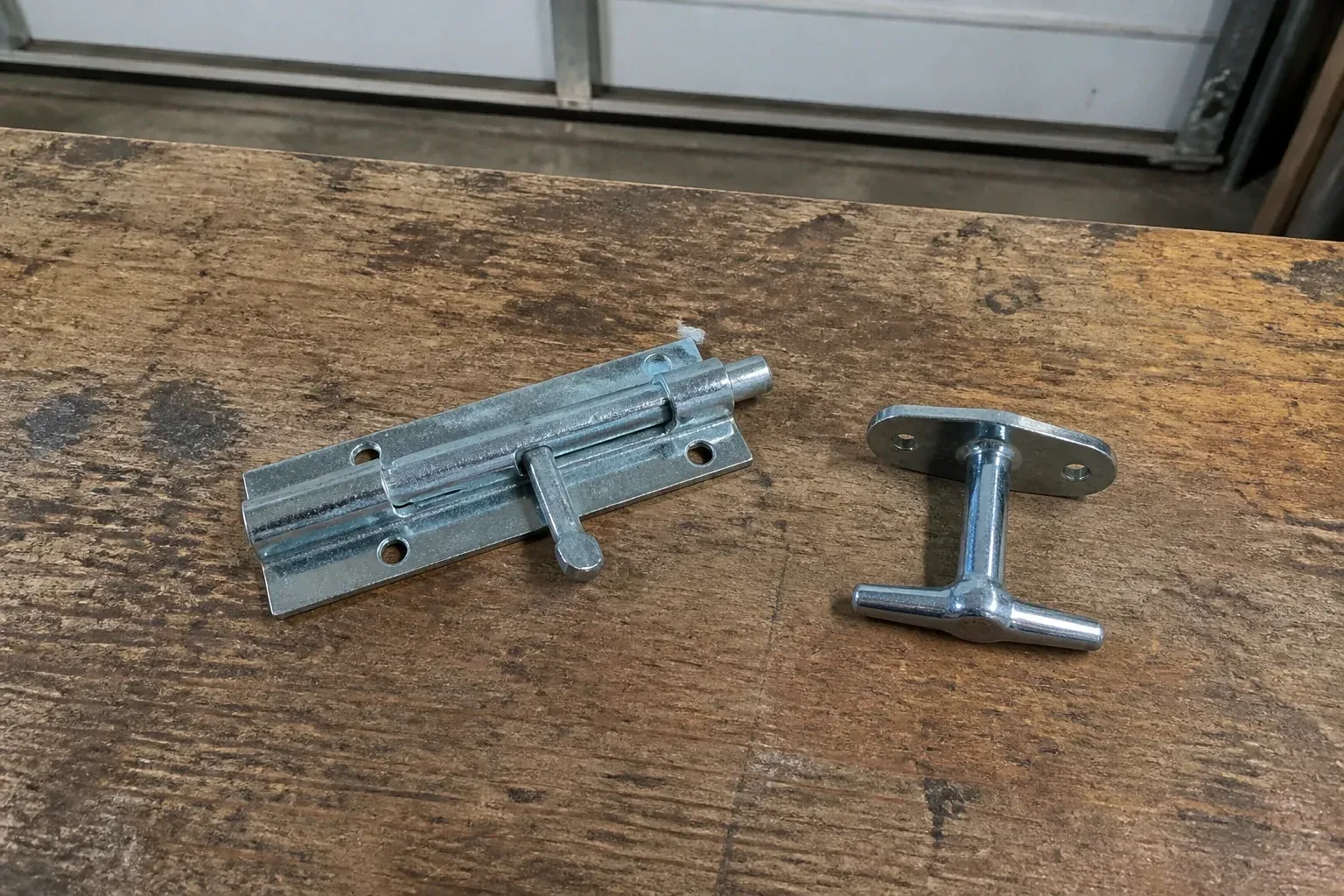
How the visit goesThe power is out in a storm, you pulled the red cord and lowered the door by hand, and now you want to lock it. The slide bolt on the inside edge is welded in place by years of rust and refuses to budge.
Garage Door Manual Lock Repair
How the visit goes
Signs the opener and the lock have met
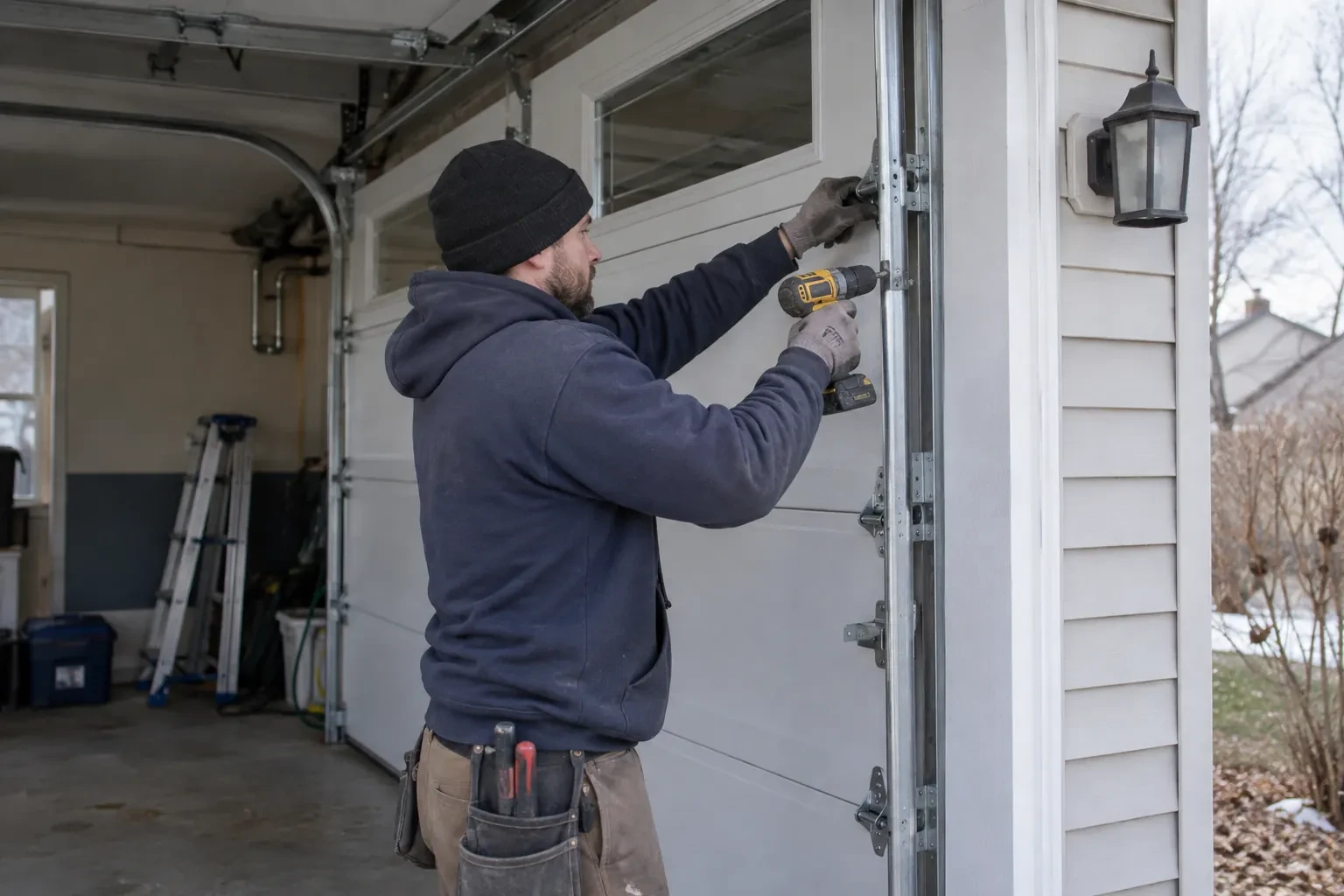
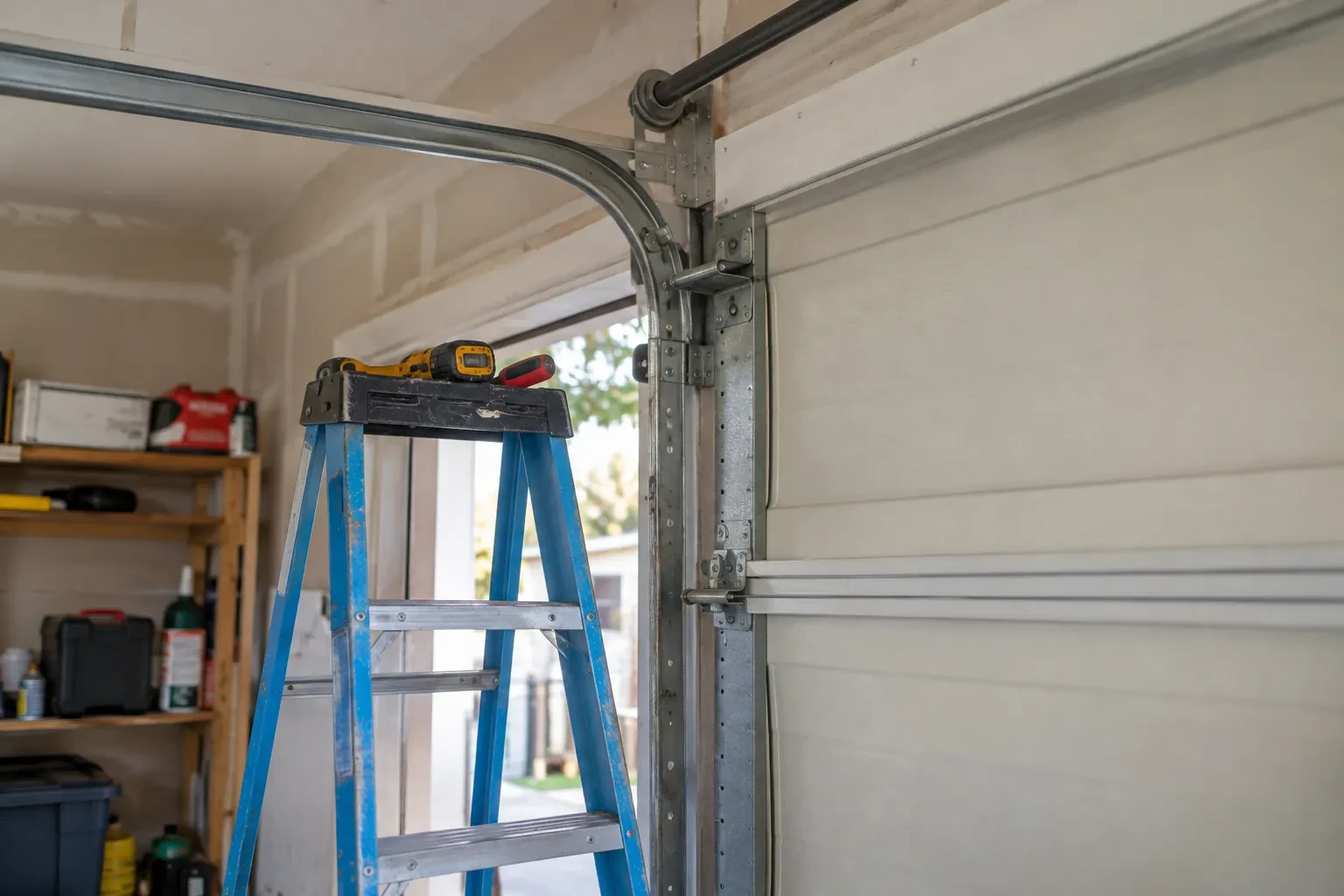
When an automatic opener shares the door, the technician looks for evidence that the two have collided: a bar bent at the track, a lock body pulled part-way from the section, a crease above the lock, a bent opener arm or a bracket strained at the top panel, and an opener that labours or reverses. The current arrangement is noted as well. Has the lock been disabled as opener makers direct, left live with no reminder, or removed altogether? Does the wall console have a lock-out feature the household knows about? These observations decide what is repaired and, just as importantly, how the door will be set up so the same thing does not happen again.
Anchoring the lock in tired material
A lock is only as sound as what it is screwed to. Where screws have pulled through a thin steel skin and left oval holes, the technician fits carriage bolts through the section with a backing plate on the inside, spreading the load across a wide patch of metal. On a wooden door with softness around the handle or along the stile, the decayed wood is cut back and a hardwood filler block or backing plate is let in, and the lock and guides are fixed to that. Holes that have grown are plugged and redrilled. The result is a handle that turns without rocking and guides that hold the bar where it was set.
One rule at the wall button
Where an opener shares the door, opener makers direct that the manual lock be removed or positively disabled rather than left in service on habit alone. The technician demonstrates the opener's own lock-out feature at the wall control and shows everyone who uses the garage how to tell at a glance whether the bars are in or out. Spring-loaded snap latches are left with their holding catch explained, since they lock on their own when the door closes. Most families settle into the routine after a few days, and the label is there for visitors, house-sitters and the one morning when someone is half asleep.
Garage Door Manual Lock Repair
In the van
Lock cylinder with tailpiece
Inside turn handle and spindle
Carriage bolts and backing plates
Lock bar guides
Spring-steel lock bars
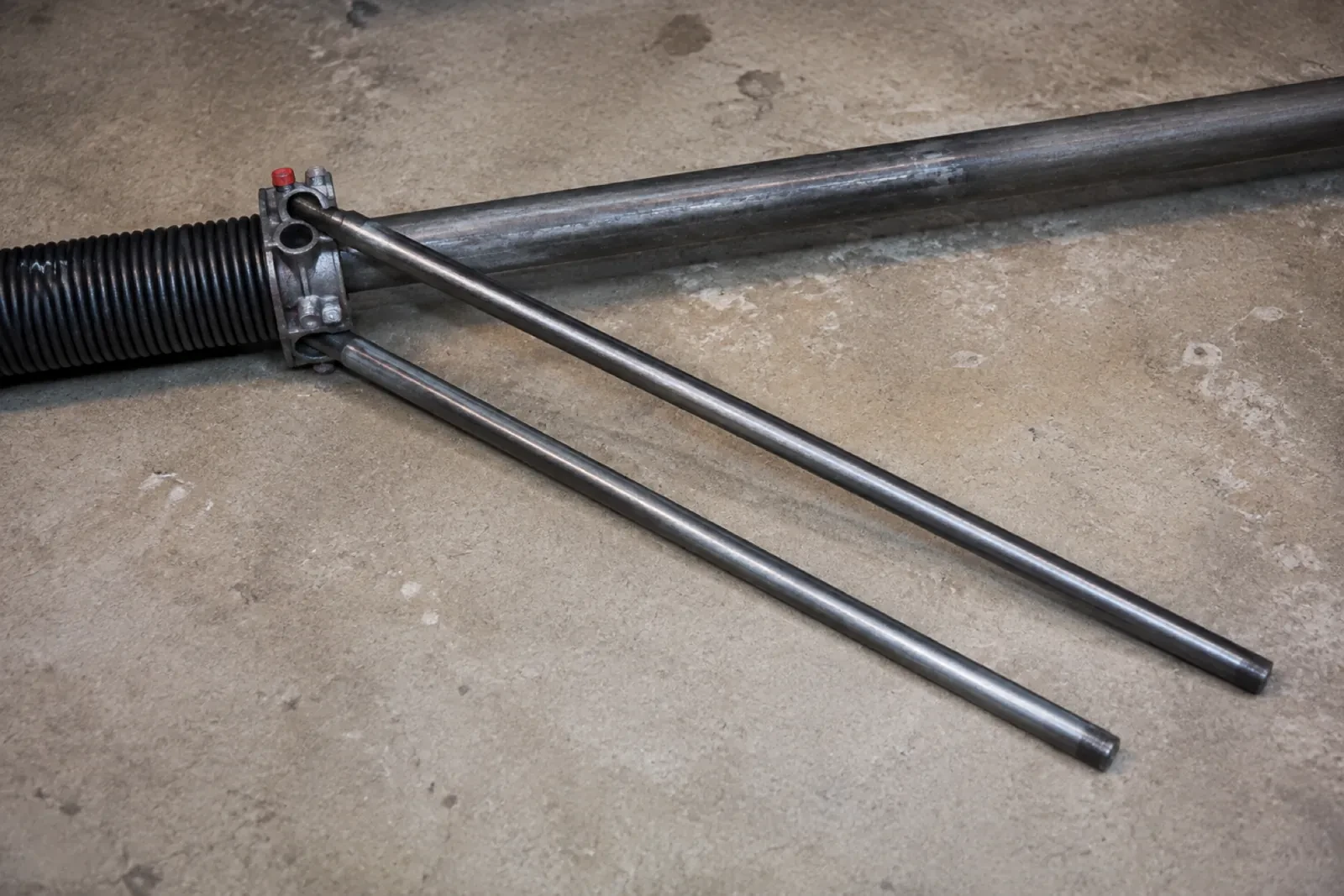
Garage Door Manual Lock Repair
What affects the quote
Cylinder work and the number of keys
Rekeying, a new cylinder and each key cut are separate items. Keying the garage to match the house key adds a little pinning time and is listed on its own.
Steel skin or wood
Thin steel that has let the screws pull, or wood gone soft around the handle, calls for carriage bolts, backing plates or a filler block. That reinforcement is its own line in the quote.
Rekeying the lock to match your other doors
Some households want the garage's manual lock to turn with the same key as the house, rather than carrying a separate one. Matching a cylinder to an existing key, or cutting a fresh set for both, is arranged once the existing hardware has been looked at.
What to have ready
- Would you like the garage lock keyed to match your house key?
- Is there an automatic opener on this door?
- Is it one door or two, and are there other garage doors on the property?
Garage Door Manual Lock Repair: questions
QuestionsMy key will not turn in the cold. What is happening?
Meltwater has run down the door face into the keyway during a thaw and frozen overnight, or cold has stiffened old lubricant inside the cylinder. Lock de-icer or gentle warmth frees it; hot water is avoided because it refreezes and can crack cold metal. Afterwards the cylinder is dried and given a dry graphite or PTFE lubricant that sheds moisture instead of trapping it.
The handle turns but the bars stay put. What has broken?
Something in the short chain between the handle and the bars. The square spindle may have twisted or sheared, the set screw holding the inside knob may have let it spin free, the cam inside the centre body may have worn round, or the return spring may have snapped. The inside cover comes off to see which, and the failed part or the whole mechanism is replaced to suit.
Can the garage handle be keyed to my house key?
Often, yes. The cylinder in a T-handle is a small pin-tumbler lock, and if it shares a keyway with your house locks it can be pinned to the same combination. Where the keyways differ, a compatible cylinder can usually be fitted to the handle so the match is possible. Bring a house key to the visit and the technician will tell you on the spot.
Related services
- Garage Door Tune-UpOn windy nights the door rattles in its frame, there is a line of daylight along one side, and the bottom seal has gone hard and flat.
- Off-Track Garage Door ResetYou tapped the door with the bumper while backing in, barely a nudge, and now the bottom corner has swung inward.
- Garage Door Panel ReplacementAfter an overnight freeze the door stuck to the slab, the opener strained, and something gave.