Openers · Stouffville
Belt-Drive Opener Repair in Stouffville
The door used to glide up with a soft hum.
In plain words
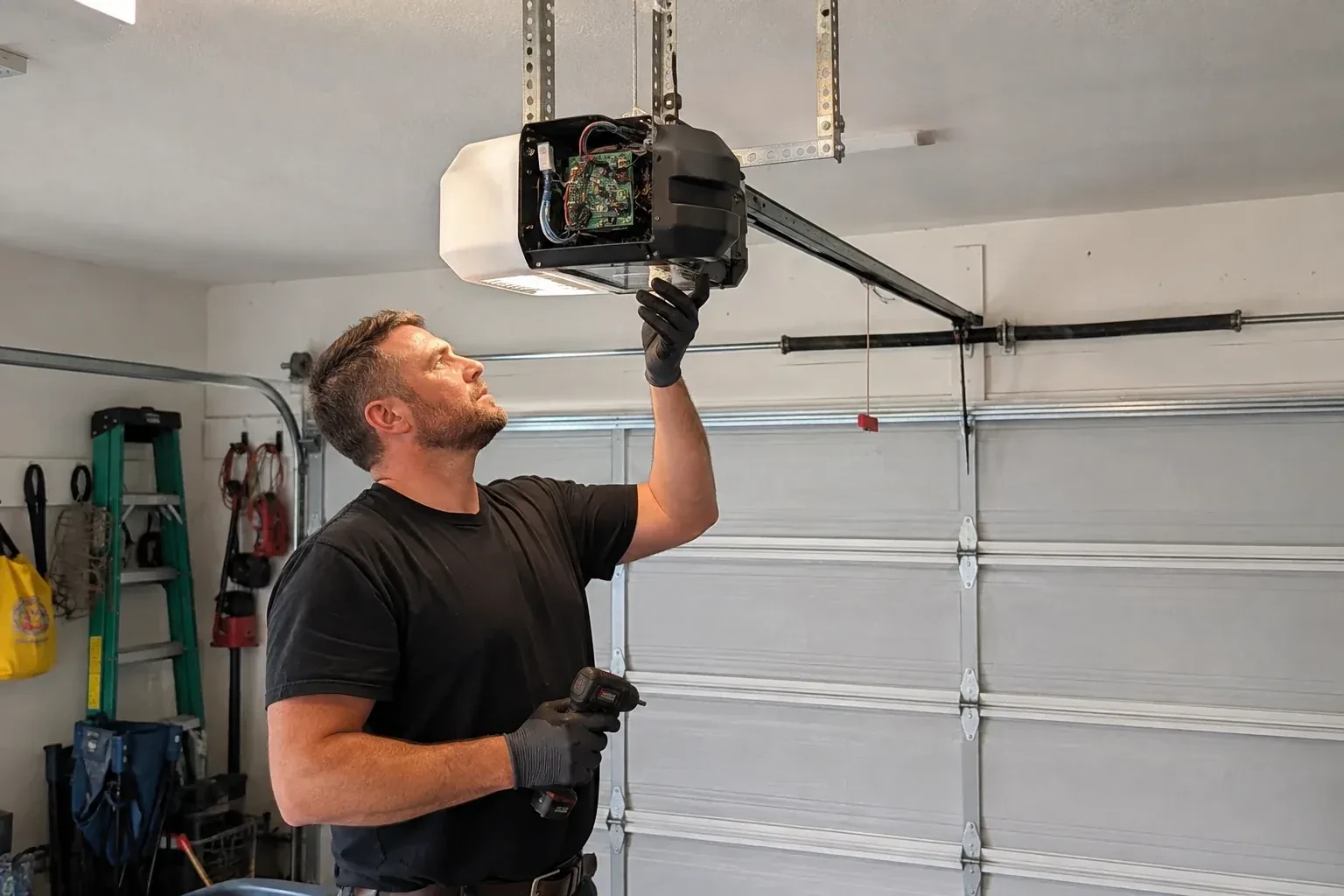
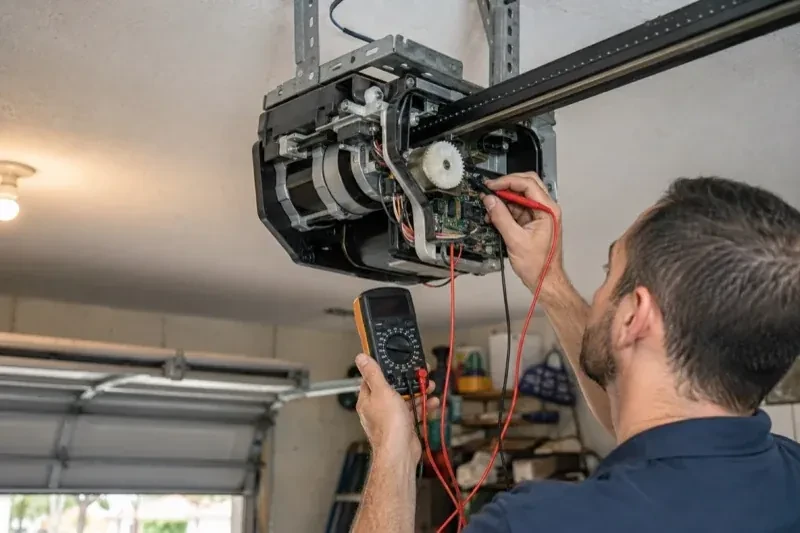
Belt-drive opener repair fixes the part of a belt-driven operator that has failed. The drive train is simple: a reinforced rubber belt runs from a sprocket on the motor head, along the rail, around an idler pulley at the far end and back, pulling a trolley that is linked to the door by an arm. When the belt stretches, cracks, sheds teeth or loses its clip, or the trolley, sprocket or pulley wears, the door stalls, clatters or stops short. The technician tests the door's balance, finds the worn piece, replaces or adjusts it, brings the motor and trolley back into step and re-runs the safety tests.
How the visit goesIt is minus twenty in the detached garage and the door climbs in jerks, the belt stiff as a board. By the afternoon, when the sun has been on the door, it runs almost normally again.
Belt-Drive Opener Repair
How the visit goes
Reading the belt from end to end
With the trolley run to one end of the rail and then the other, the whole length of the belt passes under the technician's eye and fingers, on the top run and the return. What they are looking for is specific: cracks across the back of the rubber, a glazed shine that says the belt has been slipping, an edge gone fuzzy from rubbing, a stretch where the teeth are flattened or torn away, cords showing through, and the state of the clip or link where the belt meets the trolley. Each of these points to a different cause as well as a different repair, and where the wear sits along the belt says a lot about which.
Finishing the door around the belt
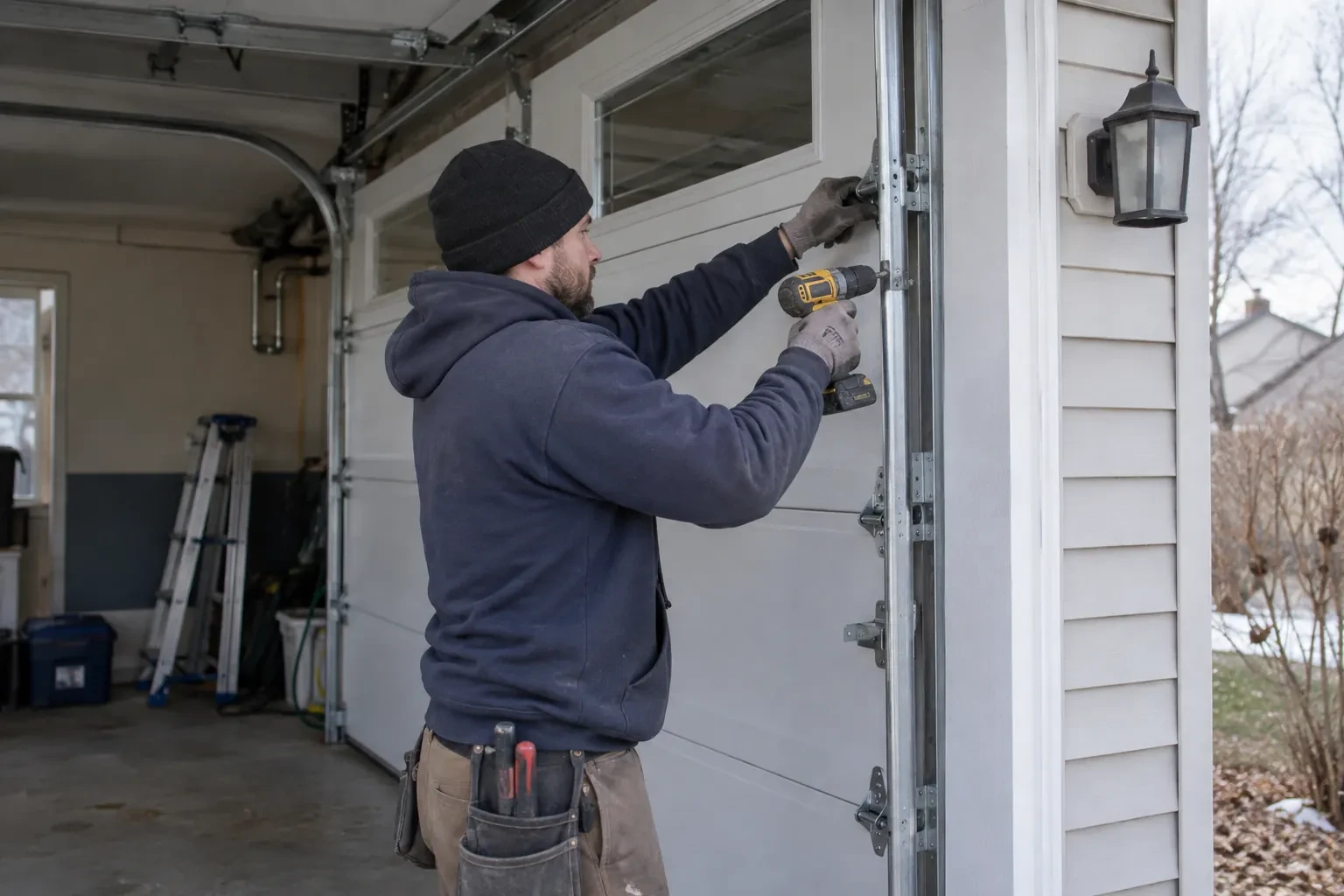
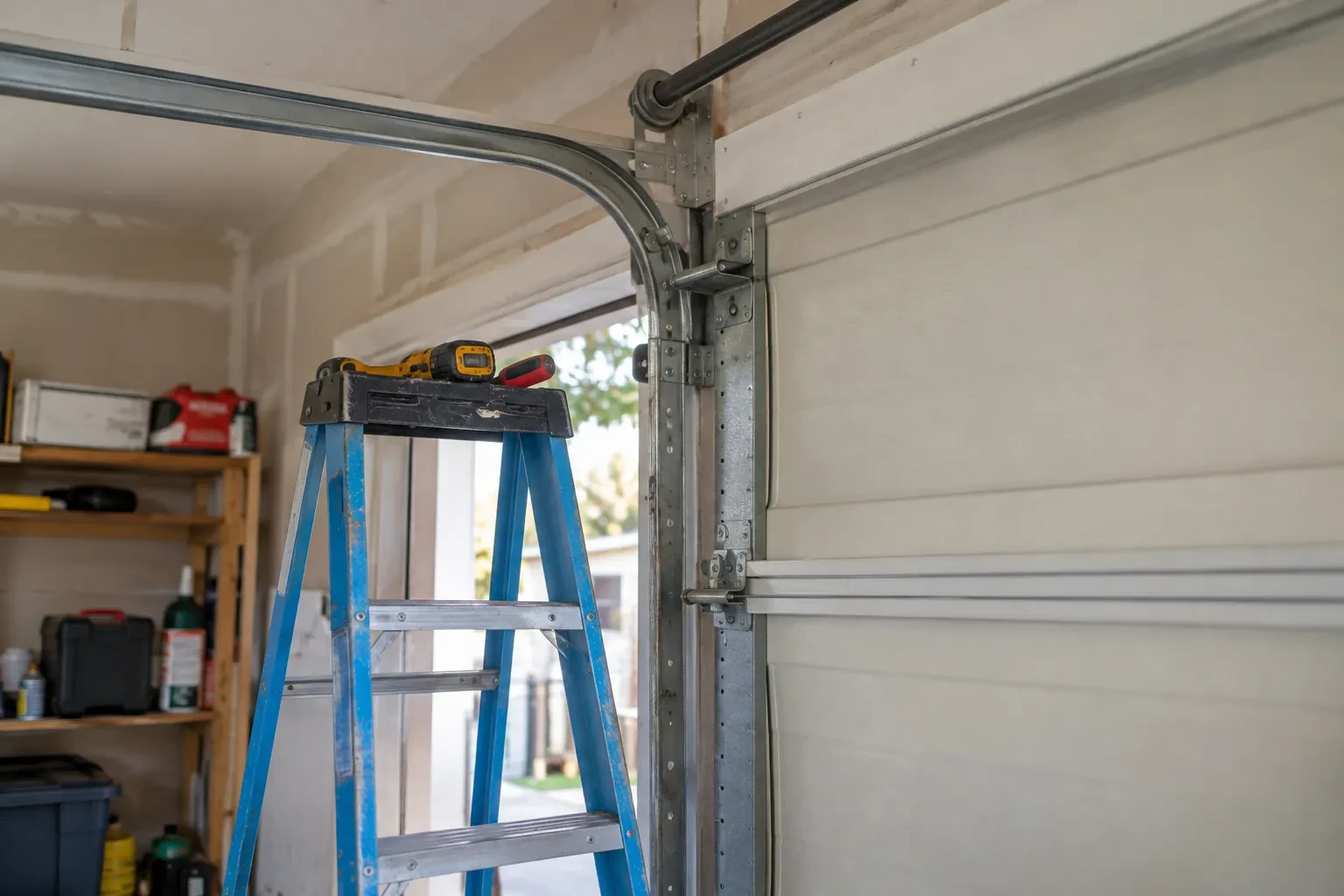
A belt drive is only as quiet as the door it moves, so the visit closes with the door hardware. Hinges, rollers and springs get a garage-door lubricant, cold-rated for a detached garage; the belt itself is wiped clean and left dry, because grease softens the rubber and packs the teeth with grit. Rail hangers are snugged, the manual slide lock is disabled so it can never be thrown against the motor, and the red release handle is confirmed to hang no more than about 1.8 m. The wall control is checked for height and the photo eyes for alignment, and the operator's cover goes back on.
A door that is balanced under a belt that is right
Because the door was tested by hand before the belt was touched, you leave with the springs and the drive in agreement. Once a season, with the door closed, unplug the operator, pull the release and lift the door to about a metre: it should stay there. If it drifts down or creeps up, the springs have moved and the belt will soon be working harder than it should, so book a spring adjustment before the belt shows it. A door that hesitates at one point in its travel with the operator disconnected is telling you about a roller or a hinge rather than the belt, and that too is a small visit.
Belt-Drive Opener Repair
In the van
Idler pulley and bearing
2x4 offcut for the reversal test
Inner and outer trolley
Rail joint brackets and stop bolts
Photo-eye sensor pair
Belt-Drive Opener Repair
What affects the quote
How far the technician drives
A garage on the edge of town and one down a long rural road take different time to reach, and that trip is a line of the quote.
Adjustment or replacement
A tension adjustment with the safety tests is the smallest visit. A new belt, with a fresh clip, phasing and relearned limits, is a larger one, and the inspection decides which you need.
Rail straightening or re-hanging
A bent rail, a sagging hanger or a misaligned rail joint that has been fraying the belt is corrected as part of the repair so the new belt runs clean, and the labour appears on the quote.
What to have ready
- What make and model is printed on the motor head, and roughly how old is it?
- How wide is the door, and is it a single or a double?
- Is the garage heated and attached to the house, or a cold detached one?
Belt-Drive Opener Repair: questions
QuestionsI pulled the red cord during a power cut. Could that have caused this?
It can, if the door was open or out of balance when it was released. The release itself disconnects the trolley from the belt, so a falling door does not throw its weight onto the drive; the real risk is the door itself crashing down and damaging the tracks, hinges or panels. Nothing about the cord itself is harmful; it is designed to be used. The habit to keep is to release the door only when it is closed.
Should the belt be lubricated?
No. The belt is meant to run clean and dry; oils and sprays soften the rubber and gather grit in the teeth, which wears the sprocket. Lubricant belongs on the door instead: hinges, rollers and springs get a garage-door lubricant once a year. The gear inside the motor head takes a light grease when it is serviced, and that is the technician's job.
Why does my belt drive clatter like a chain drive now?
Sprocket noise on a belt drive almost always means tension is wrong in one direction or the other. A slack belt skips teeth on the sprocket and slaps the rail; a belt pulled too tight grinds on the sprocket and strains the motor bearings. Both sound harsh. Setting the tension spring to its proper length, and checking that the sprocket and idler pulley are not worn, brings the quiet back.
Related services
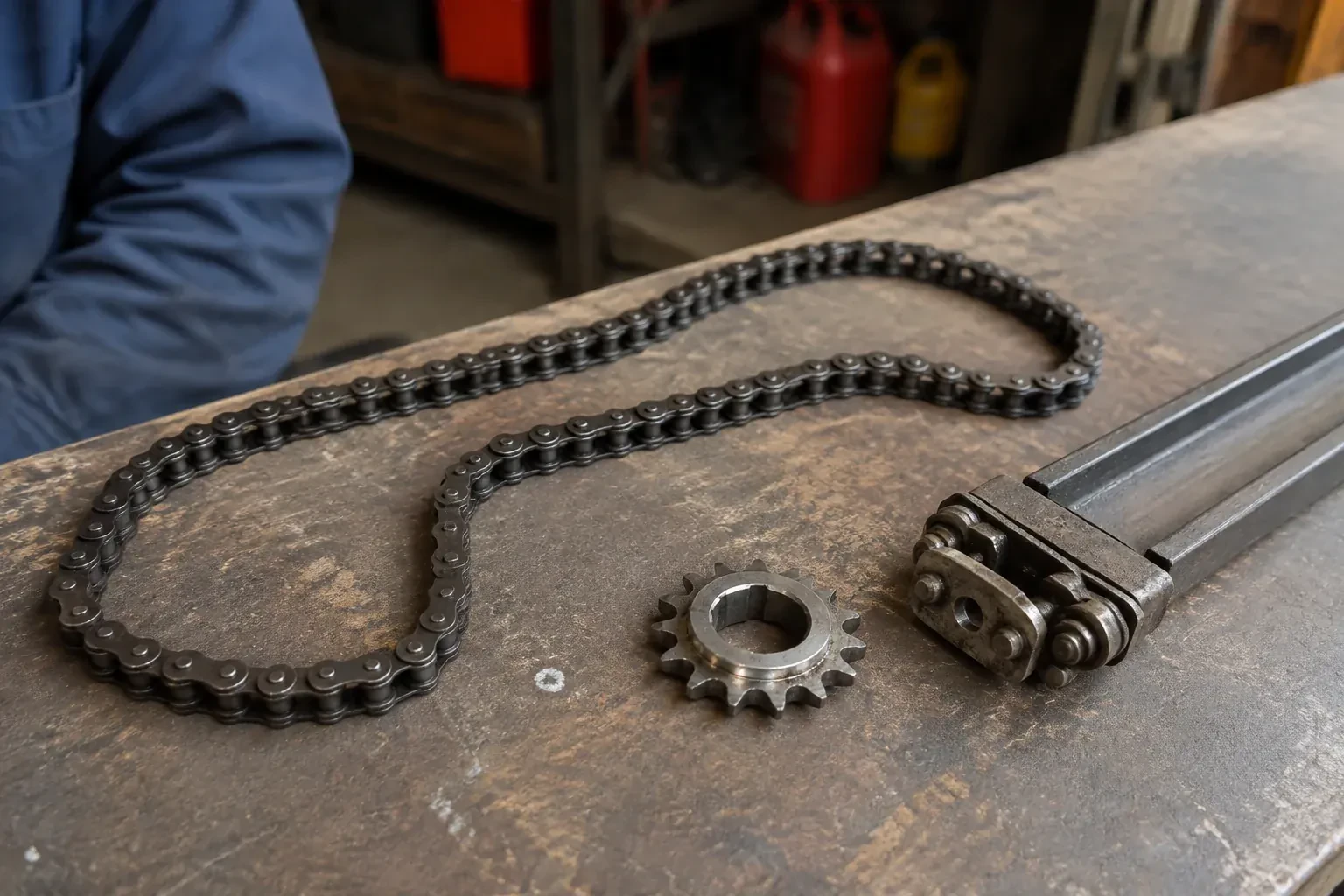
- Chain-Drive Opener RepairThe chain hangs in a loop under the rail and slaps against it on every cycle.
- Garage Door Opener ReplacementYou want the ceiling back.
- Photo-Eye Sensor Alignment or ReplacementSince shelving went up along the garage wall, the door will not close and both sensor lights are dead.