Springs · Whitchurch-Stouffville
Garage Door Cable Replacement
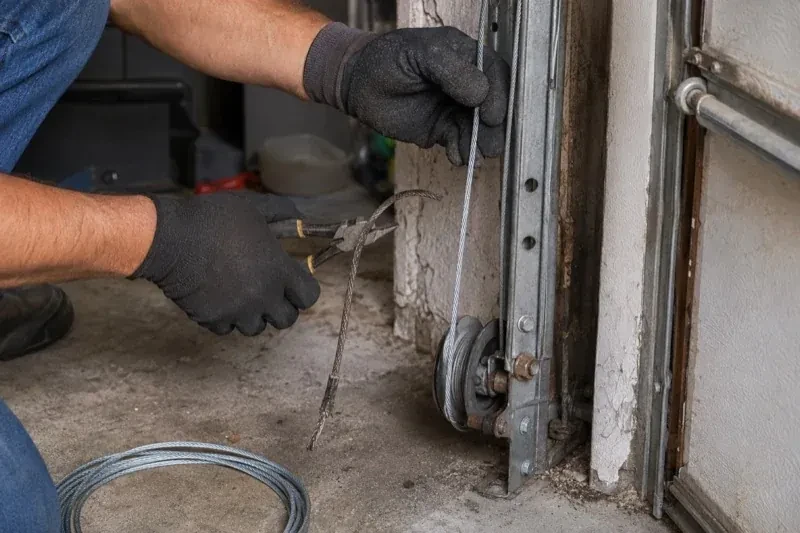
After years of slushy winters the cables look thinner near the bottom brackets, with rust streaks running down the door where they attach.
In plain words
A cable visit runs in a set order. First the opener is disconnected and the door clamped so nothing can move. Then the counterbalance is unloaded so the drums, cables and bottom brackets can be handled calmly. The old cables come off, the drums and brackets are inspected, and new cables of the correct specification go on. Both sides are tensioned evenly until the door sits level, then the springs are wound back to the turns the door height calls for. Finally the door is balanced by hand, the opener reconnected and its travel and reversing checked. You are shown the finished door working before the technician leaves.
How the visit goesThe cable has wrapped itself around the shaft above the door instead of sitting on its drum. When the opener runs, the door lurches, one side rises before the other, and the top panel twists.
Garage Door Cable Replacement
How the visit goes
Why the last cable failed
A new cable fitted onto the same problem does not last, so the technician wants the cause. Frayed wires along the length point to rubbing against a bent track or a rough drum. Rust at the loop points to slush at the floor. A cable that jumped its drum usually follows the door closing on something, a spring that has lost tension, or a drum that slipped. A snapped cable on a door that was level beforehand often means age and corrosion rather than misalignment. You will be asked what happened before the failure, because a shovel in the opening or a bump from the car is a fact only you can supply.
Extension-spring doors: pulleys, clips and containment
On a door with springs along the tracks, the new cable is threaded from the bottom bracket up over the pulley at the front of the horizontal track, back to the pulley on the end of the spring, and forward to the adjusting clip on the track hanger. The technician replaces a pulley whose wheel is grooved or whose bearing has seized, since that is often what wore the cable, and checks the S-hooks and sheave forks. Each side is set to the same clip position so the door hangs level. A containment cable is confirmed through the centre of each spring and added if the door was never fitted with one.
A clear threshold
Most cables that jump their drums do so because the door came down on something. Keep the opening clear of bins, bikes and the snow shovel, and in winter clear the ridge of packed snow and ice that forms at the threshold before running the door. If the door does meet an obstruction and stops, leave it where it is rather than pressing the button again, since a second attempt is what turns a slack cable into a tangled one. The photo eyes near the floor should be clean and aligned so they catch anything in the path; a wipe with a soft cloth each season keeps them working.
Garage Door Cable Replacement
In the van
Extension-spring pulleys and sheave forks
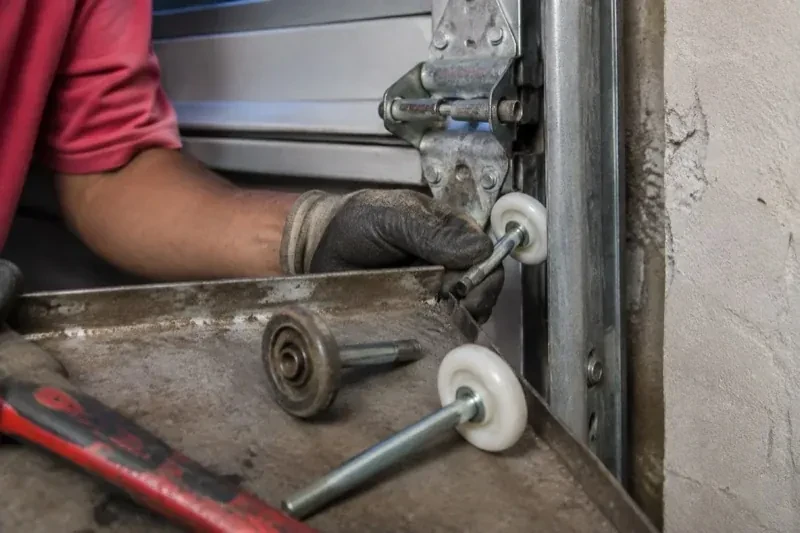
Bottom rollers and hinges
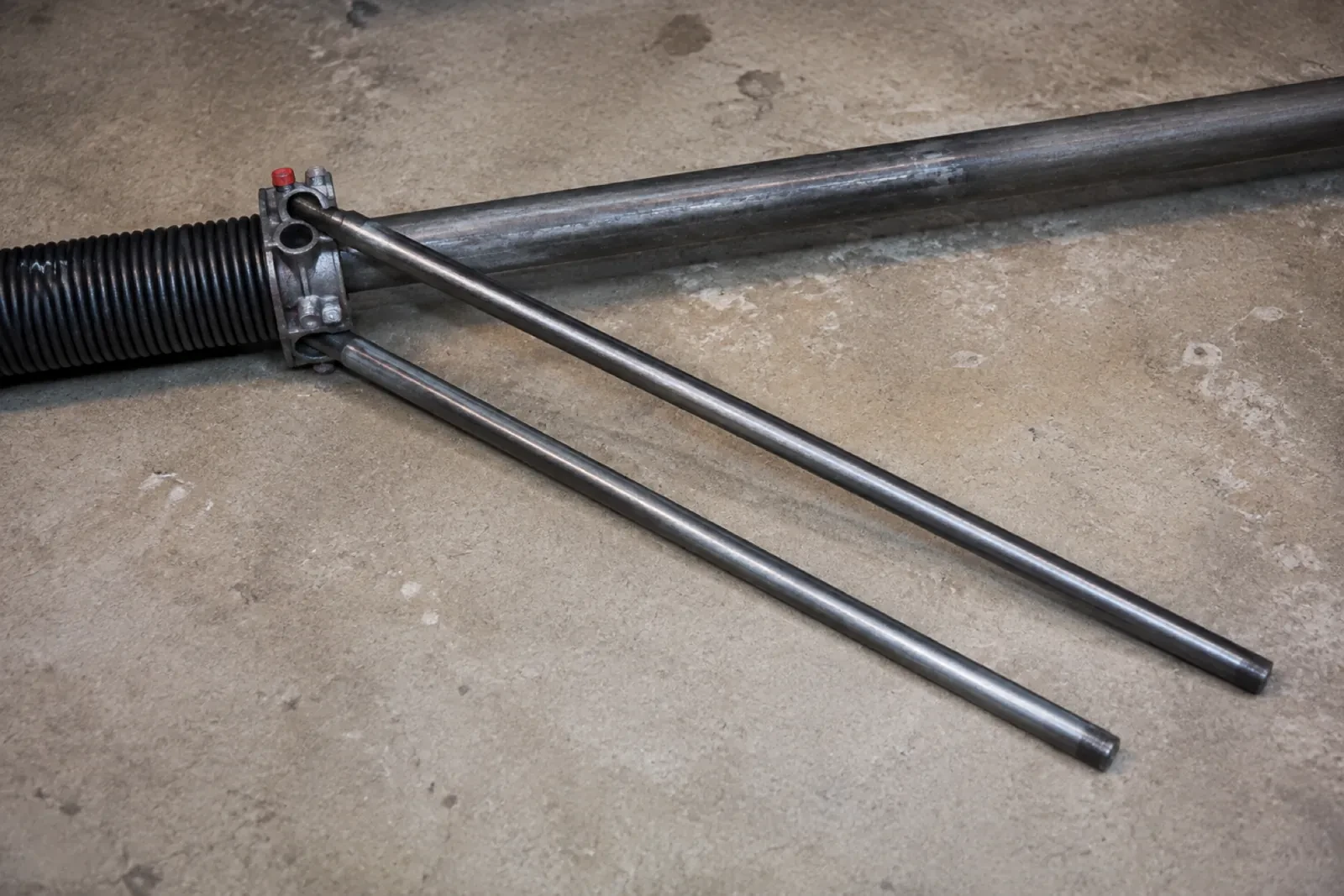
Winding bars
Clevis pins and cotter pins
Silicone garage-door lubricant
Garage Door Cable Replacement
What affects the quote
How the door is sitting
A door resting closed is simpler than one wedged crooked in the opening or off its track, which has to be supported and straightened before the cables can be handled.
Condition of the bottom brackets
A bracket bent by a bumper or corroded by years of salt is replaced while the system is unloaded. New brackets, roller and fasteners are listed as their own line.
Access to the spring shaft
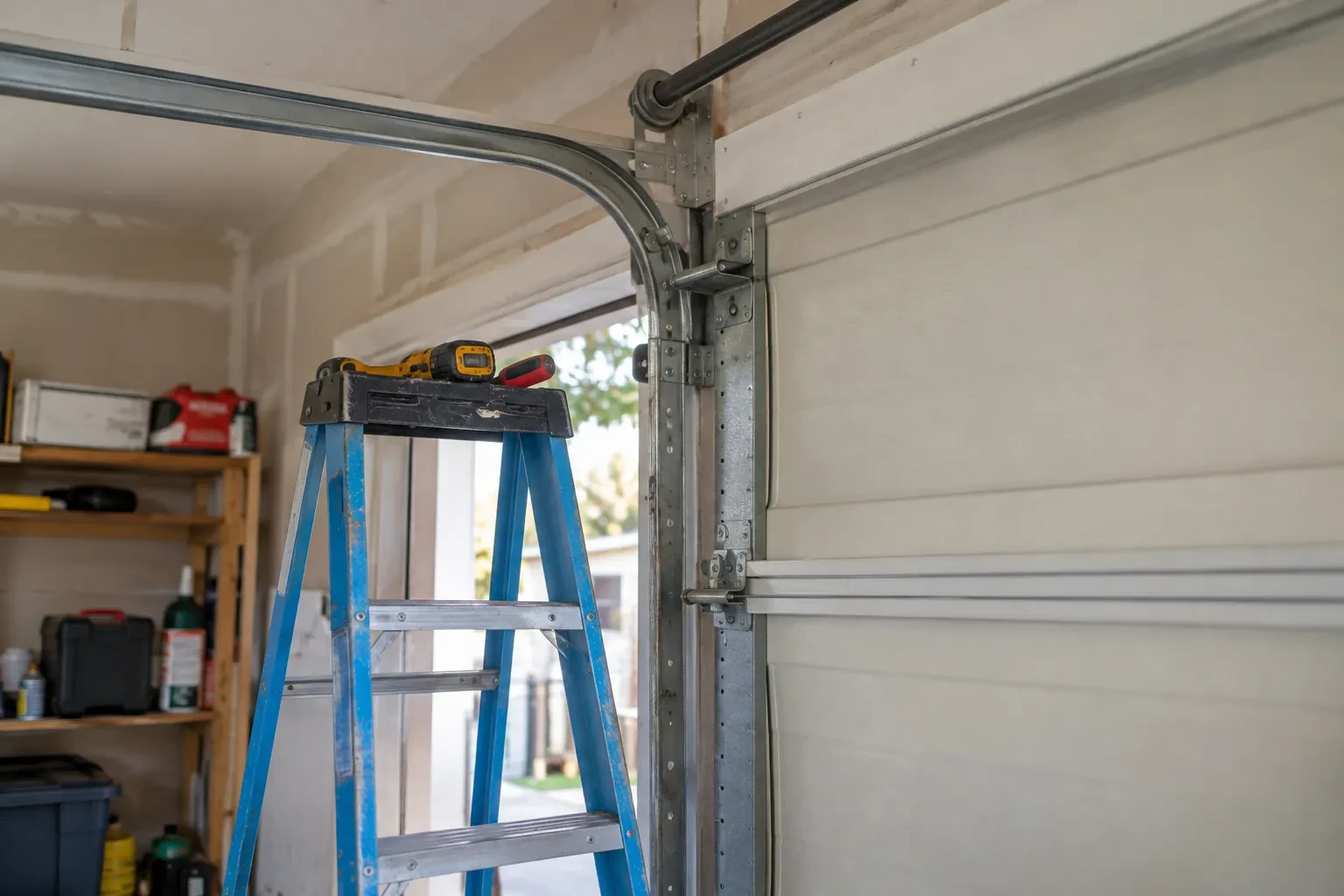
Shelving, storage or a low ceiling around the torsion shaft and drums slows the work. Clearing the area beforehand or a tighter working space both affect the time quoted.
What to have ready
- Do you have the door's manual or a label showing the model?
- Did the door come down on something, or did a vehicle touch it?
- Can you see a cable hanging loose, frayed, or wound around the shaft?
Garage Door Cable Replacement: questions
QuestionsShould I keep using the opener until the technician arrives?
It is better to leave the door where it is and use another way in and out. Running the opener against a crooked or cable-slack door tends to tangle the cable further, twist the top section and knock the door out of its track, which adds to the repair. Pull nothing and adjust nothing; simply keep the opening clear and let the technician take it from there.
What is the difference between a lift cable and a safety cable?
A lift cable does the work: it connects the door's bottom corner to the spring system and carries the door's weight. A safety or containment cable does no lifting at all. It runs through the middle of an extension spring and is anchored at both ends so that if the spring breaks, the pieces stay put. Torsion springs sit on a shaft and do not need one.
Should I lubricate the cables?
A light film, yes. A mist of silicone or a lubricant made for garage doors on the cables, especially the lowest stretch near the brackets, sheds moisture and slows rust. Avoid heavy grease or oil, which holds grit and salt against the strands. The springs, hinges, roller bearings and bracket pins take the same product a couple of times a year, and the tracks are simply wiped clean.
Related services
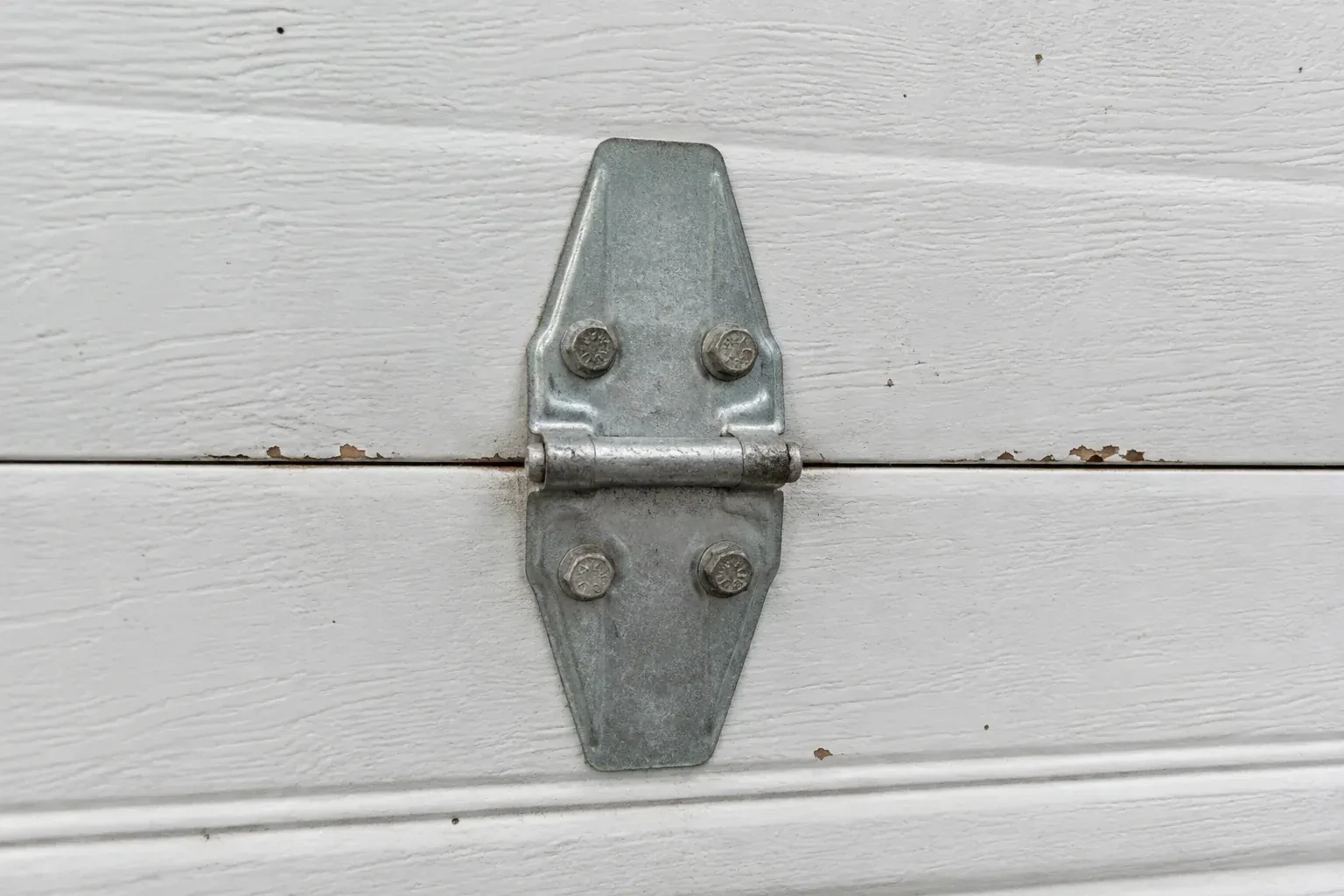
- Garage Door Hinge ReplacementWatching from inside as the door opens, you can see the gap between the second and third panels open up on one side as they turn the corner into the ceiling, then close again.
- Garage Door Track Repair or ReplacementHalfway up, the door lurches and one roller rides onto the lip of the channel.
- Torsion Spring ReplacementLooking up at the coil above the door, you can see a clean split with a gap of several centimetres between the two halves.