Openers · Whitchurch-Stouffville
Emergency Release Repair
It is the coldest morning of the year.
In plain words
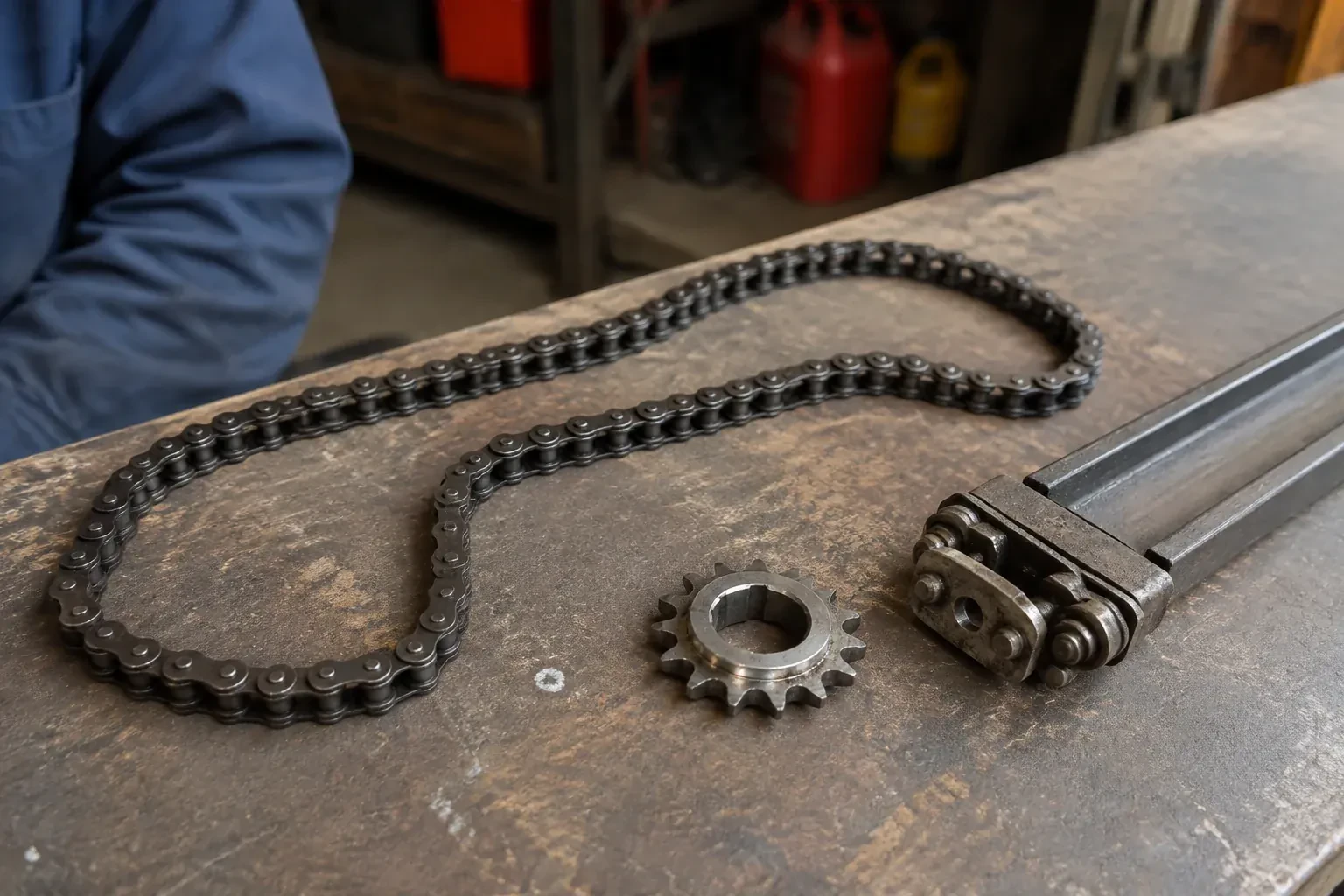
Most households meet the release for the first time in a power outage, usually in winter. The door is shut, the car is inside, and the red handle is the only way to move the door. This service makes that moment go smoothly: a handle that hangs where a person can reach it, a cord strong enough to throw the lever, a trolley that lets go cleanly, and a door that lifts without a fight once it is free. The technician also shows everyone in the house the sequence, including how to hold the trolley out for a few days of manual use and how to reconnect afterwards.
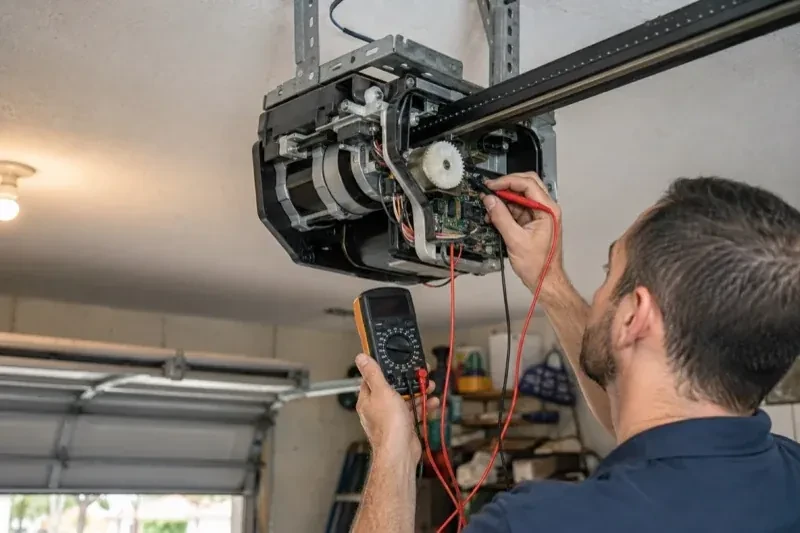
How the visit goesAfter a week of lifting the door by hand you pressed the button, hoping it would catch. Instead the motor grinds, the trolley thumps against the end of the rail, and the little lever that should snap back stays stubbornly upright.
Emergency Release Repair
How the visit goes
The outside key release, if there is one
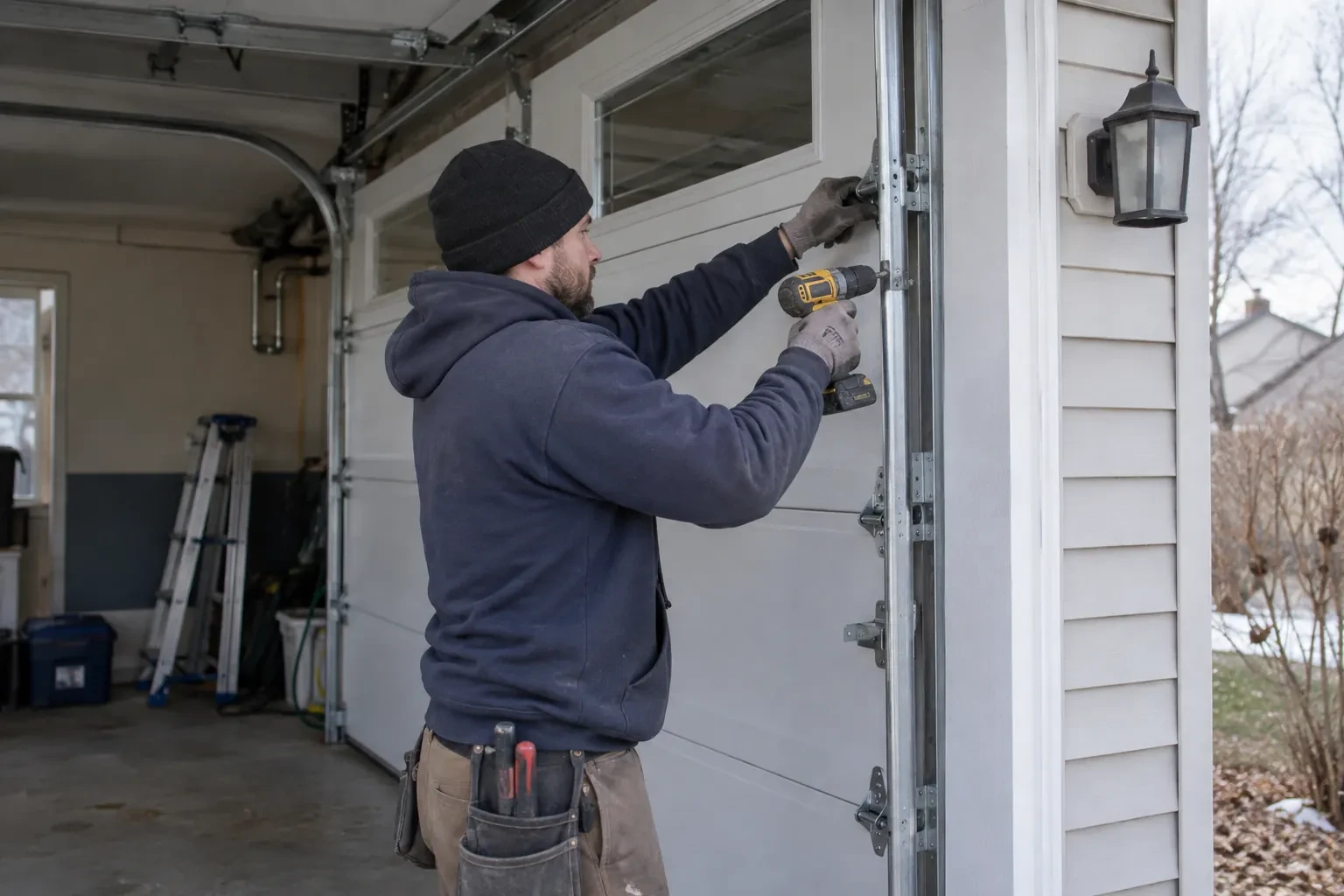
Many detached garages and some attached ones have a small keyed cylinder, set in the top section on a sectional door or at mid-height on others. The technician checks whether one is fitted, whether the key is available, and whether the cylinder turns and pulls out as designed. Behind it, a cable runs to the trolley lever; it is traced for kinks, stretch, a detached end or a route that snags on a section joint as the door bends. In winter the cylinder is checked for salt crust and ice. Where the garage has no other door, this release is the way in when the opener is silent, so its condition is treated as part of the same job.
Door work first when the balance test fails
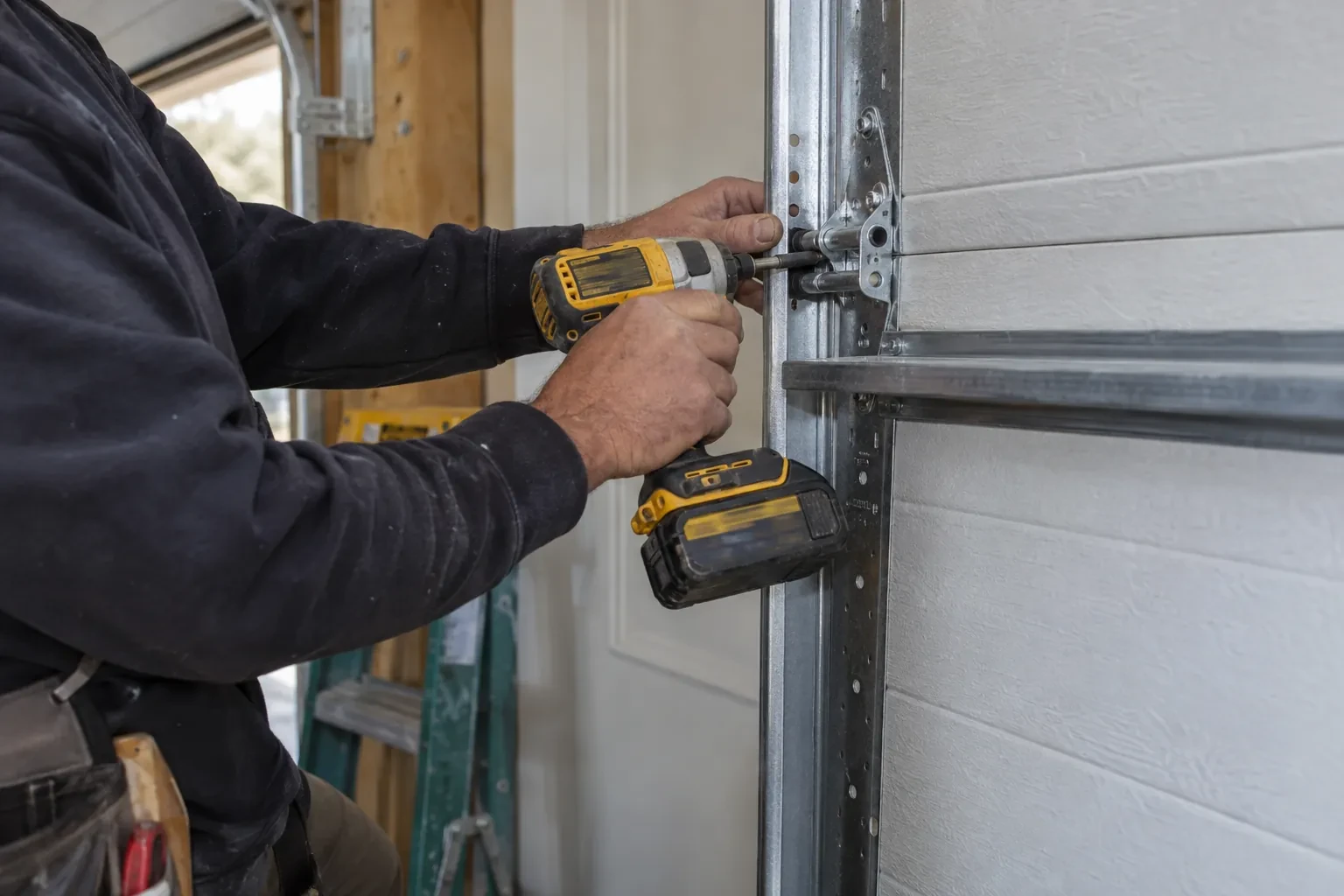
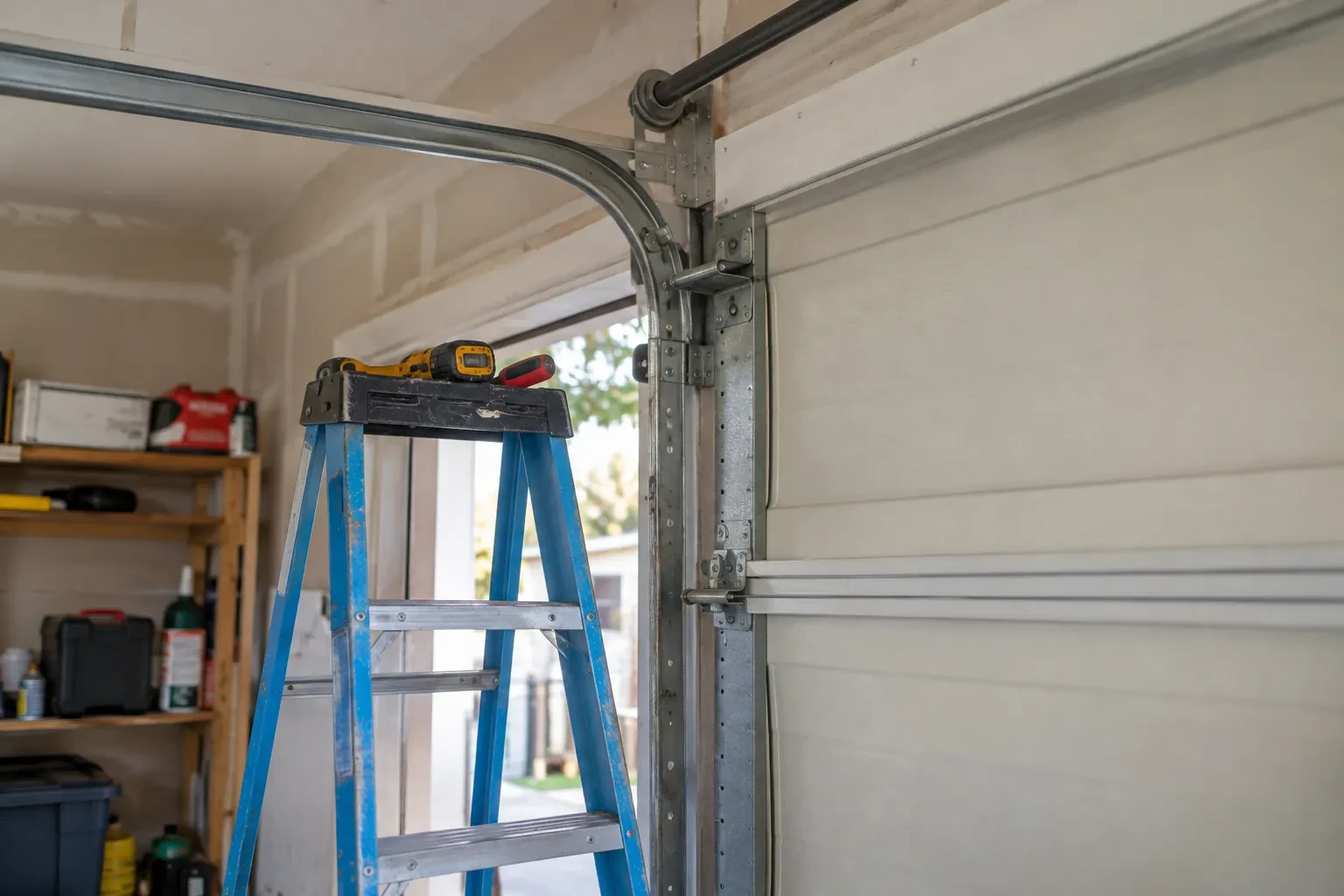
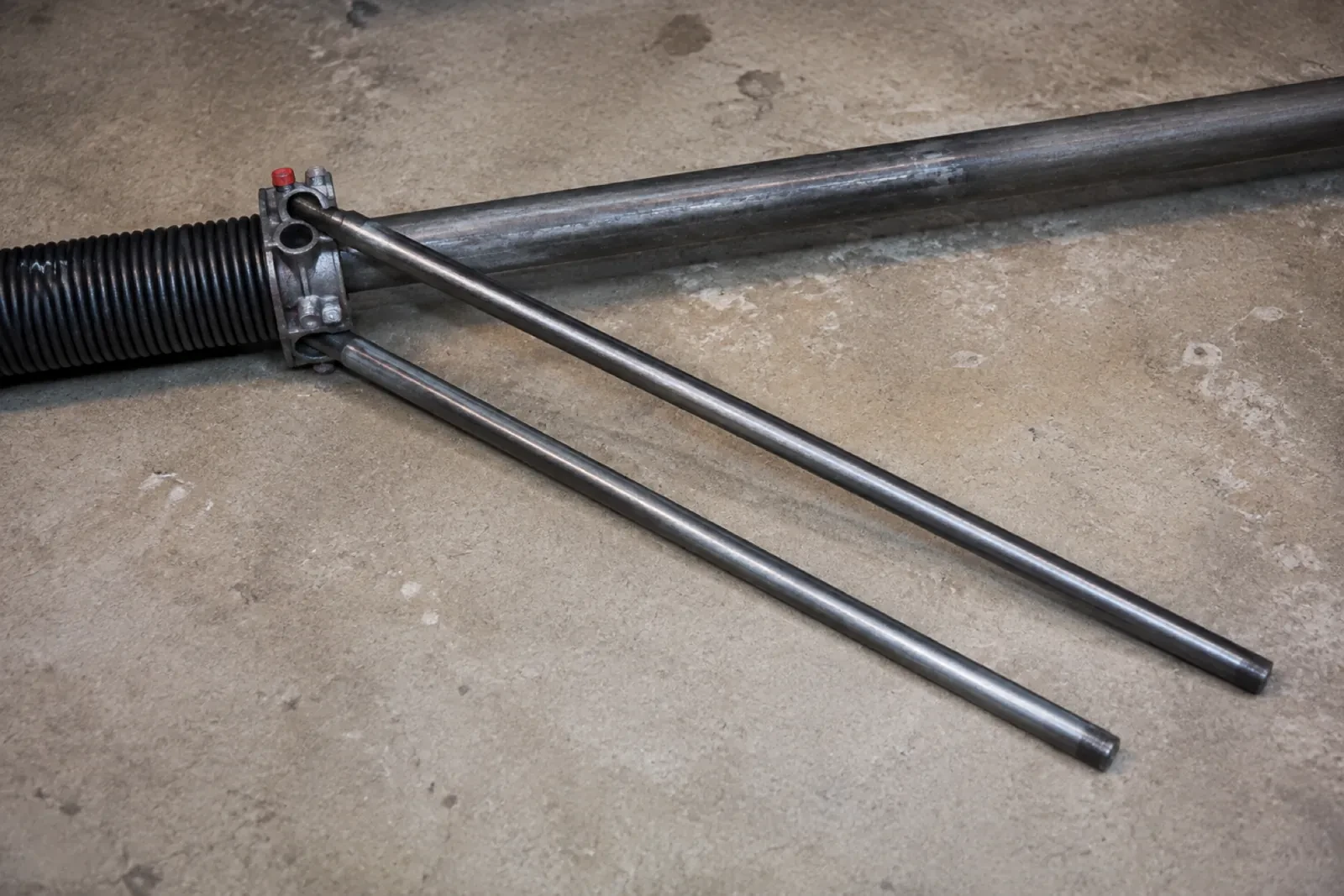
When the disconnected door proves heavy, drifts or binds, the technician changes the order of the visit. The opener stays disconnected, and the door side is put right first: springs re-tensioned or replaced with winding bars by a technician trained for tensioned hardware, frayed cables replaced, dry rollers and hinges lubricated, a bent track straightened. Only when the door lifts and holds by hand is the release work finished and the trolley reconnected. This keeps the release honest: it is meant to hand you a door you can move, and it can only do that once the springs are carrying the weight.
A handle you can find in the dark
You are left with a red handle hanging at a height an adult can reach from the floor, clear of the car and visible from the door into the house. Nothing is tied around the rail, nothing is stacked beneath it. If the garage is dark in an outage, the handle is where your hand expects it. Keep it that way: when shelving, bikes or a storage platform go in, leave the space under the trolley open. Once a season, glance at the cord for fraying where it meets the lever, since sun through a window and winter cold both age rope.
Emergency Release Repair
In the van
Release cable and clips
Outside key release kit (lock, cable, keys)
Rope and red handle kit
Track clamps to hold the door
Door arm, clevis pins and clips
Emergency Release Repair
What affects the quote
Damage from a door that dropped
A release pulled on an unbalanced open door can bend the arm, the carriage, a bracket or a panel. Anything that took the impact is listed on its own once it has been seen.
Door work found by the balance test
If the disconnected door proves heavy or drifting, spring, cable or roller work comes before the release is put back into use, and that door-side work is quoted as its own item.
Time of the call
A weekday daytime visit and an evening, weekend or holiday one cost the same amount for freeing or repairing an emergency release. The exact figure is confirmed once the technician has seen the trolley, the cord or lever, and how the door was left.
What to have ready
- Does the garage have a side door or a door into the house?
- Has the trolley ever been left disconnected for a stretch of manual use?
- Do you lose power often, and would battery backup interest you?
Emergency Release Repair: questions
QuestionsWhy should the door be closed before I pull the handle?
Because once the trolley lets go, the door is held only by its springs. A well-balanced door will stay put wherever it is, but a door whose springs are tired can drop, and one that is over-tensioned can rise on its own. Even with the door already on the floor it can still move unexpectedly, so keep the opening clear whenever the release is pulled. The industry checklist and opener makers give the same instruction: disconnect with the door fully closed.
What exactly is the emergency release on a garage door opener?
It is the manual disconnect between the opener and the door: a red handle on a cord below the rail, connected to a lever on the trolley. Pull it and the trolley lets go of the door so you can move the door by hand, for instance during a power outage. Push the lever back, or run the opener, and the two reconnect. It is required on residential openers, coloured red so it stands out from everything else overhead.
How long does an emergency release repair take?
A cord and handle, a lever spring or a trolley freed from the stop bolt is a modest part of an hour, including the balance test and reversal tests. Replacing a trolley or fitting an outside key release takes longer, since the drive is slackened and re-tensioned or a hole is cut in the door. If the balance test finds the springs need work first, that is a separate piece of the visit, and you are told before it starts.