Repairs · Stouffville
Garage Door Perimeter Weatherstrip in Stouffville
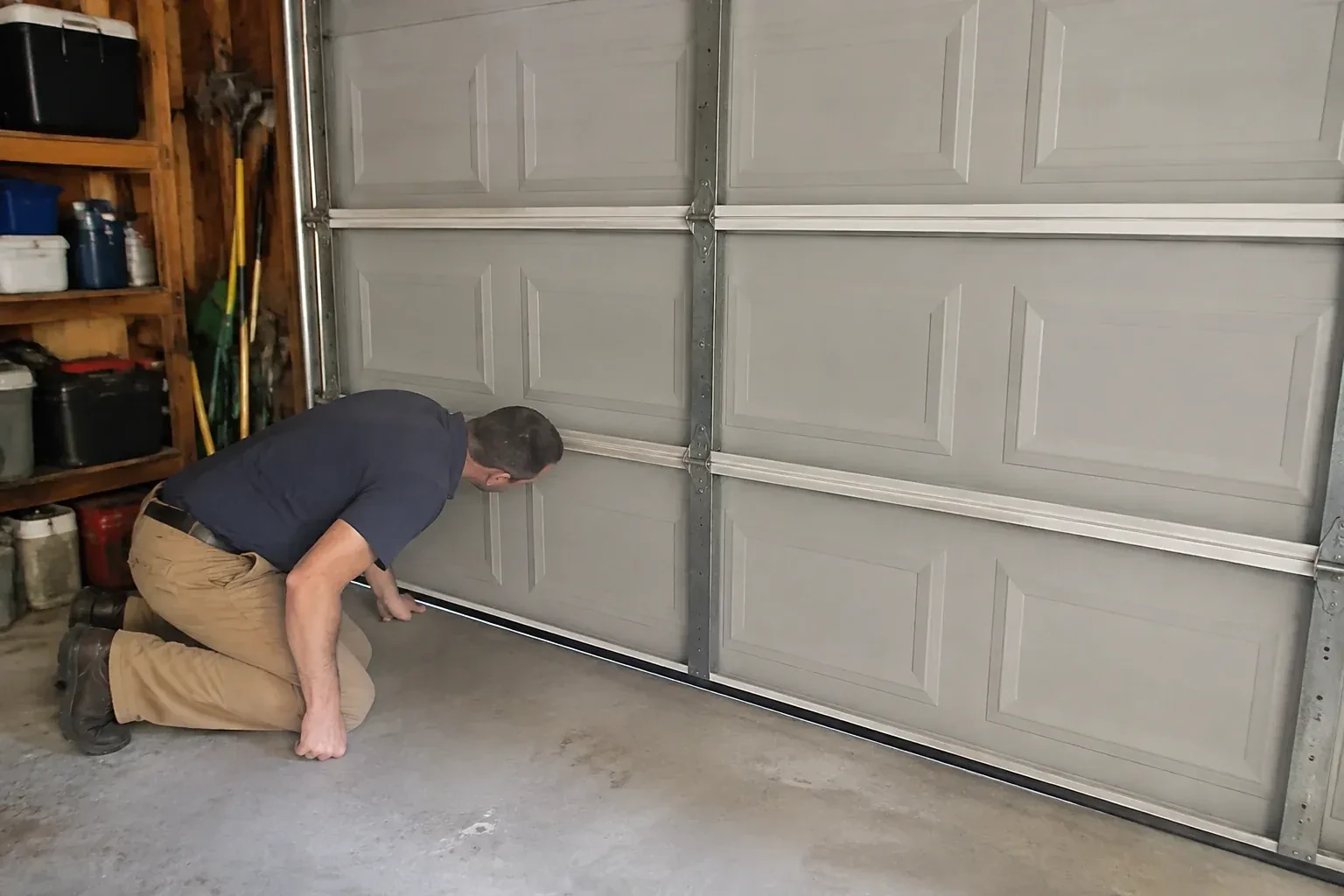
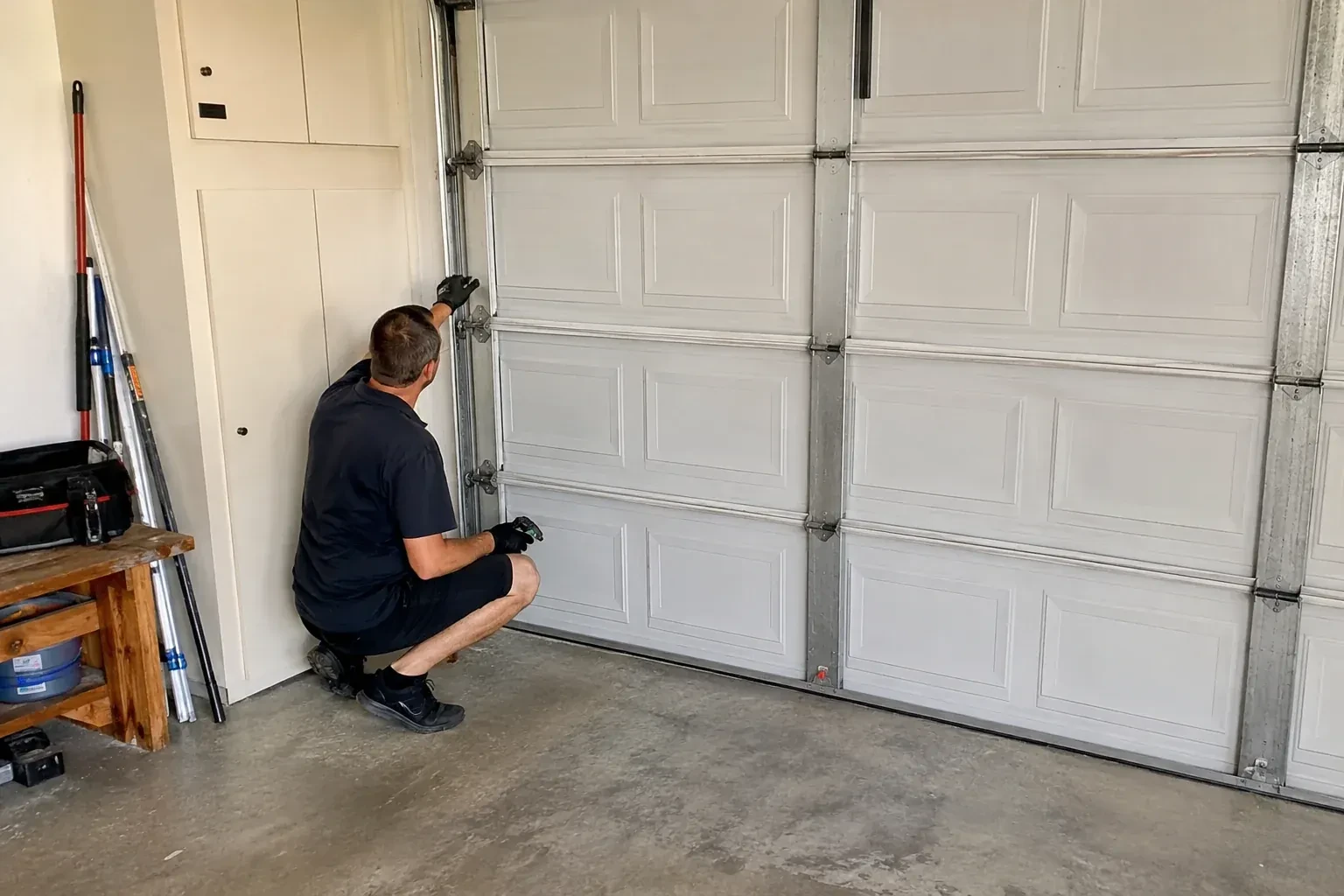
With the door closed and the garage lights off, a thin bright line runs down the whole left side of the opening.
In plain words
When the work is finished you have a door that closes against a soft, continuous line of contact on both sides and across the top. From inside with the lights off there is no daylight at the edges; from outside, the new stop matches the trim colour. The door moves through its full travel without the fin catching or squealing. You are told what profile, colour and lengths were fitted, so a match is simple later, and shown the few habits that keep the seal supple: no paint on the fin, a silicone wipe before freezing rain, and slush kept off the bottom of the jambs.
How the visit goesThe vinyl strip around the door used to be soft and white. Now it is grey and hard, cracked every few inches, and a piece near the corner snaps off in your fingers. It no longer bends toward the door at all.
Garage Door Perimeter Weatherstrip
How the visit goes
Trim, cladding and where water gets behind
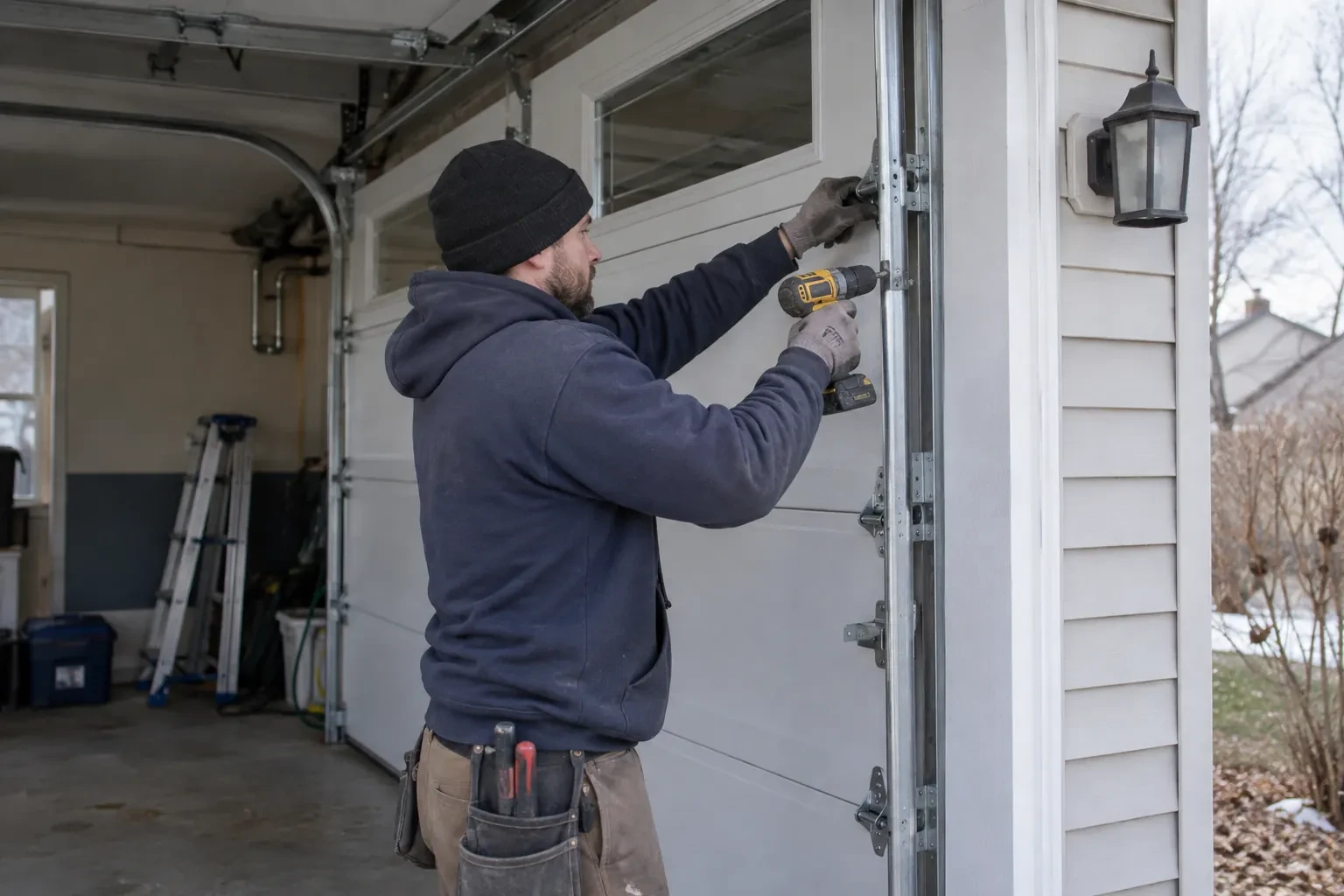
The seal shares the jamb with brickmould, siding, capping and old caulking, and water that gets behind any of them ends up in the wood the strip is nailed to. The technician follows the joint between stop and trim looking for cracked or missing caulk, capping that funnels water down the jamb face, and gaps at the sill where meltwater collects. These are small things to correct while the old strip is off and the surface is bare, and they are what stop the fresh wood from going the way of the old. Anything larger, such as damaged siding, is pointed out for a separate decision.
The header piece goes on first
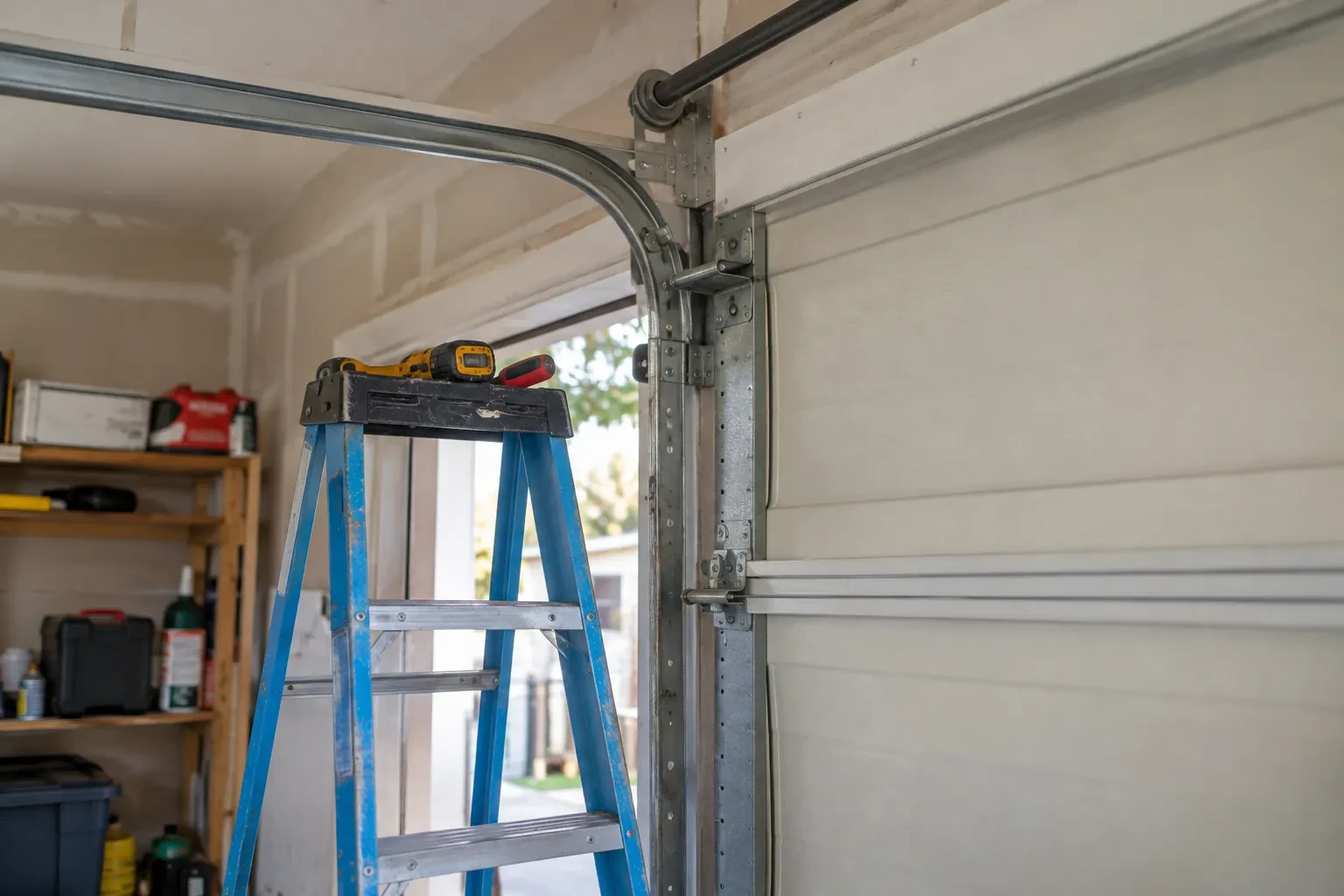
With the door closed, the header length is cut to the full width of the opening and lifted into place, a two-person job on a double door. It is positioned so its fin lies against the top section with a slight, even deflection along the whole width, then fastened from the centre outward with galvanized or stainless nails or exterior screws at regular spacing, which keeps the length straight rather than letting it wander. The ends are left to receive the side pieces beneath them. Fitting the header first means both sides are cut to meet it exactly, and the corners close properly.
Before the freezing rain
In late autumn, wipe the fin with a silicone spray or a silicone-based lubricant on a cloth. It leaves a film that cuts the odds of meltwater bonding the fin to the cold door face during an ice storm, though a hard freeze can still catch it. Oil-based products are avoided because they swell and soften vinyl over time. The same wipe once or twice through the winter keeps the fin supple. If the door does freeze to the seal, a little warm water along the edge from inside, or simply waiting for the sun, frees it without pulling; dry the thawed spot afterwards so it does not simply refreeze.
Garage Door Perimeter Weatherstrip
In the van
Tape measure, level and square
Flexible vinyl fin seal
Utility knife and mitre saw
Galvanized or stainless trim nails
Silicone spray lubricant
Garage Door Perimeter Weatherstrip
What affects the quote
Doing the bottom seal at the same time
When the bottom seal on the door is also worn, renewing it during the same visit is offered as a separate line and saves the cost of a second call.
Working height and access
A tall header, a sloped driveway that makes a ladder awkward, shrubs against the jambs or cars and storage close to the door all affect how long the work takes.
Colour and profile
Standard colours and fin widths are carried on the truck. A less common colour, an extra-wide fin or a commercial retainer with insert may be a special order, with the difference noted.
What to have ready
- What colour is the trim around the door?
- Has the door recently been replaced or adjusted?
- Is anything stored against the jambs, or a car parked close to the opening?
Garage Door Perimeter Weatherstrip: questions
QuestionsShould I choose a fin on the wood stop or a one-piece vinyl stop?
If the wood stop is sound, straight and not buried in paint, a new fin nailed to its face is the simpler choice and keeps the look of the trim. If the stop is cracked, soft or has been painted many times, a one-piece vinyl stop replaces it entirely, needs no paint and cannot rot. The technician checks the stop and recommends one or the other on site.
Does new weatherstrip make the door any quieter when it opens and closes?
A little, though it is not the main reason to do it. A fresh bottom seal cushions the door's contact with the floor, and snug side and top seals stop the panel rattling against loose or worn stops. Most of the noise people notice from a garage door comes from rollers, hinges and the opener chain or belt rather than the seals, so a technician checking the weatherstrip will usually point out those parts too if they are the louder culprit.
How do I stop the seal freezing to the door in an ice storm?
Wipe the fin with a silicone spray or a silicone lubricant on a cloth in late autumn and once or twice through the winter. The film cuts the odds of meltwater bonding the fin to the cold door face, though a hard freeze can still catch it. Avoid oil-based products, which soften vinyl. If the door does freeze to the seal, let the sun or a little warm water free it, dry the spot afterwards, and avoid forcing the opener.
Related services
- Garage Door Tune-UpOn windy nights the door rattles in its frame, there is a line of daylight along one side, and the bottom seal has gone hard and flat.
- Off-Track Garage Door ResetYou tapped the door with the bumper while backing in, barely a nudge, and now the bottom corner has swung inward.
- Garage Door Panel ReplacementAfter an overnight freeze the door stuck to the slab, the opener strained, and something gave.