New Doors · Whitchurch-Stouffville
Commercial Sectional Door Repair in Whitchurch-Stouffville
One busy service-bay door has become louder than the matching doors beside it.
In plain words
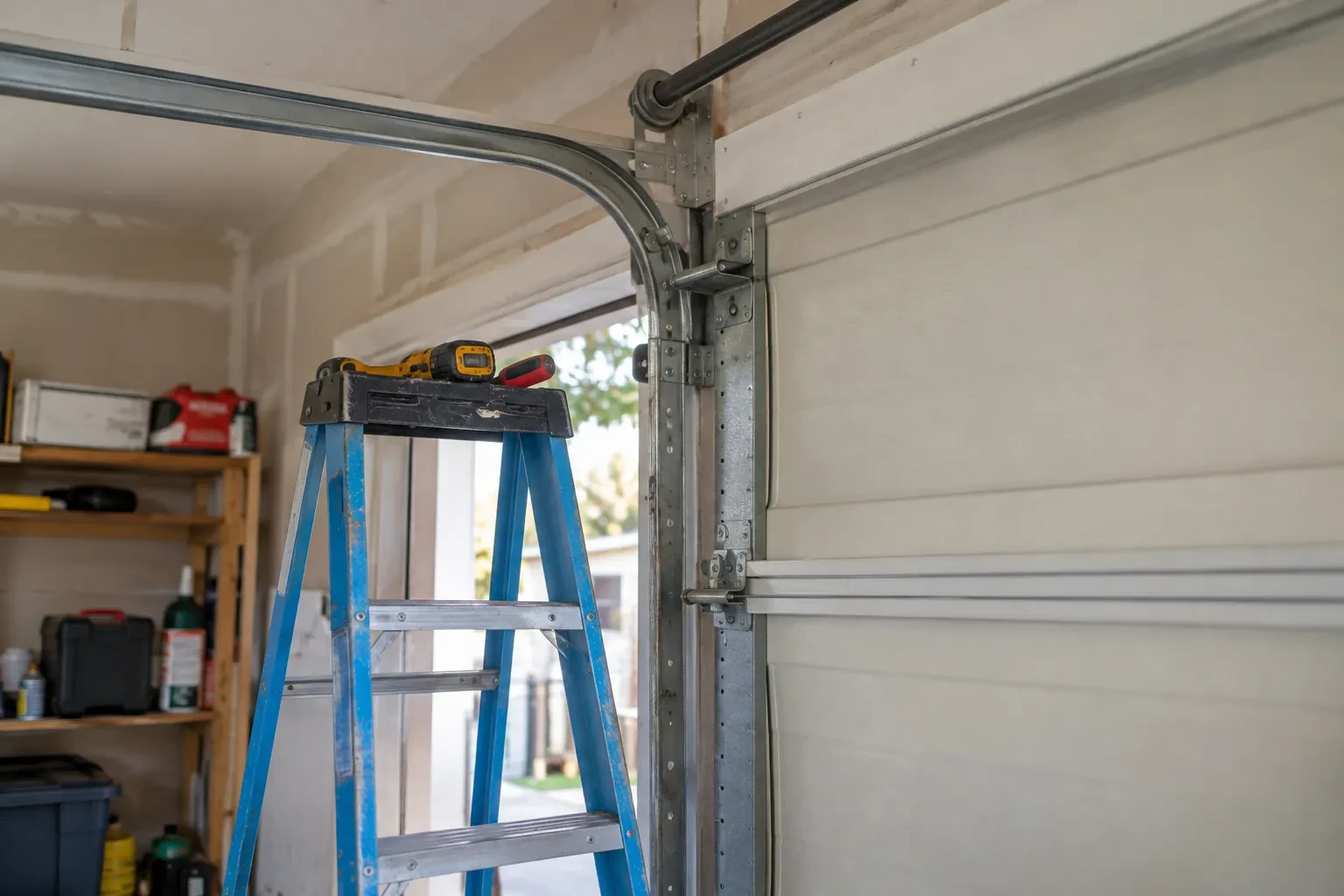
High-lift and vertical-lift doors need repair methods suited to their track geometry. Cable tension, drum selection, shaft condition, track support and the transition from vertical travel all affect whether the sections remain controlled. The technician records the configuration before disassembly, supports the door at a stable position and matches replacement components to the door weight and lift arrangement. After reassembly, level travel and cable seating are observed at several positions rather than judged only with the door closed.
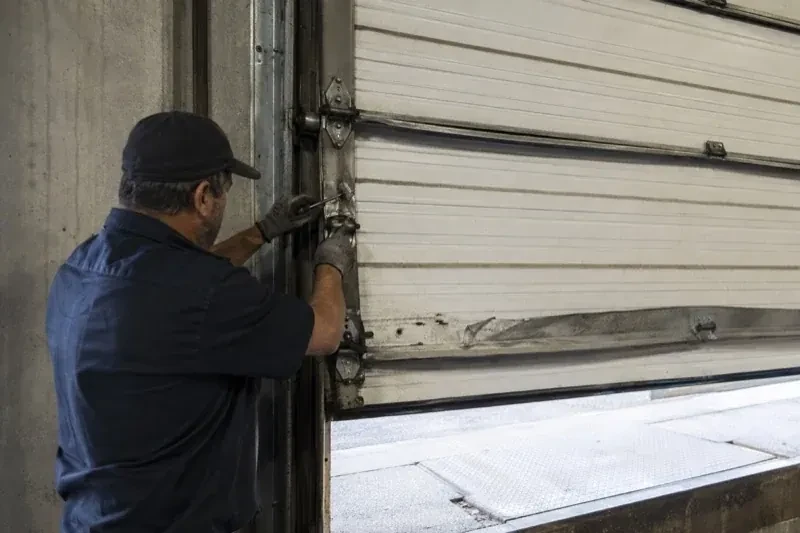
How the visit goesA forklift clipped the bottom panel while backing through the bay. The section is creased near an end stile, the lower roller rubs the track, and daylight now shows along one corner when the door closes.
Commercial Sectional Door Repair
How the visit goes
Starting with the impact point
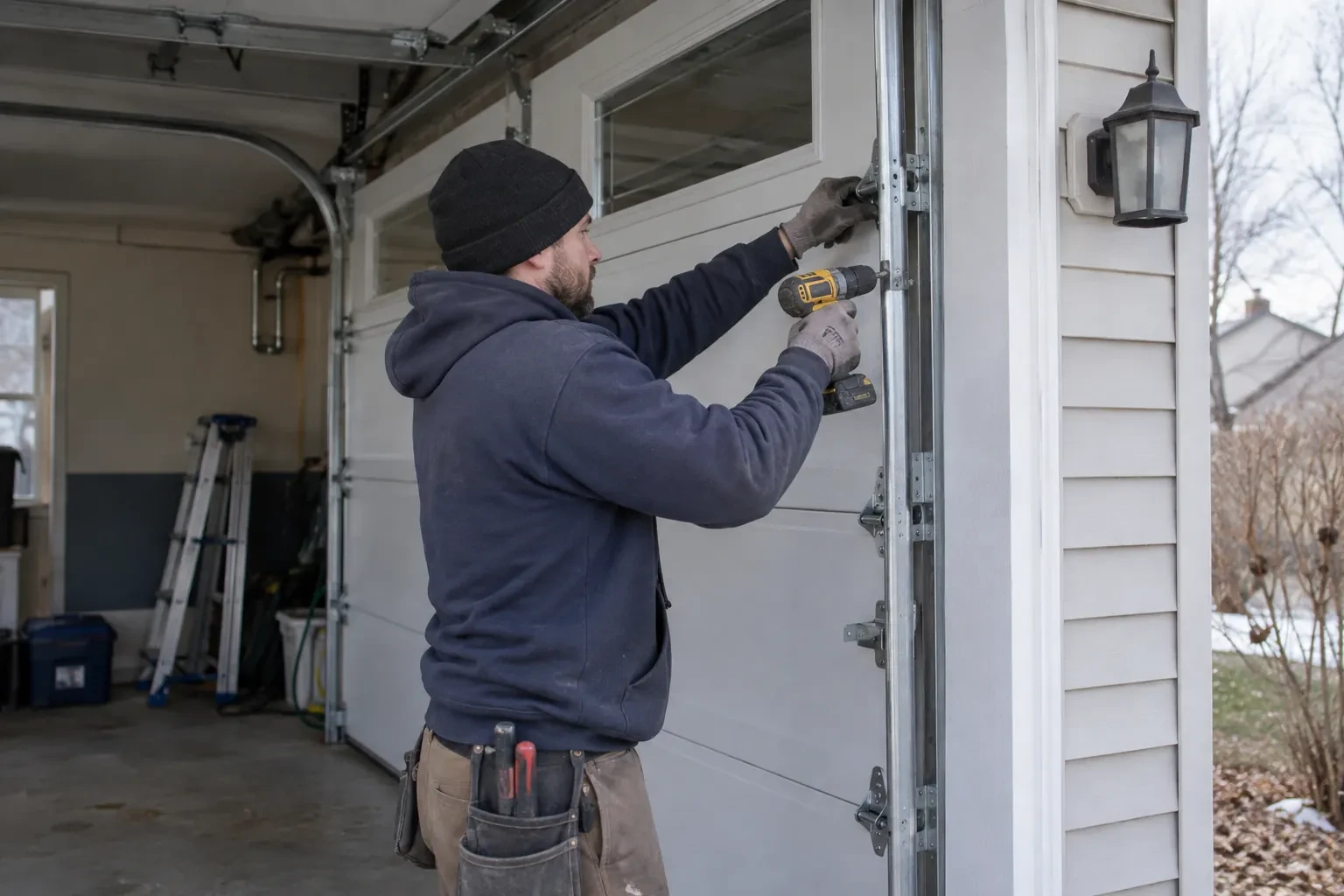
After a vehicle or load contacts the door, the first inspection follows the force beyond the visible crease. The technician checks the panel skin, insulation, end stiles, reinforcement struts and hinge mounting areas, then looks at the nearest rollers and vertical track. Jamb brackets and anchors are examined for movement that could alter the entire travel path. Door position matters too: damage near the bottom fixture receives special handling because the lift cable connects there under tension. This mapped assessment distinguishes a replaceable section from a wider structural and hardware repair.
Controlling the door before repair
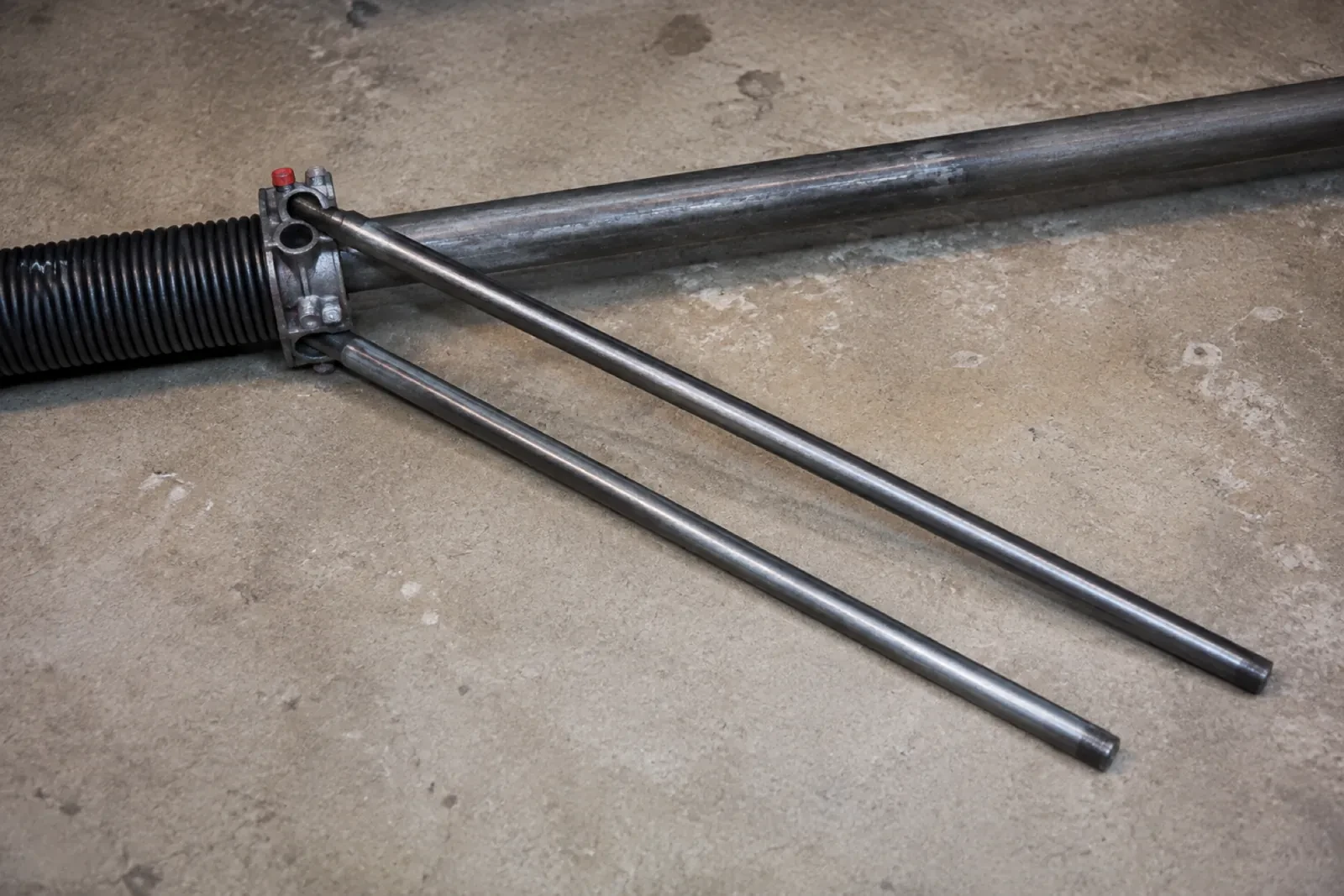
Work begins by separating the bay from normal traffic and placing the door in the safest workable position for the identified fault. Electrical controls are isolated where the task calls for it, and the assembly is held with clamps, locking pliers or rated supports suited to its weight and track type. Stored spring force is managed with proper winding tools and a planned sequence. With movement controlled, hardware can be removed without letting a crooked section, slack cable or broken spring shift the rest of the system.
Useful documentation for a busy facility
The finished record ties the complaint to the actual repair: door identification, parts changed, settings adjusted and functions tested. For properties with many similar openings, assigning a clear asset number to each door prevents service histories from becoming mixed. Cycle demand, collisions and recurring observations can then be logged against the correct bay. This information supports practical maintenance planning and helps the next technician arrive with relevant dimensions and system details, while staff retain a concise reference for normal sound, travel and control behaviour.
Commercial Sectional Door Repair
In the van
Track brackets and back hangs
Commercial rollers
Reinforcement struts
Lift cables and drums
Torsion springs
Commercial Sectional Door Repair
What affects the quote
Number of affected openings
A single bay with one defined fault differs from a facility request covering several numbered doors, separate symptoms and individual operational tests.
Lift and track configuration
Standard, low-headroom, high-lift and vertical-lift arrangements use different track geometry, drums, cables and access methods, so the installed configuration shapes labour and parts.
Section construction and finish
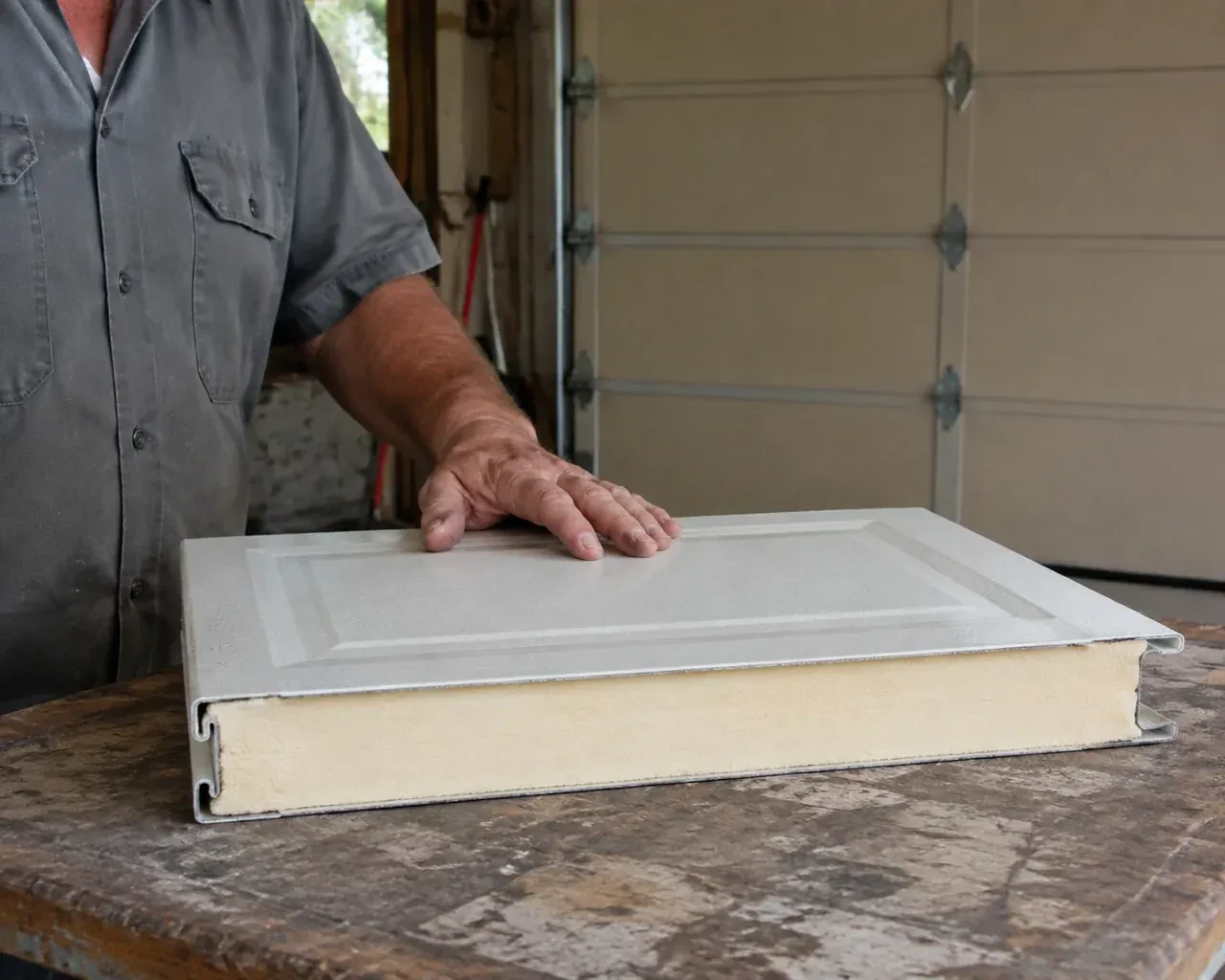
Steel, aluminum, insulated sandwich and full-vision sections have different profiles, reinforcement, glazing and hardware patterns that affect matching and replacement scope.
What to have ready
- Is the door closed, open or stopped between positions?
- Can traffic use another opening during the work?
- Which controls or sensors show unusual behaviour?
Commercial Sectional Door Repair: questions
QuestionsWhy does the door reverse near the floor?
A reversal can start with a blocked or misaligned photoelectric sensor, a distorted sensing edge, resistance in the track, an incorrect close limit or a control-circuit issue. Inspection covers the clear opening, sensor alignment and wiring, bottom edge and mechanical travel. The source is corrected first, then the protective response is tested through several complete cycles.
Should the operator be adjusted when the door feels heavy?
The mechanical door should be assessed before operator force, clutch or travel settings are changed. Extra resistance can come from spring imbalance, cable trouble, worn rollers, track contact or an engaged lock. Once the door moves freely and is correctly balanced, the operator can be set to that sound baseline and its limits and protective devices can be checked.
What information helps identify replacement parts?
A clear photo of the interior label, model and serial details, opening width and height, panel thickness and the affected component are useful. For springs or cables, door weight and lift configuration also matter. Photos showing the entire inside of the opening help reveal standard, high-lift or vertical track. Existing service records can confirm earlier component changes.
Related services
- Insulated Steel Garage Door InstallationYou want windows for natural light without turning the garage into a cold glass wall.
- Wind-Rated Garage Door ReplacementThe current double door shudders when pressure changes outside, and daylight appears briefly along one edge.
- Carriage-House Garage Door InstallationTraditional swing-out coach doors have the look you like, but the driveway needs to remain clear as the door opens.