Repairs · Whitchurch-Stouffville
Garage Door Bottom Seal Replacement in Whitchurch-Stouffville
There are mouse droppings along the wall behind the recycling bins, and at one bottom corner of the door the vinyl has a neat chewed notch the width of a thumb.
In plain words
In this climate the bottom seal lives a hard life. Meltwater from the car pools at the threshold and freezes the seal to the slab, and the next press of the remote tears it or drags it out of its channel. Road salt stiffens the vinyl and eats the aluminum retainer; deep cold turns a supple strip rigid. Replacement puts a cold-rated profile on a sound retainer, sized to meet the floor without over-compressing, and the technician shows how a wipe of silicone each autumn and a clear threshold keep the new strip from bonding to the ice. The door closes softly onto rubber again, not onto a frozen ridge.
How the visit goesThe garage doubles as a workshop, and with the heater running the floor near the door stays cold and the draft finds your ankles at the bench. When the wind is up you can feel the air moving under the door.
Garage Door Bottom Seal Replacement
How the visit goes
Why the old seal failed
The old strip is read for its history before it comes off. Cracks along the fold and a chalky surface point to sun and age. A flattened bulb that no longer springs back is compression set. A torn edge at one end usually means the seal froze to the floor and the opener pulled it free. Chew marks say rodents. A strip that has slid partly out of its channel points to a bent or opened retainer, or to a seal that was slightly the wrong size. Each of these leads to a different choice of material, profile or retainer work, so the new seal is spared the fate of the old one.
Securing the door before work begins
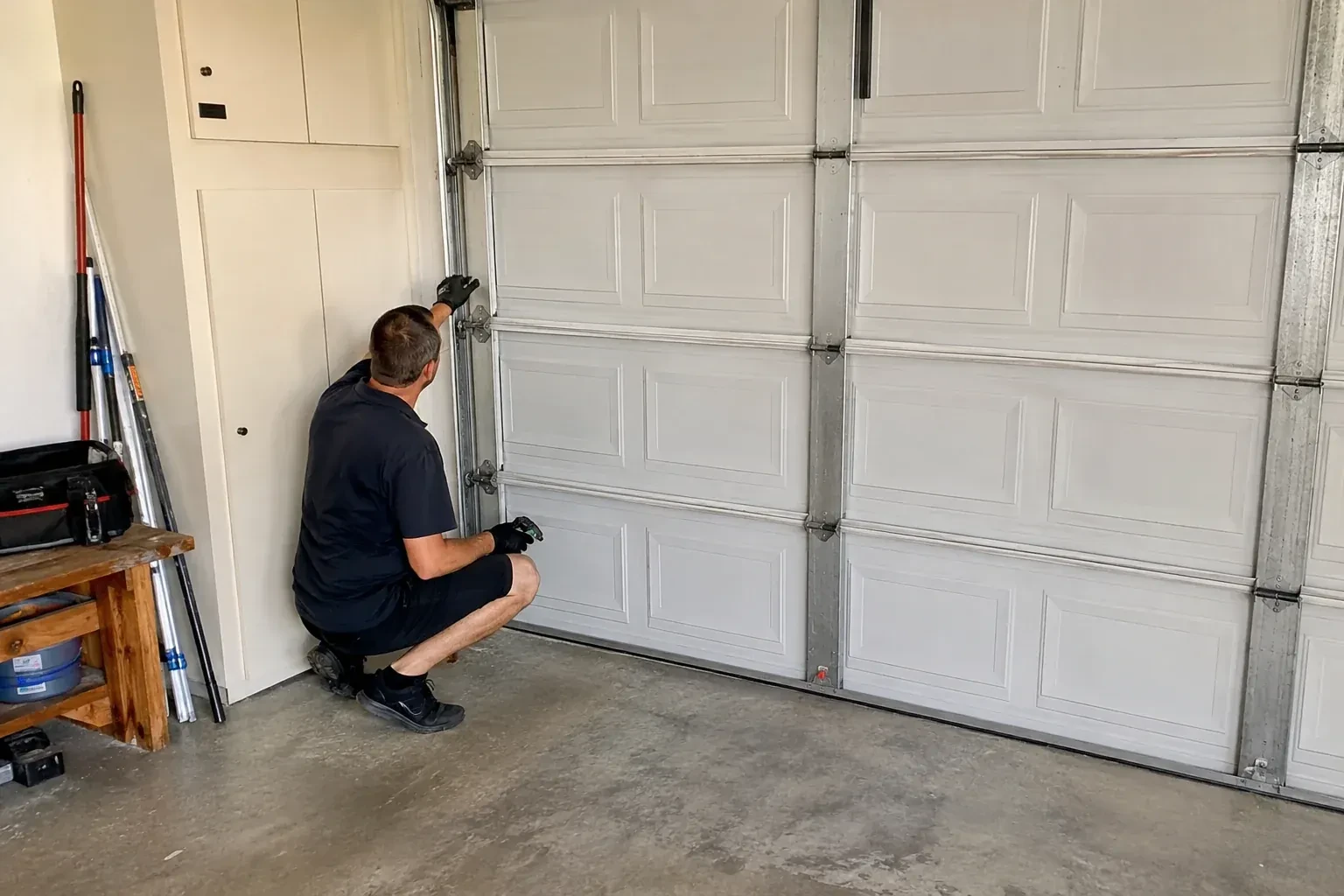
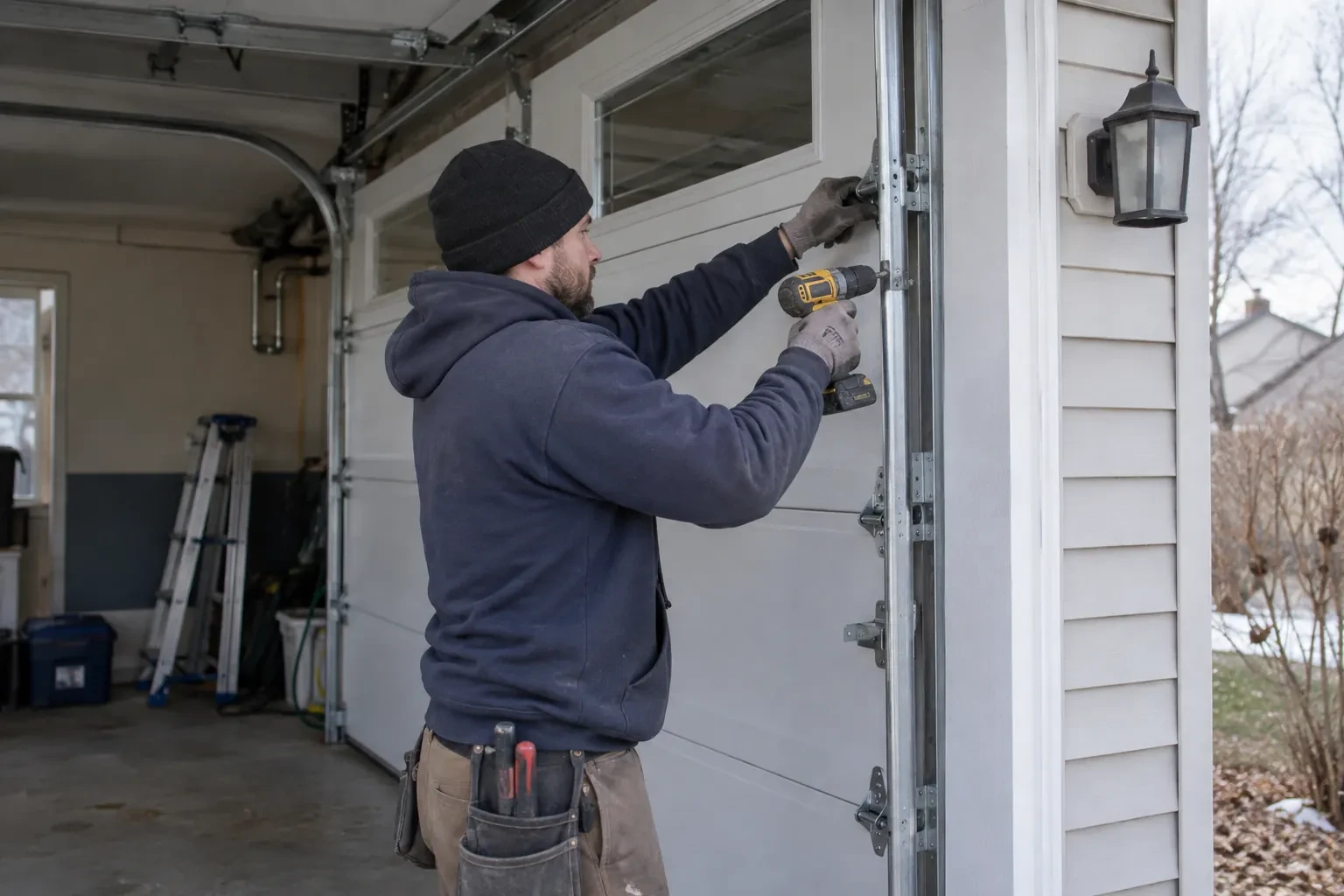
The opener's release cord is pulled so the motor is out of the picture, and the door is raised by hand to a height where the bottom rail sits at a comfortable working level, usually around chest height. A clamp goes on each vertical track just below a roller so the door cannot drift down while the retainer is exposed. The bottom brackets in each corner stay untouched throughout, because they carry cable tension whenever the springs are wound. With the door held and the floor in front clear, the seal and retainer can be handled like any other piece of hardware.
A door that meets the floor in one line
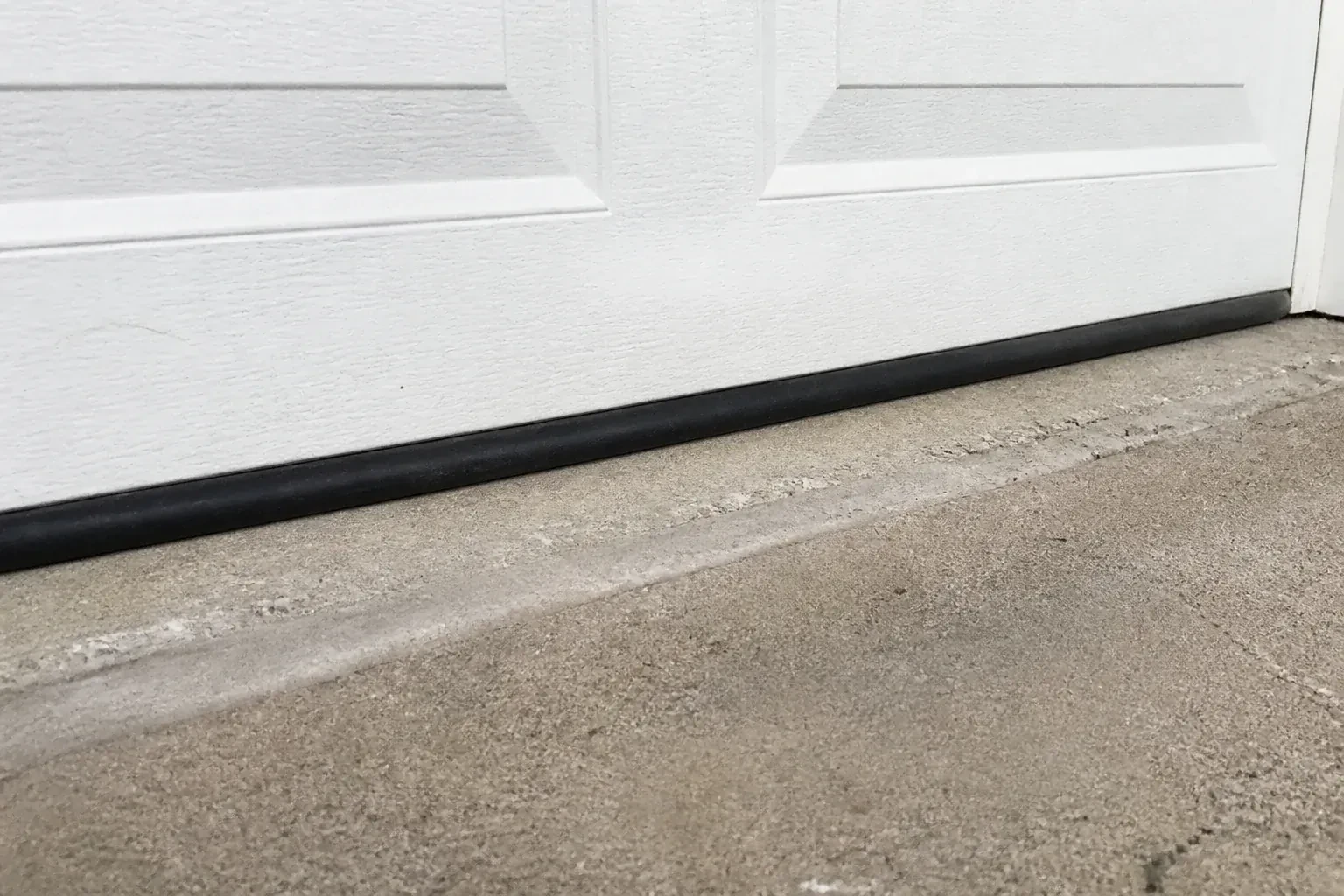
The first thing you notice is the absence of daylight. With the door closed and the lights off, the floor line is dark from one jamb to the other, and the draft that used to move across the floor is much reduced. The door lands softly, because the opener now stops when the seal is gently compressed rather than driving the section into the concrete. Leaves, grit and drifting snow are kept out far more often. If you crouch and look, the new bulb sits evenly along the slab, filling the low corner the old strip used to hover above.
Garage Door Bottom Seal Replacement
In the van
Bead-style bottom seal
Wire brush and scraper
Bulb or U-style bottom seal
T-style bottom seal
Seal end caps
Garage Door Bottom Seal Replacement
What affects the quote
Material chosen
Standard vinyl, cold-flexible rubber and silicone are priced differently. Where the door faces the weather, the technician explains what the step up buys in flexibility and working life.
Retainer replacement
If the aluminum or plastic retainer is bent, spread open or corroded, a new extrusion, fasteners and the time to fit it straight along the rail are added as their own line.
Access and clearance
Storage, a vehicle that must stay inside, or shelving against the bottom of the door slows the work. A clear metre inside the door makes the visit shorter.
What to have ready
- Is the old seal hard and cracked, torn, hanging loose, or missing?
- Does the driveway slope toward the garage, or does water pool at the door?
- Can you send a photo of the end of the bottom section showing the retainer?
Garage Door Bottom Seal Replacement: questions
QuestionsWhat happens during the visit?
The technician maps the gap with the door closed, checks the door is level and the bottom section straight, and identifies the retainer and profile. The opener is disconnected and the door clamped at working height. The old seal comes out, the channels are cleaned, a new seal is cut and fed in, and any retainer work is done. The door is then closed under power, the opener reset, and the reversing and photo-eye tests run.
How can I tell that the bottom seal needs replacing?
Close the door, turn off the lights and look along the floor from inside. Daylight showing, a strip that feels hard or cracks when pressed, a bulb that has flattened and stays flat, an end hanging out of its channel, chew marks or missing pieces are all signs. So are leaves, snow or a puddle inside the door after weather. Any one of these means the seal has stopped doing its job.
Is this something I can do myself?
Many homeowners do, and a technician's value lies in the parts that go wrong: identifying the exact profile so the seal seats, freeing a strip that has fused into its channel, spotting a retainer or door-level problem behind the gap, and resetting the opener's limit and force so the door lands gently and still reverses on an obstruction. If you would rather have it measured, fitted and tested in one go, that is what the visit is for.
Related services
- Garage Door Tune-UpOn windy nights the door rattles in its frame, there is a line of daylight along one side, and the bottom seal has gone hard and flat.
- Off-Track Garage Door ResetYou tapped the door with the bumper while backing in, barely a nudge, and now the bottom corner has swung inward.
- Garage Door Panel ReplacementAfter an overnight freeze the door stuck to the slab, the opener strained, and something gave.