Repairs · Ringwood
Off-Track Garage Door Reset in Ringwood
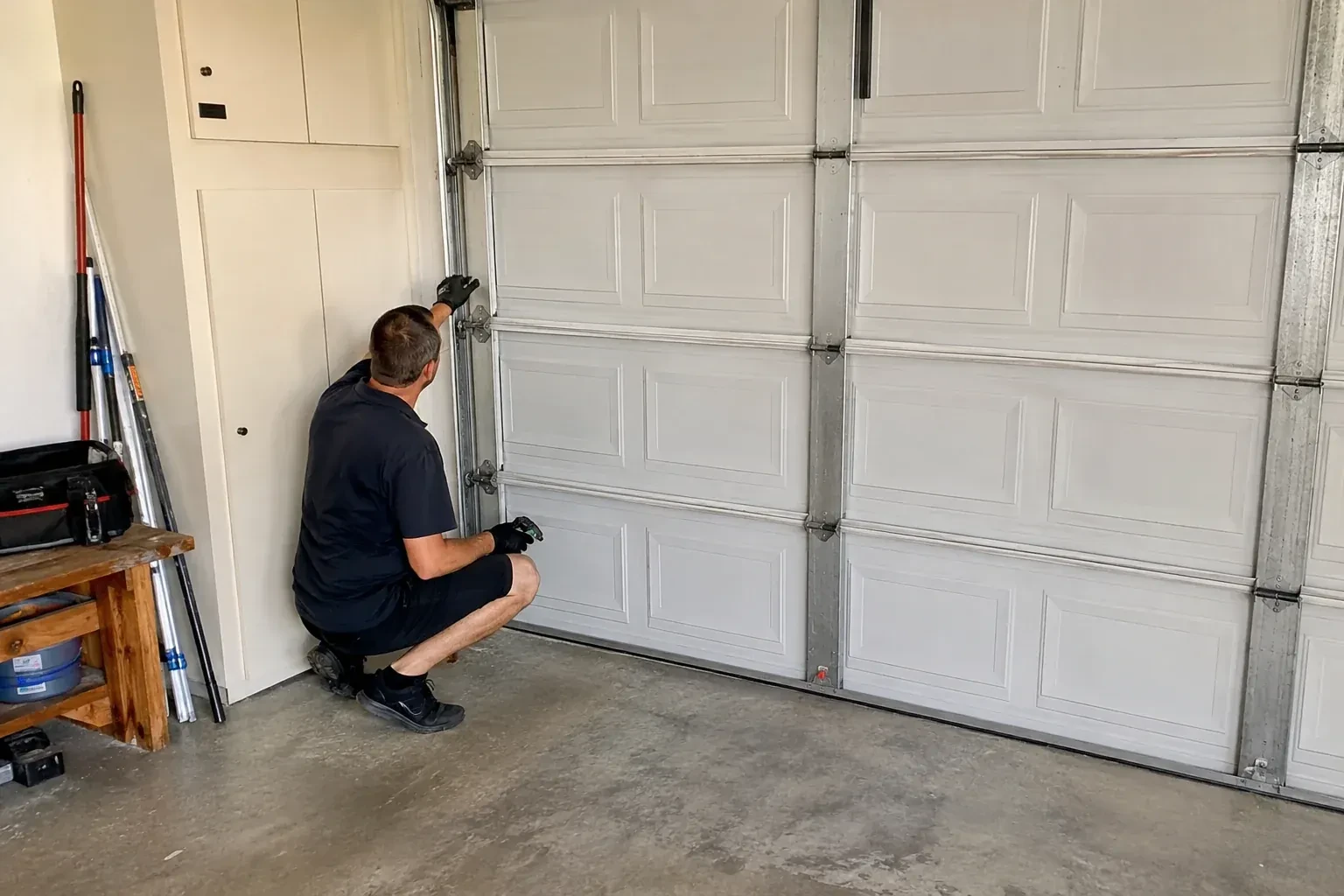
You tapped the door with the bumper while backing in, barely a nudge, and now the bottom corner has swung inward.
In plain words
Off-track doors are really two problems in one, and the reset addresses both. The first is the visible one: a roller outside its rail and a door out of square. The second is the cause, which is often a slack or broken lifting cable, a worn roller, a bent hinge or a track bracket that has let go of the wall. Putting the roller back without fixing the cause invites a repeat within weeks. So the visit pairs the re-seating work with a whole-system check of cables, drums, springs, hinges, brackets and track geometry, and replaces the piece that started the trouble.
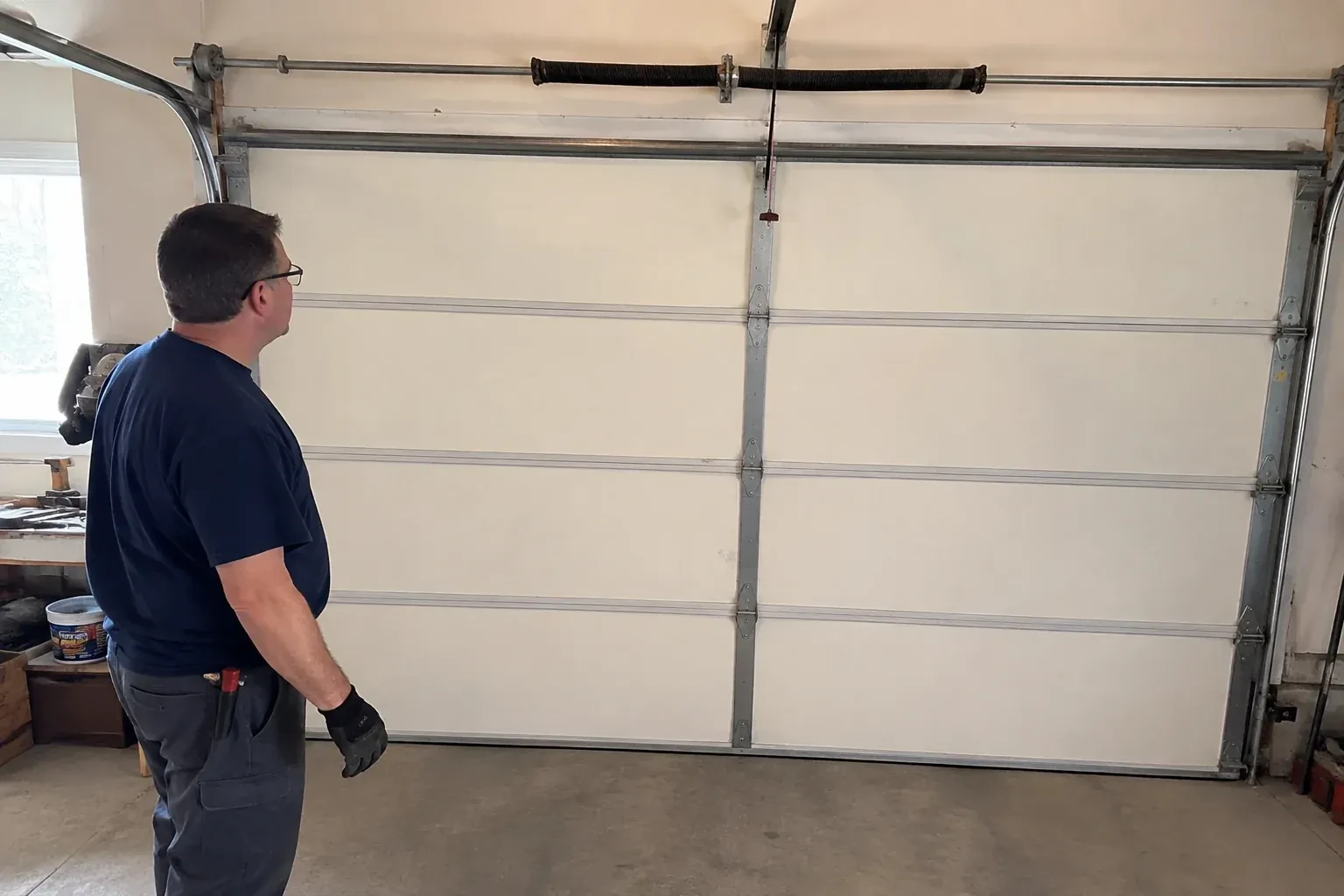
How the visit goesOne side of the door hangs a hand's width lower than the other. A steel cable is drooping in a loop beside the track instead of running tight to the drum, and the whole door looks tilted in the opening.
Off-Track Garage Door Reset
How the visit goes
What happened in the minutes before
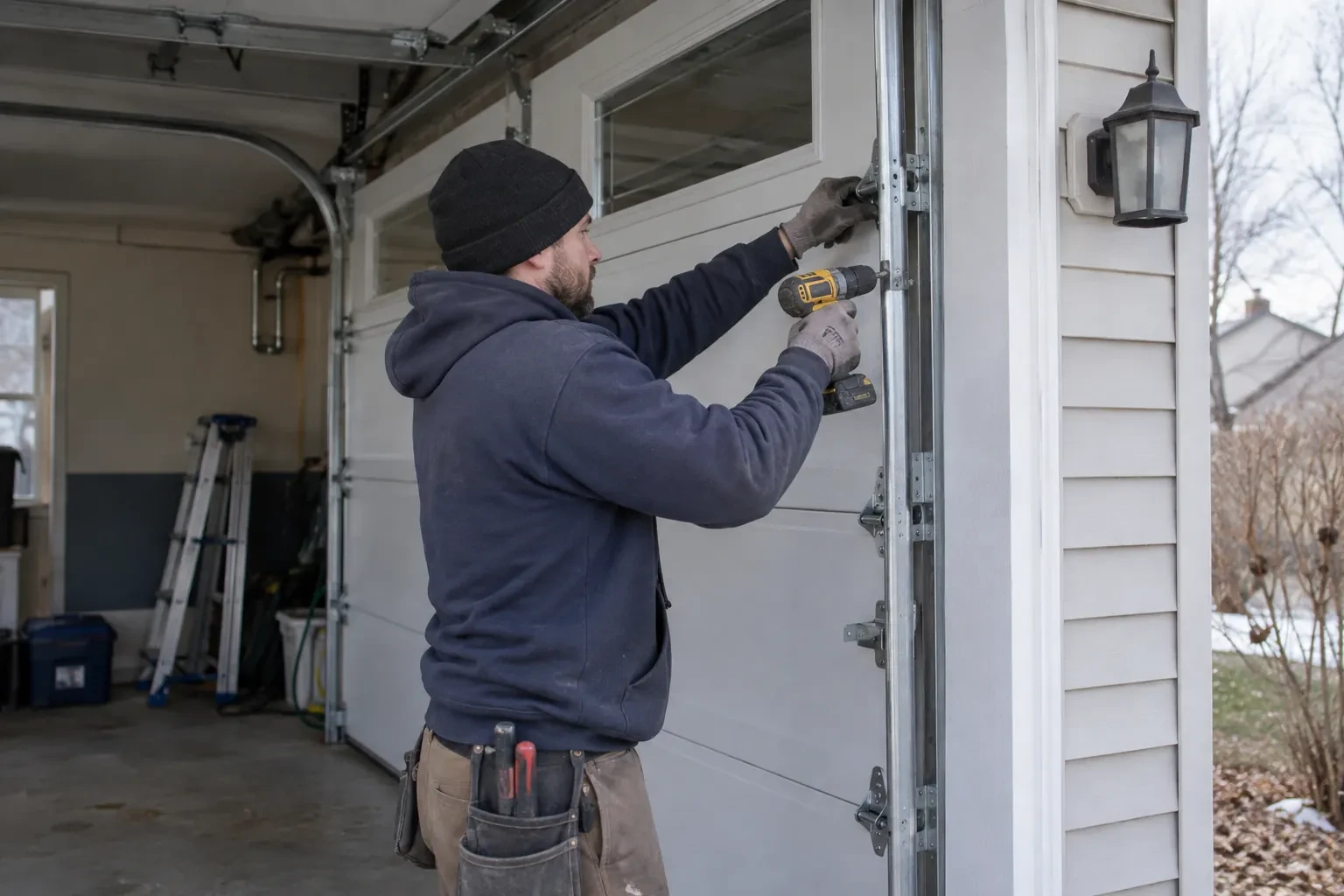
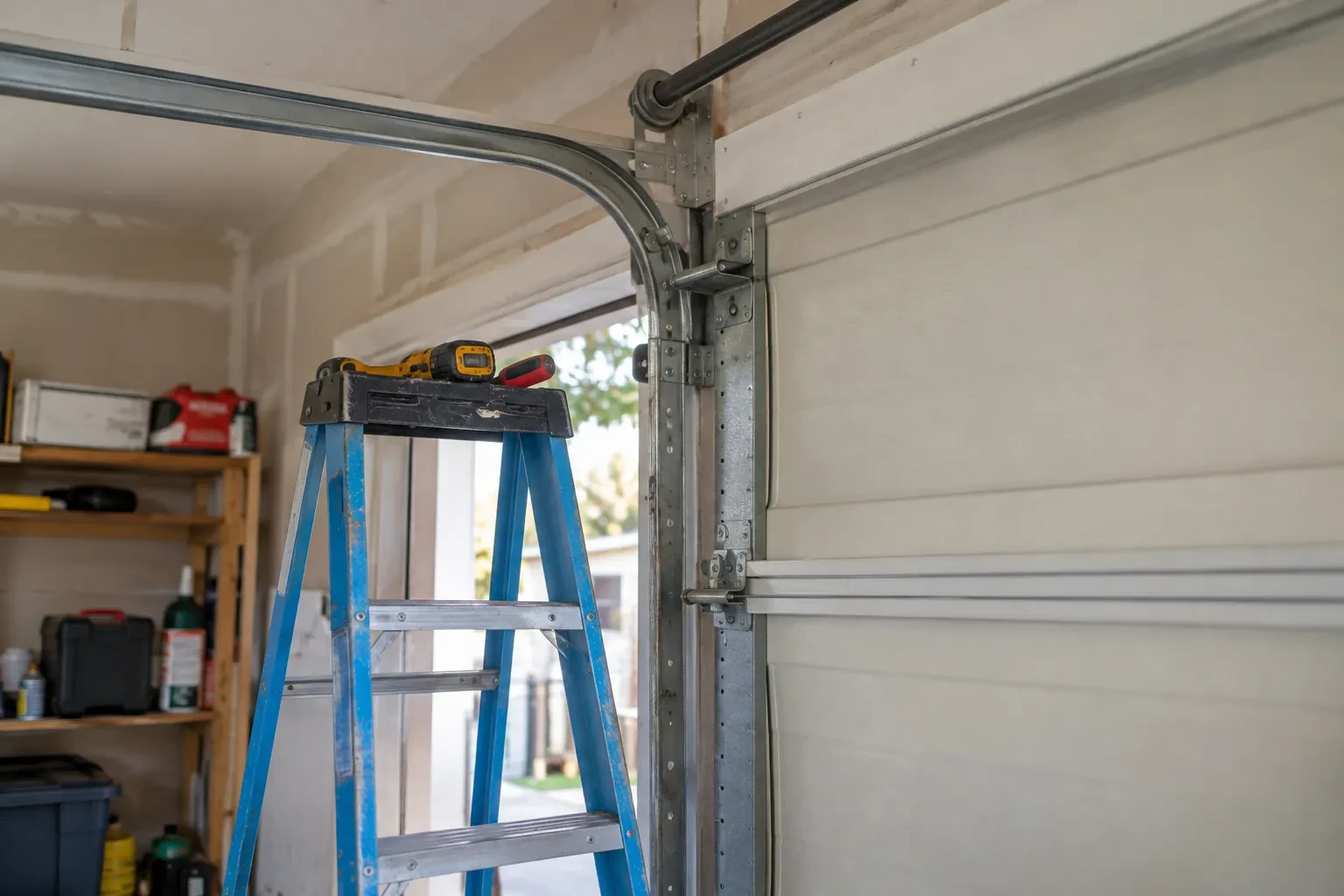
A short conversation fills in the picture. Did a vehicle touch the door? Was there a bang, a squeal or a grinding noise? Had the door been frozen to the floor that morning, or had something been left under it? Was one side already hanging lower for a while? Had the rollers been noisy for months? Each answer points at a different cause: impact, cable failure, ice, obstruction or long wear. Photographs the homeowner took from a safe distance are useful too, because they show the door before anything moved. This history is the difference between resetting the symptom and fixing the reason.
Putting the cables back on their drums
A cable that unwound or crossed on its drum is stripped back and rewound in its groove, beginning at the cable stop and laying each turn beside the last. Both cables are set to equal length so the bottom section hangs level, then the drums are locked to the shaft and the springs are rewound to the door's weight. A cable with kinks, rust or broken strands is replaced along with its partner so the two sides age together. This part of the work is done with the door clamped fully closed and the sections held, because a cable coming under tension is exactly when a door wants to move.
Keeping the opener honest
The opener leaves the visit re-taught to the trued door, and a monthly test keeps it that way. Lay a piece of wood about 1.5 inches thick flat on the floor in the door's path and close the door from the wall button: it must touch the block and reverse. Then start the door closing again and pass an object through the photo-eye beam near the floor: it must stop and go back up. If either test fails, unhook the door from the opener and operate it by hand until it has been looked at. A door that reverses properly is one that stops before it can rack itself against an obstruction.
Off-Track Garage Door Reset
In the van
Level and plumb line
Vertical or horizontal track section
Graduated edge hinges
Locking pliers and track clamps
Lifting cables, matched pair
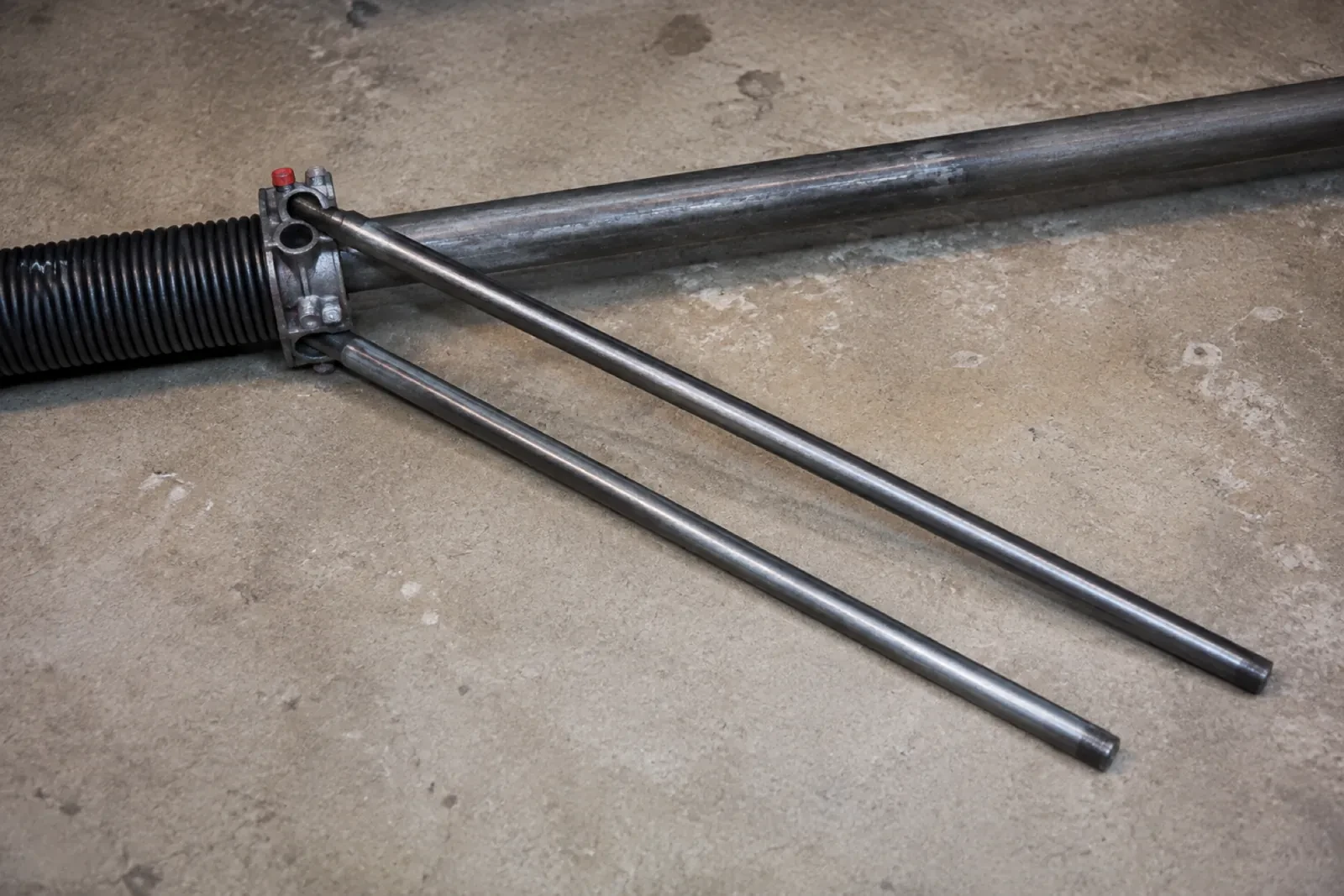
Off-Track Garage Door Reset
What affects the quote
Opener reconnection and adjustment
Reconnecting the trolley, resetting travel limits and force, and testing the reversal are normally part of the reset. An opener arm, bracket or reinforcement damaged during the event is an additional item.
Spring condition found during the check
If the springs are broken, badly worn or mismatched to the door, they are quoted as their own job. You choose whether to do that in the same visit, and the reset itself stands on its own.
How far the door has left its track
One roller out at the bottom of a closed door is a different job from a door racked across the opening with rollers out on both sides. The quote follows the amount of resetting involved.
What to have ready
- Can you see a cable hanging loose or lying on the floor?
- Are the springs mounted above the door or stretched along the sides?
- Is one side of the door hanging lower than the other?
Off-Track Garage Door Reset: questions
QuestionsWill the door be as good as it was before?
In most cases it comes back better, because the reset includes truing the track, replacing worn rollers and correcting the misalignments that had been building unnoticed. The exception is a section creased by an impact: it may work perfectly well after the reset yet keep a visible dent, and the technician will tell you whether it is sound or worth replacing at some point. You are shown the door running before the visit ends.
Why did the door come off its track in the first place?
The usual causes are an impact from a vehicle, a lifting cable that broke or slipped off its drum, ice holding the door to the floor while the opener pulled, an obstruction under the door, worn rollers that no longer hold in the rail, or track brackets that have loosened from the wall. Finding which one applies is the first part of the visit, because the reset is only durable once the cause is corrected.
I only tapped the door with the bumper. Why is it off its track?
A sectional door is strong in the direction it travels and surprisingly easy to push sideways at a single roller. A light nudge on the bottom section can flex the track lip enough for the roller to slip out, after which the section twists and the rollers above follow. The good news is that this kind of event usually leaves the cables and springs alone, so the reset is often rollers, a re-formed track lip and a hinge check.
Related services
- Garage Door Tune-UpOn windy nights the door rattles in its frame, there is a line of daylight along one side, and the bottom seal has gone hard and flat.
- Garage Door Panel ReplacementAfter an overnight freeze the door stuck to the slab, the opener strained, and something gave.
- Garage Door Bottom Seal ReplacementThere are mouse droppings along the wall behind the recycling bins, and at one bottom corner of the door the vinyl has a neat chewed notch the width of a thumb.