Springs · Ringwood
Garage Door Balance Adjustment in Ringwood
On cold mornings the door barely makes it up.
In plain words
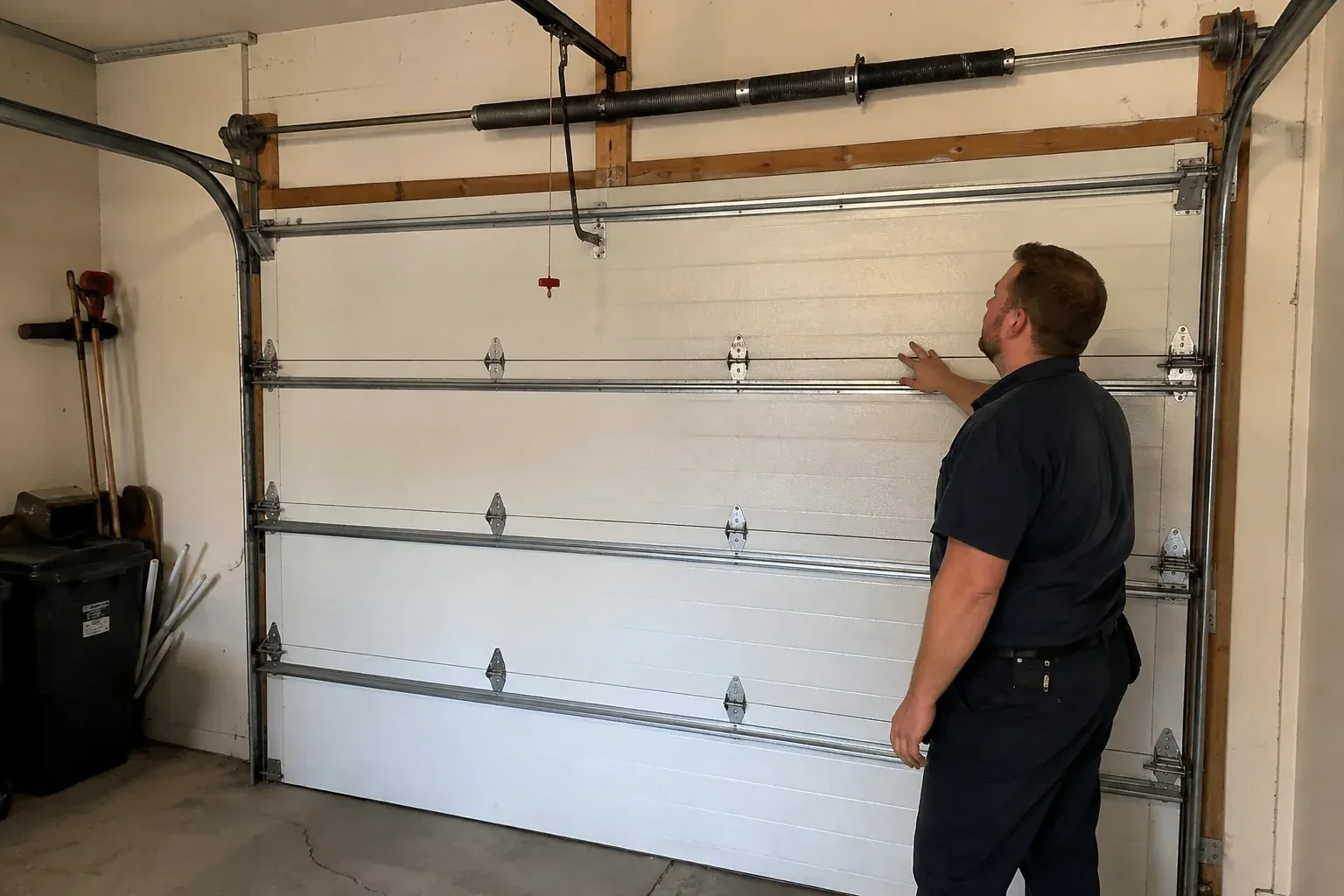
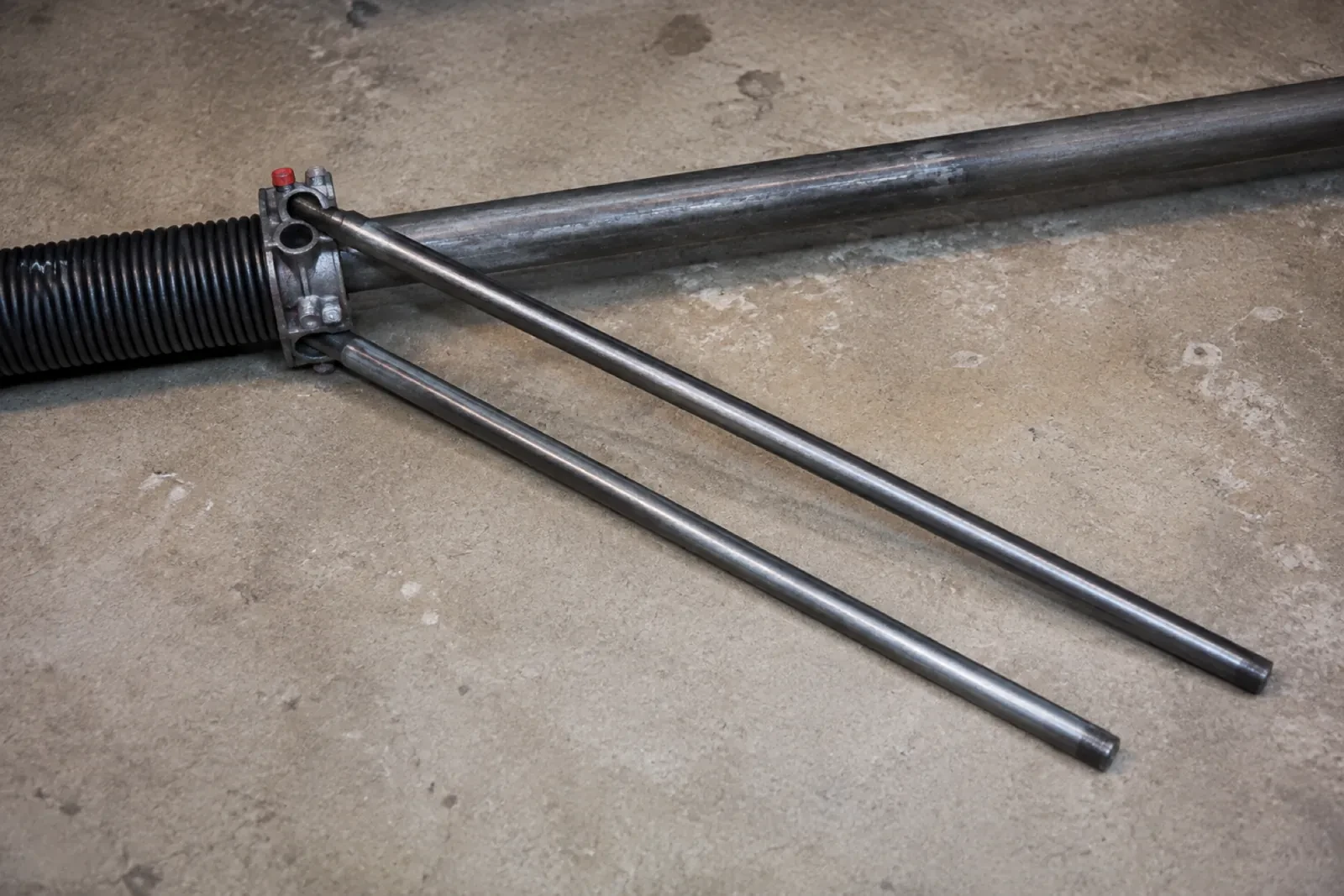
On a torsion door the springs sit on a shaft above the opening, and balance is set by how many turns of wind they carry. A seven-foot door typically needs a little over seven full turns; a quarter turn either way changes how the door feels. The technician clamps the door, fits winding bars into the cone, loosens the set screws, and adds or releases tension one quarter turn at a time, locking the cone again before each test. Both springs on a two-spring door are set alike so the shaft carries the load evenly. That precision is what makes the door hold wherever it is stopped.
How the visit goesOn cold mornings the door barely makes it up. The motor whines, the door crawls, and once or twice it has given up halfway. By afternoon, with the sun on the garage, it runs almost normally again.
Garage Door Balance Adjustment
How the visit goes
Releasing the door and reading how it behaves
The assessment begins with the opener out of the picture. The technician closes the door, pulls the red manual release so the trolley disconnects, and lifts the door by hand to about a metre, then to full height, then lets it settle. A balanced door pauses wherever it is stopped; a door that climbs on its own has too much tension, one that drops has too little, and one that is fine low down but drifts up near the top can point to drum profile, cable length, uneven section weight or the spring's own characteristics rather than one single cause. How much effort the lift takes and whether it stays fully open are noted before anything is adjusted.
Securing the door before the first turn
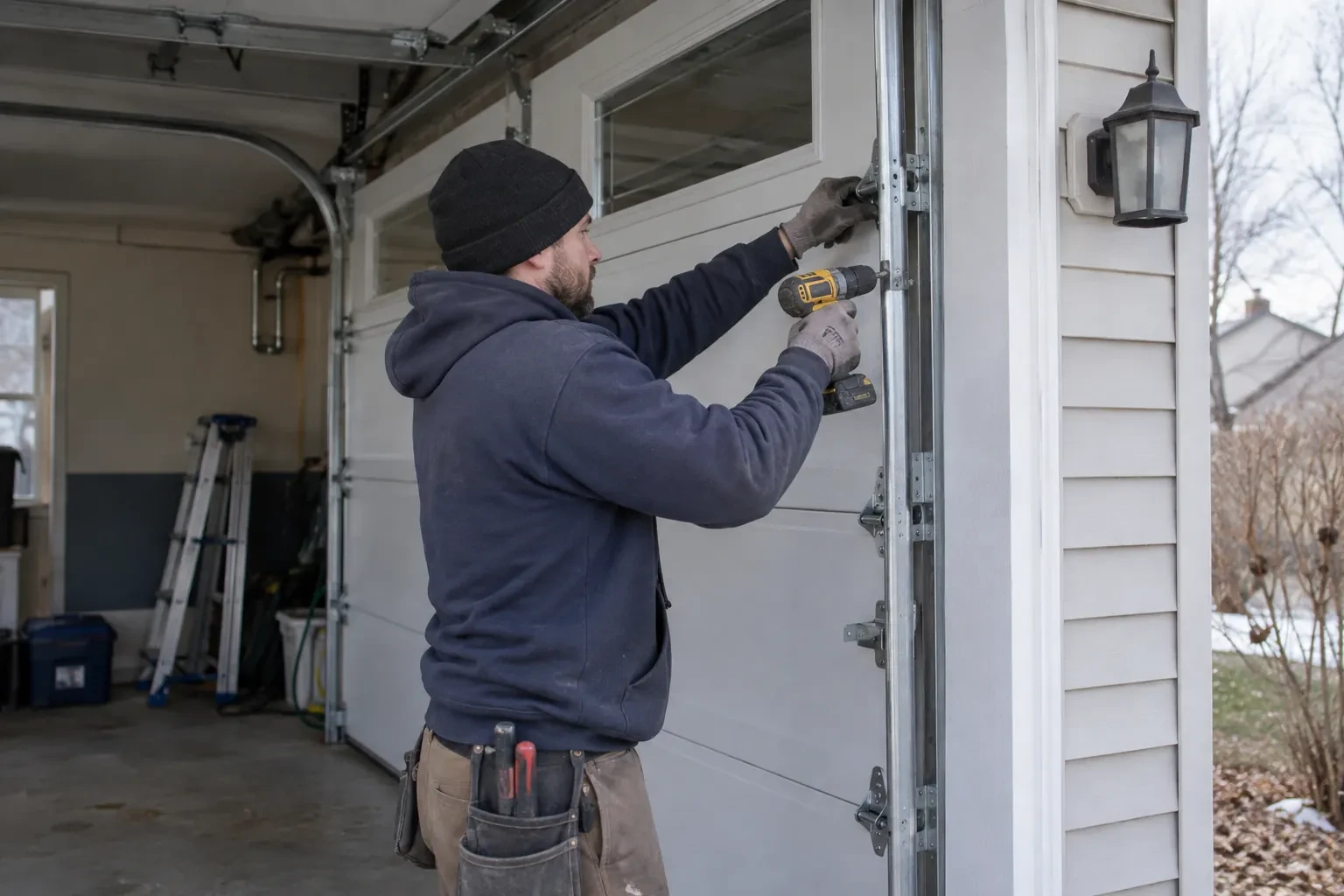
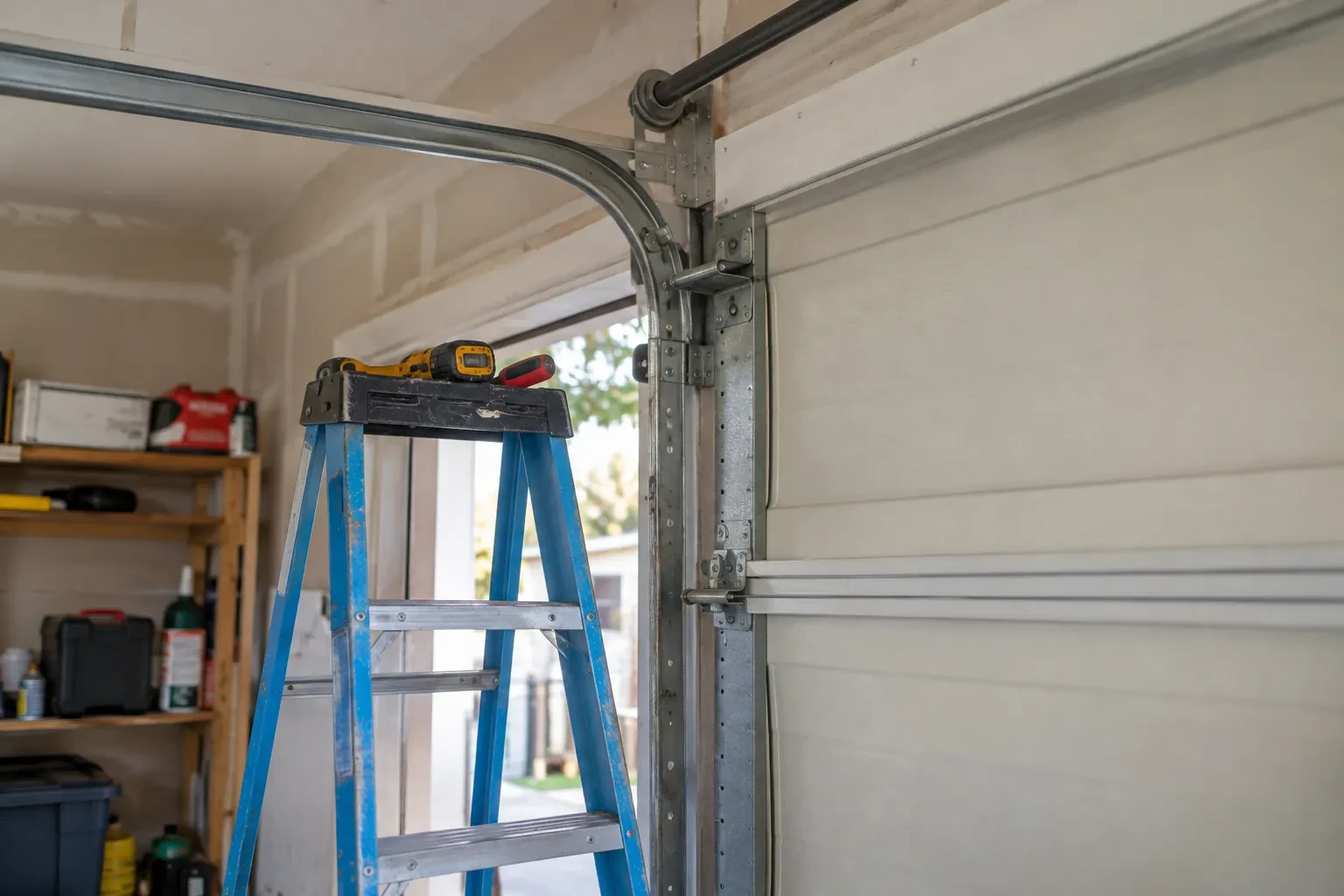
Before any tension changes, the door is made immovable. The technician disconnects the opener, clamps a pair of locking pliers on the track just above a roller so the door cannot rise, and clears the area under the shaft. On a torsion system the springs remain wound while the winding bars are used to add or subtract turns, so nothing has to be fully unloaded for a simple adjustment. On an extension system the door is raised fully and clamped there, which relaxes the springs so the hooks and clips can be moved safely. This setup takes a few minutes and is what makes the adjustment itself calm and controlled.
Keeping the opener honest
A balanced door lets the opener's safety settings stay at sensible values, and it is worth keeping them there. If the door ever starts to reverse for no reason or struggles to lift, resist the temptation to turn the force up on the motor; that hides a door that has grown heavy again and takes the entrapment protection out of its proper range. Instead, release the door and try the hand test. If it no longer holds, the springs want attention, and a balance adjustment puts the weight back on them so the opener can remain at the gentle settings it was left with.
Garage Door Balance Adjustment
In the van
Cable drums
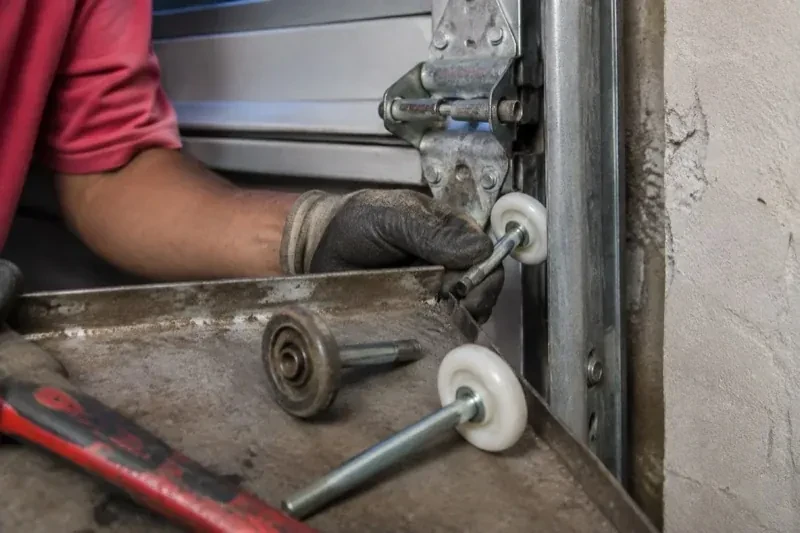
Nylon or steel rollers
Door scale
Replacement hinges
Winding cone set screws
Garage Door Balance Adjustment
What affects the quote
Access to the spring shaft
Shelving, bikes or storage close to the header, a very high ceiling or a tight low-headroom installation slow the work. Clearing the area beforehand helps the time quoted.
Commercial or oversized doors
Doors wider or heavier than a standard residential opening use heavier springs, sometimes several on one shaft, and take longer to wind and test, which the quote reflects.
Opener adjustment and tests
Resetting travel limits and force settings on the opener and running the reversal tests is a short step that follows every balance job and is named in the quote when needed.
What to have ready
- Do you have the door or opener manual, or a label with the model?
- When were the springs last replaced or adjusted, if you know?
- Does the door behave differently in cold weather?
Garage Door Balance Adjustment: questions
QuestionsWhat information helps when I book the visit?
Whether the door drifts up, sinks, or hangs crooked when released; whether there is one spring on a shaft above the door or springs along the tracks; whether it is a single or double door and roughly how tall; when the springs were last changed if you know; what has been added to the door; and whether the opener strains, reverses or stalls. A photo of the spring area is useful.
I added insulation panels to my door. Does that affect balance?
Yes, and it is one of the most common reasons a door starts to sink. Springs are matched to the door's weight, and insulation kits, replacement sections, windows or a heavier seal add weight the original springs were not sized for. A technician can weigh the door and either add tension to suit it or, if the added weight is beyond what the springs can carry, specify new ones.
How should I prepare the garage for the visit?
Move the car out if you can and clear the floor near the door and beneath the spring shaft, since the technician will be on a ladder there with winding bars. Take down anything hanging from the tracks or stored on top of the horizontal rails. Leave the door where it is, make sure the wall button and the opener are reachable, and have any spring or opener paperwork handy.
Related services
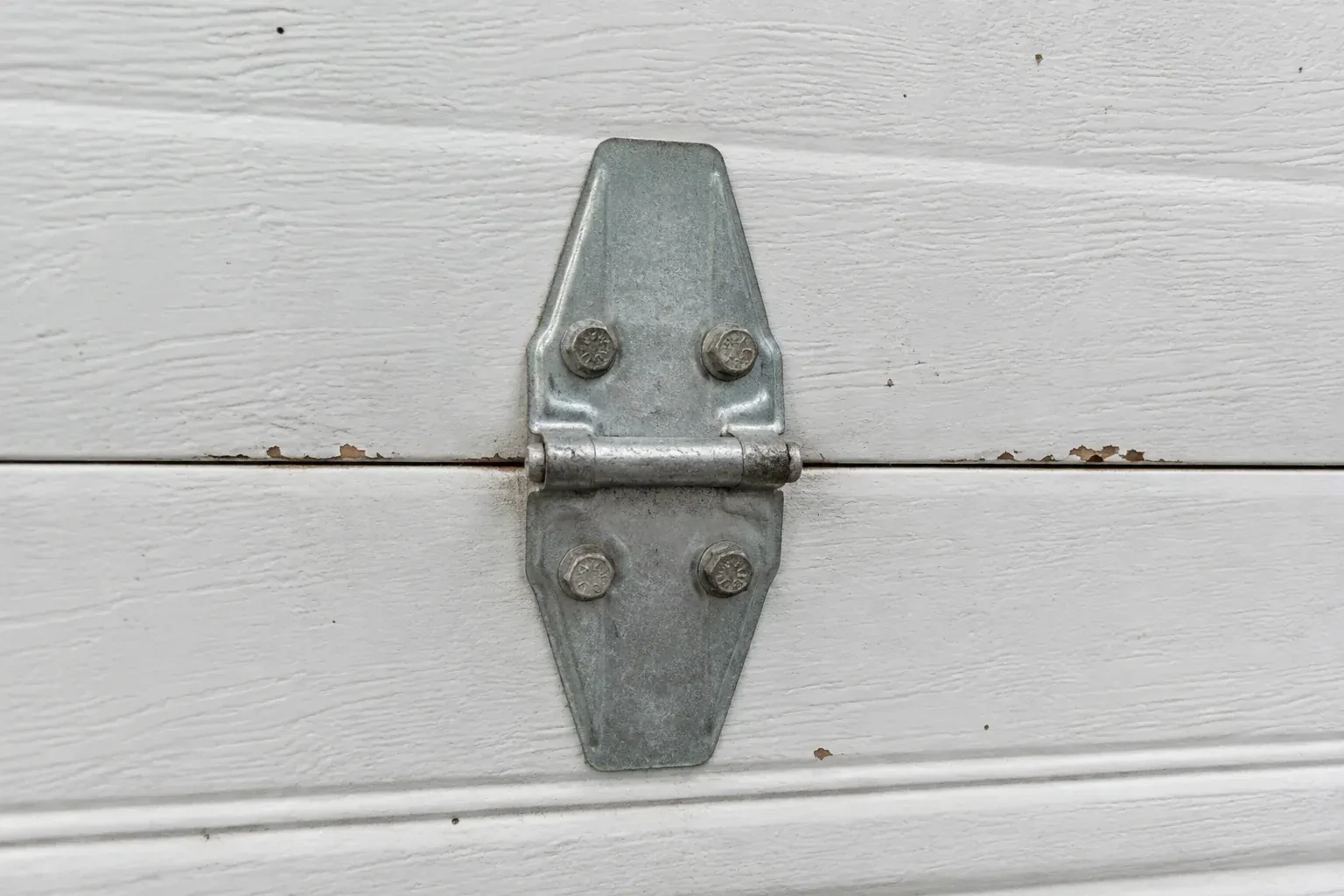
- Garage Door Hinge ReplacementWatching from inside as the door opens, you can see the gap between the second and third panels open up on one side as they turn the corner into the ceiling, then close again.
- Garage Door Track Repair or ReplacementHalfway up, the door lurches and one roller rides onto the lip of the channel.
- Garage Door Cable ReplacementAfter years of slushy winters the cables look thinner near the bottom brackets, with rust streaks running down the door where they attach.