Garage Doors in Whitchurch-Stouffville, OntarioBikes, strollersand a door that behaves.
Family garages in Whitchurch-Stouffville are busy places, with kids ducking under the door and a bike wheel always somewhere near the track. We set the auto-reverse so it trips on a light touch, aim the photo-eyes properly, and make sure the door closes fully every time so the house stays secure behind it. Nearby, we also work in Lemonville.
Family garages in Whitchurch-Stouffville are busy places, with kids ducking under the door and a bike wheel always somewhere near the track. We set the auto-reverse so it trips on a light touch, aim the photo-eyes properly, and make sure the door closes fully every time so the house stays secure behind it. Nearby, we also work in Lemonville.
Plain answers about your garage door.
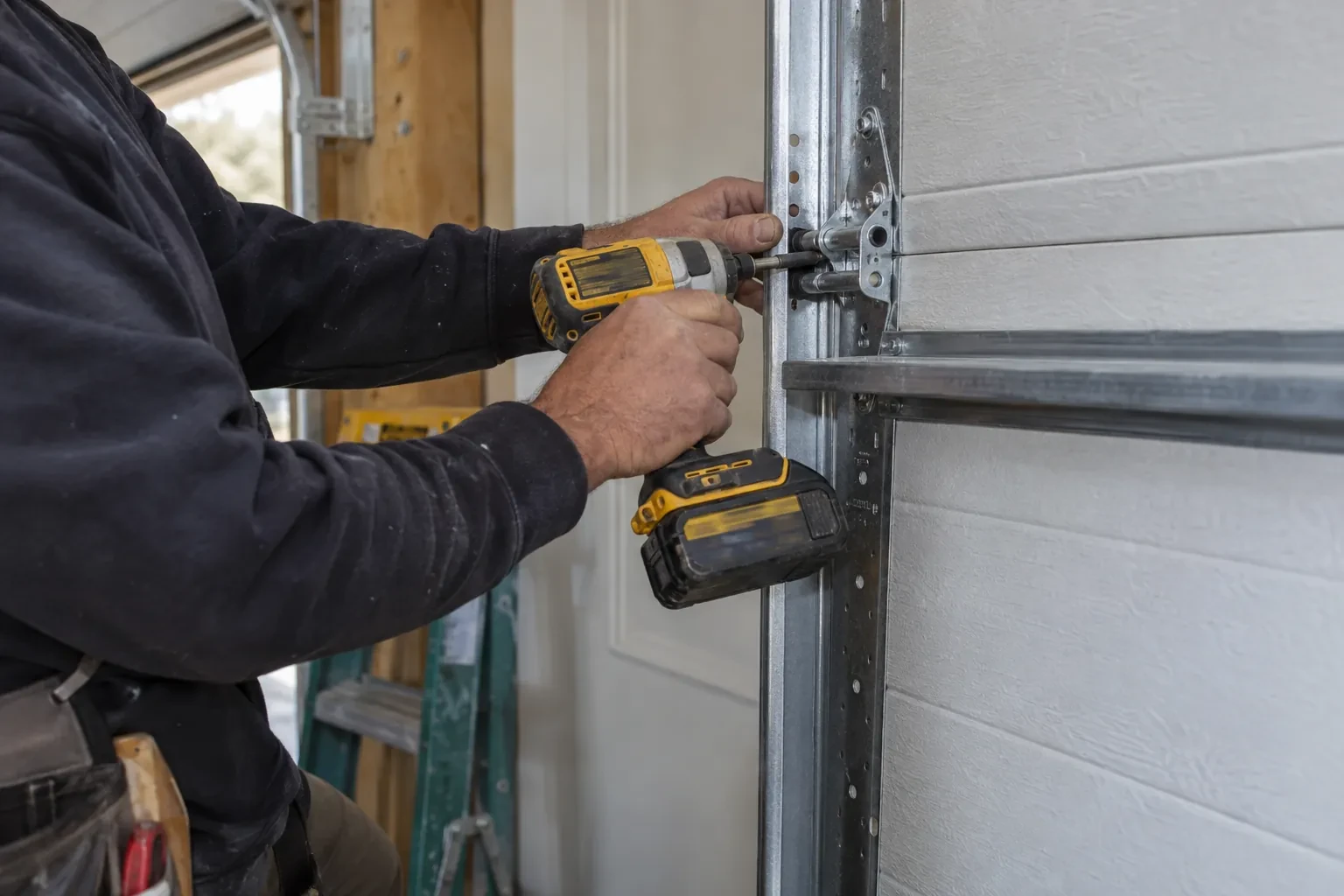
We work in Whitchurch-Stouffville the way a good tradesman works on his own house: replace parts in matched pairs so wear stays even, use the spring size the door actually needs rather than the closest one on the shelf, and tidy the garage before leaving. Small habits like these are why doors stay fixed.
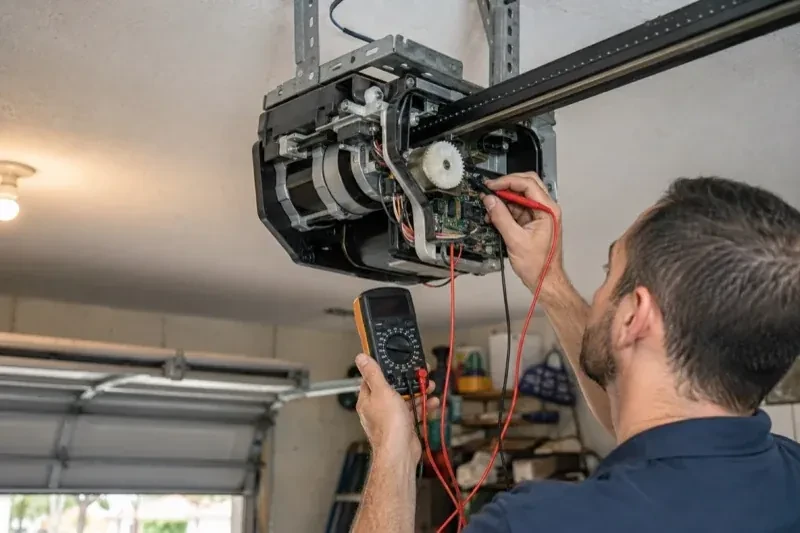
Homeowners across Whitchurch-Stouffville call us when the remote stops answering, the keypad forgets its code or the opener hums without lifting. We work through the system in order, from power to logic board to travel limits to sensors, and explain each part as we go. New openers are installed and fully set up, with every remote and keypad working before the technician leaves.
17years in business
24/7open every day
Talk before tools. The visit begins with a conversation about what you noticed and ends with one about what we did. The work sits in between.
Tidy job, tidy garage. Loose hardware collected, packaging taken away, tracks wiped. We judge our work partly by how the garage looks when we leave.
Options with honest trade-offs. A basic part, a heavier-duty one, or a new door: we describe how each will behave over time and let you weigh it.
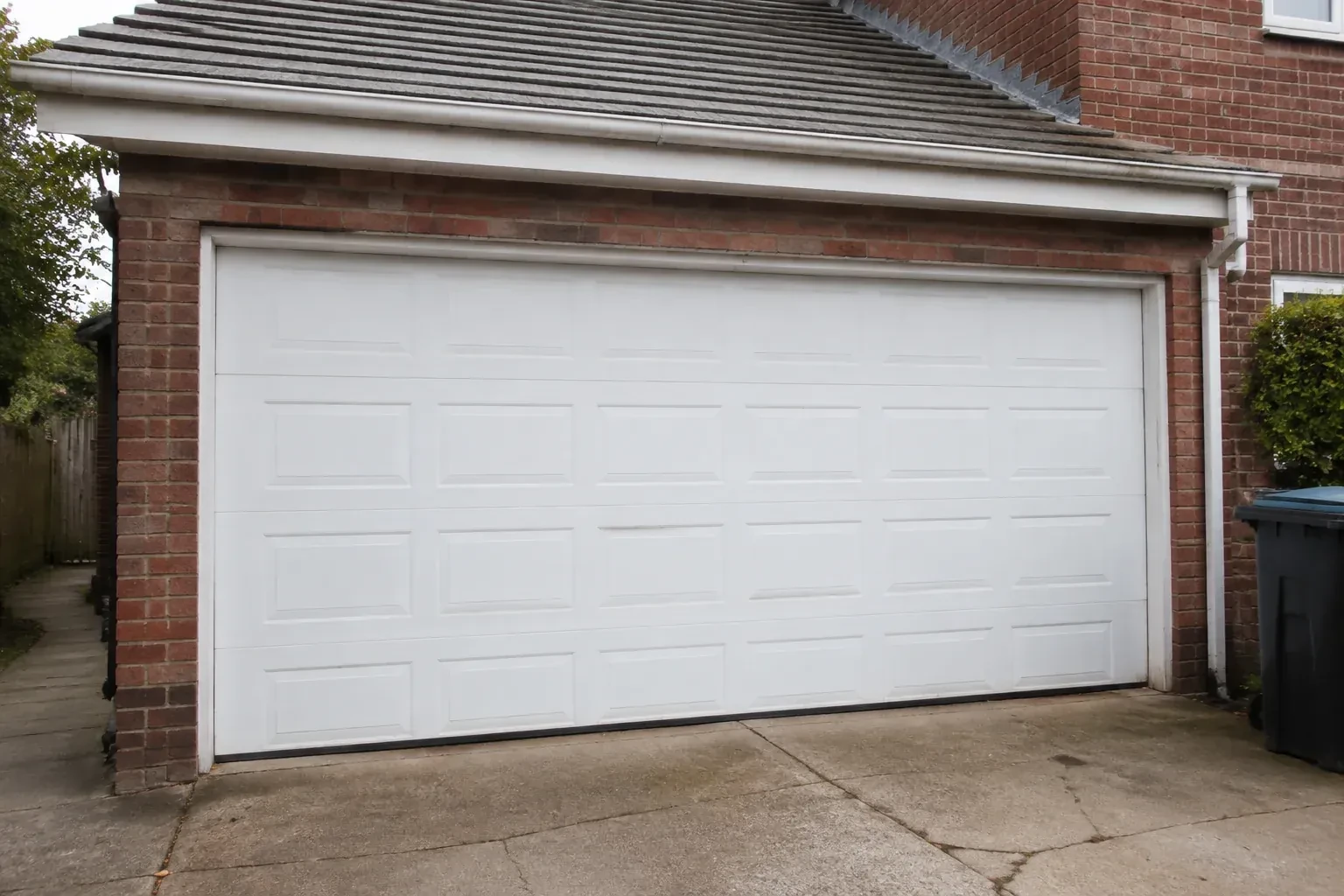
Ask about a new garage door for your Whitchurch-Stouffville home.
Broken spring, snapped cable, door off the track, opener humming but not lifting, remote lost, seal cracked, panel dented, door too loud for the bedroom above: those are the calls we take from Whitchurch-Stouffville, and each has its own service page explaining how we handle it.
About 22% of homes in Whitchurch-Stouffville were built in 1980 or earlier, according to the 2021 Census.
Newer homes
Households in newer neighbourhoods often use the garage as the main entrance every day, which puts far more cycles on the door in a year than an older single door would see. A tune-up schedule matched to that use keeps the springs and opener working within their design.
Single-detached houses make up about 74% of homes in Whitchurch-Stouffville (2021 Census).
Mostly houses
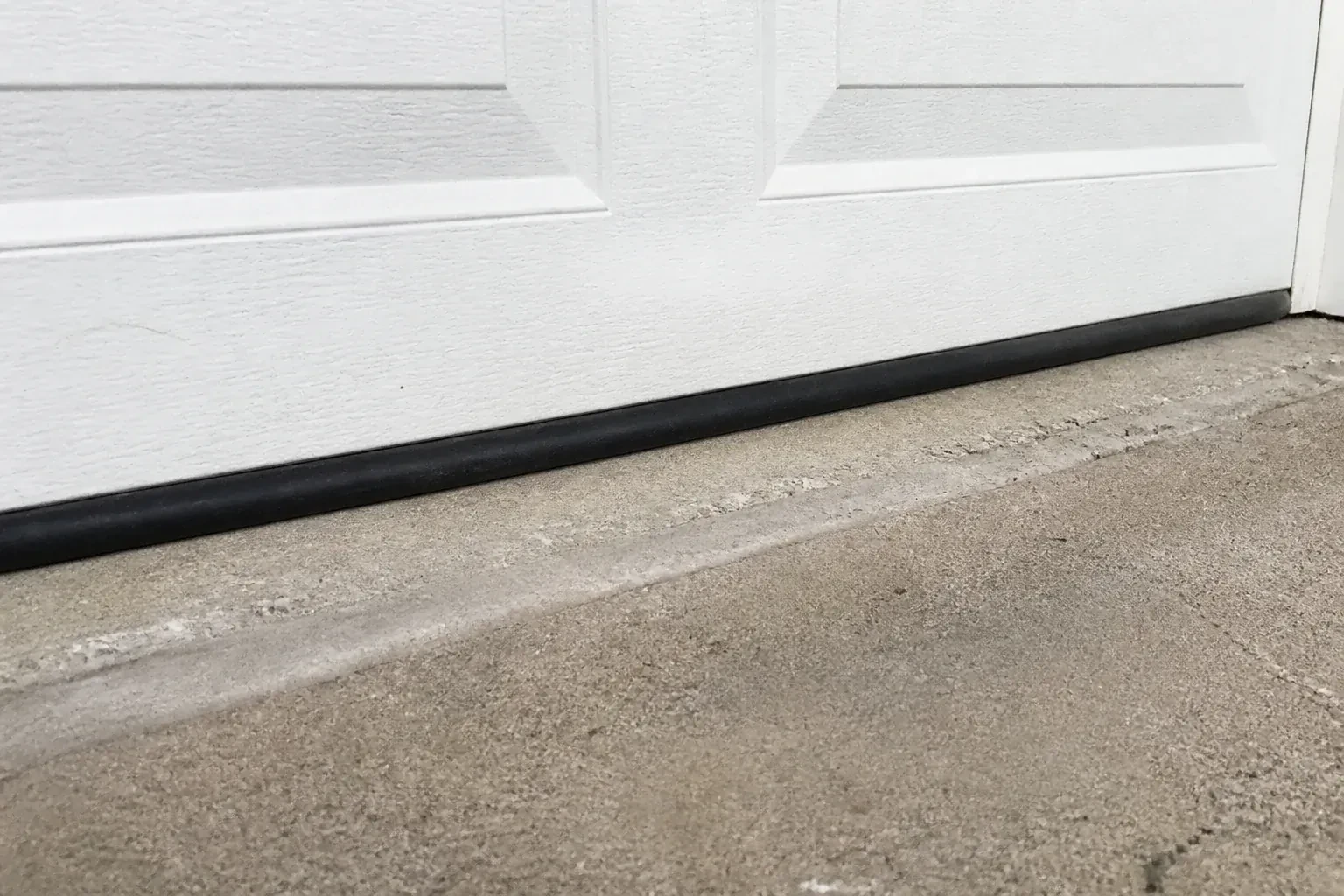
Detached homes usually have their own driveway and apron, and years of freeze and thaw can leave the concrete uneven where the door meets it. A thicker bottom seal or a threshold strip closes the gap, keeping snow, leaves and cold air out of the garage.
Every morning the door announces itself to the whole street: a long metallic squeal as it climbs, a rattle at the top, and a groan on the way back down. It still opens and closes, but it never used to sound like this.
The garage doubles as a workshop, and with the heater running the floor near the door stays cold and the draft finds your ankles at the bench. When the wind is up you can feel the air moving under the door.
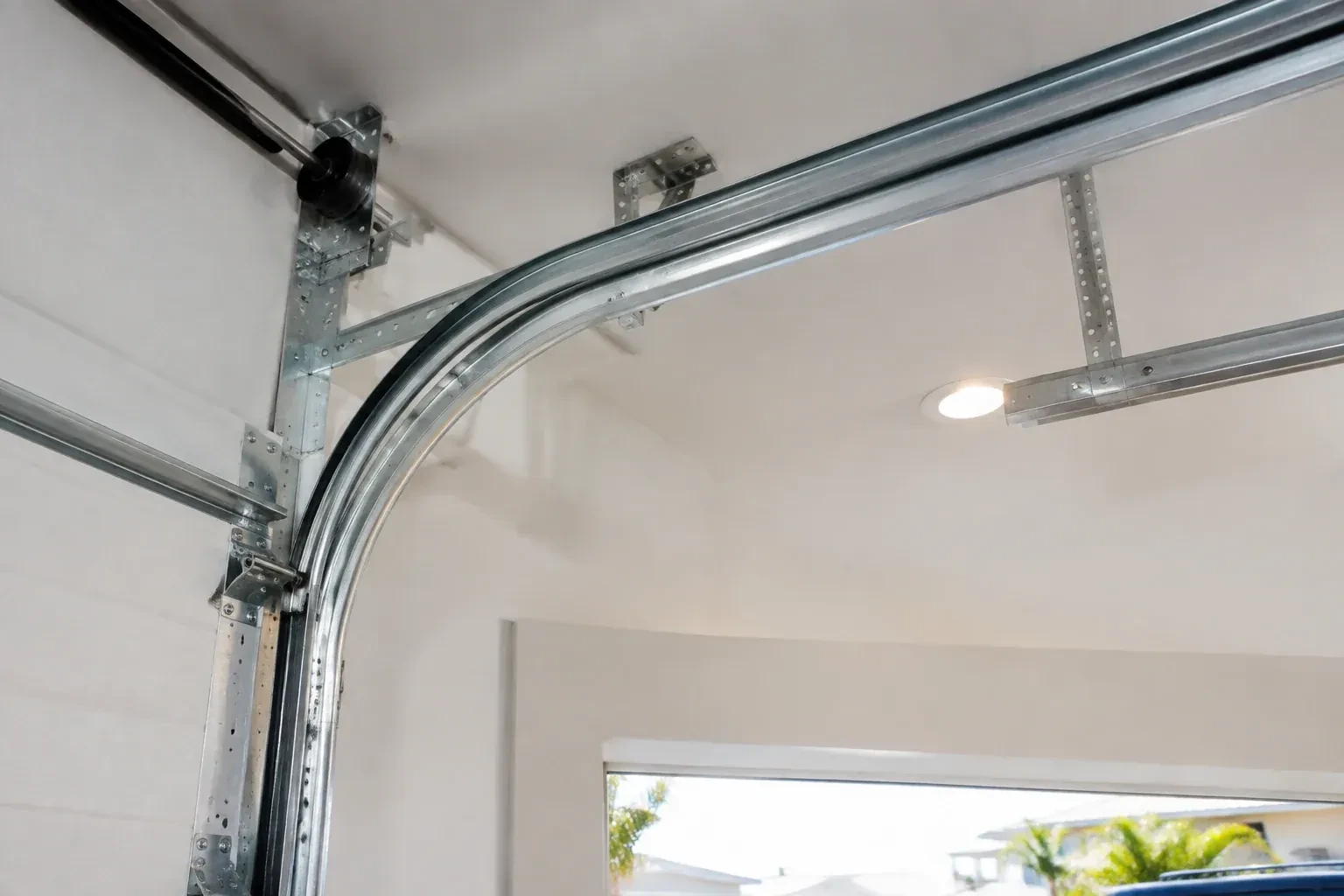
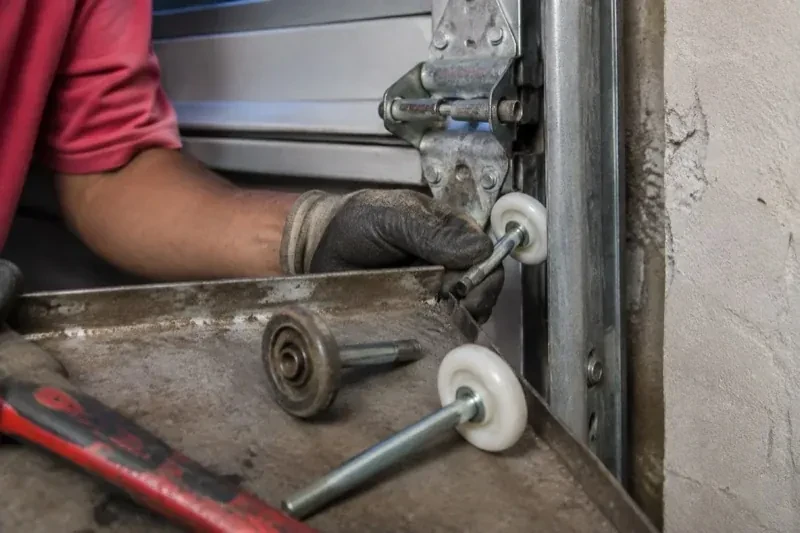
After a decade of slushy winters the bottom foot of the track is flaking rust. A roller squeals as it passes, and the channel edge has gone rough and thin where the salt collects.
The motor runs, the chain rattles along the rail, and the door does not move a millimetre. You notice the little carriage sliding back and forth on its own. Last week the power was out and someone pulled the red cord to get the car out.
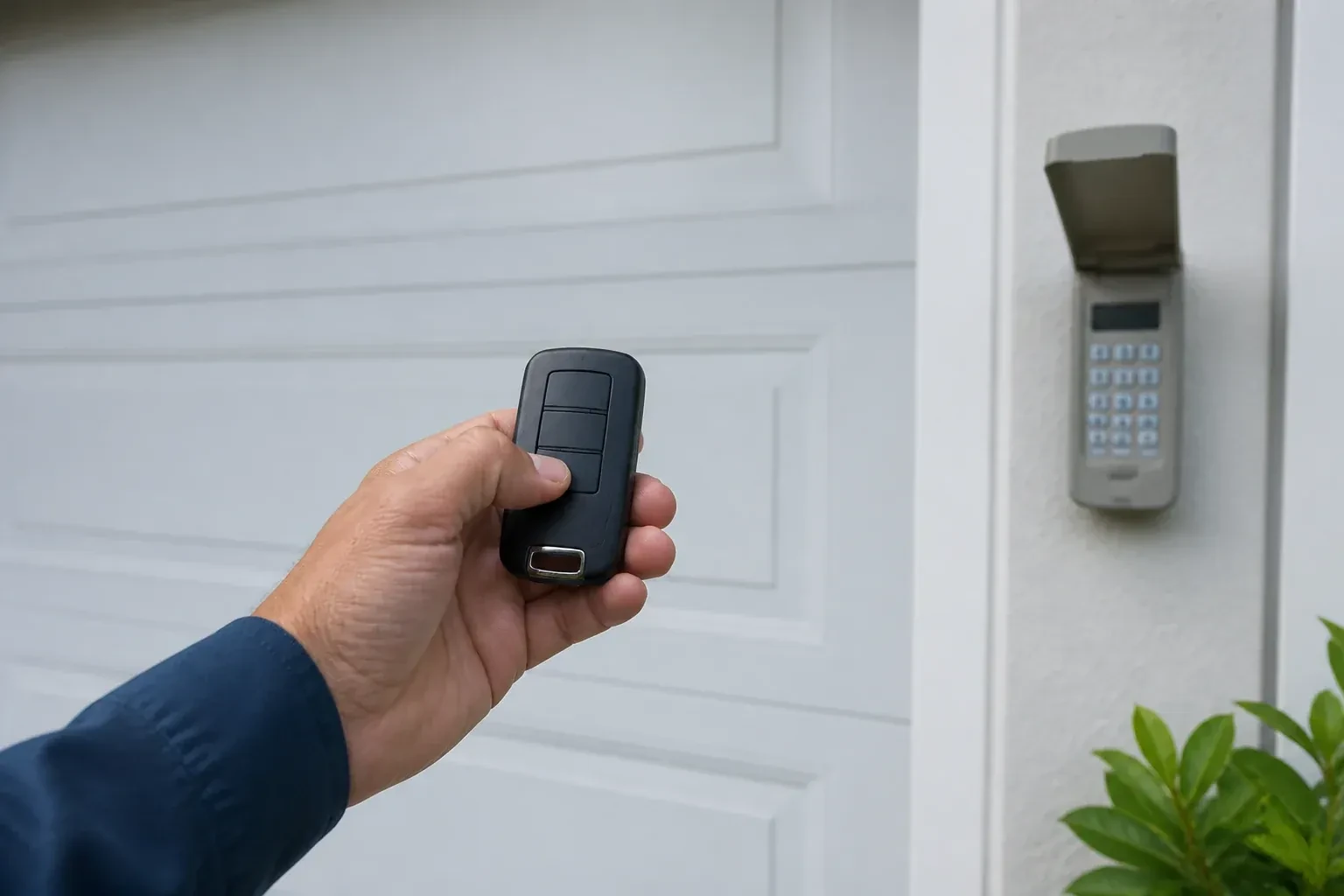
Someone in the family tried to add a remote, held the button on the ceiling unit a little too long, and now every remote in the house is dead at once. The wall control still moves the door. The remotes act as if they were never programmed.
One remote lives in a car you sold last spring. The other needs three presses from the driveway and its battery cover is taped on. Your phone is already in your hand when you pull in, and it would make a better opener.
A planned exterior renovation has made the old door stand out for the wrong reasons. Its colour, window pattern and panel style no longer suit the house, even though the opening itself remains useful.
The property faces open fields, leaving the garage frontage more exposed than neighbouring homes sheltered by trees and buildings. You want the large opening assessed as part of choosing a sturdier replacement assembly.
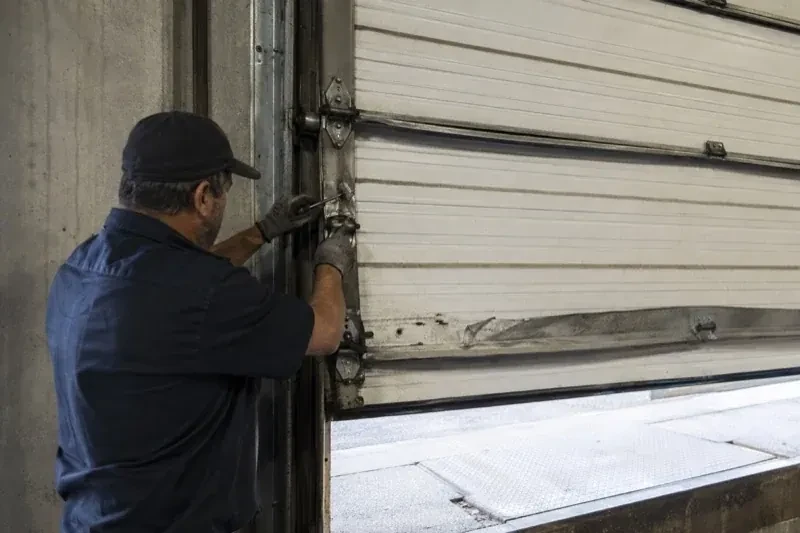
A forklift clipped the bottom panel while backing through the bay. The section is creased near an end stile, the lower roller rubs the track, and daylight now shows along one corner when the door closes.
The labelled rolling fire door still moves from its control, yet the release assembly and closing path were disturbed during nearby work. The facility needs the repair and return-to-service record handled as a fire-door scope.
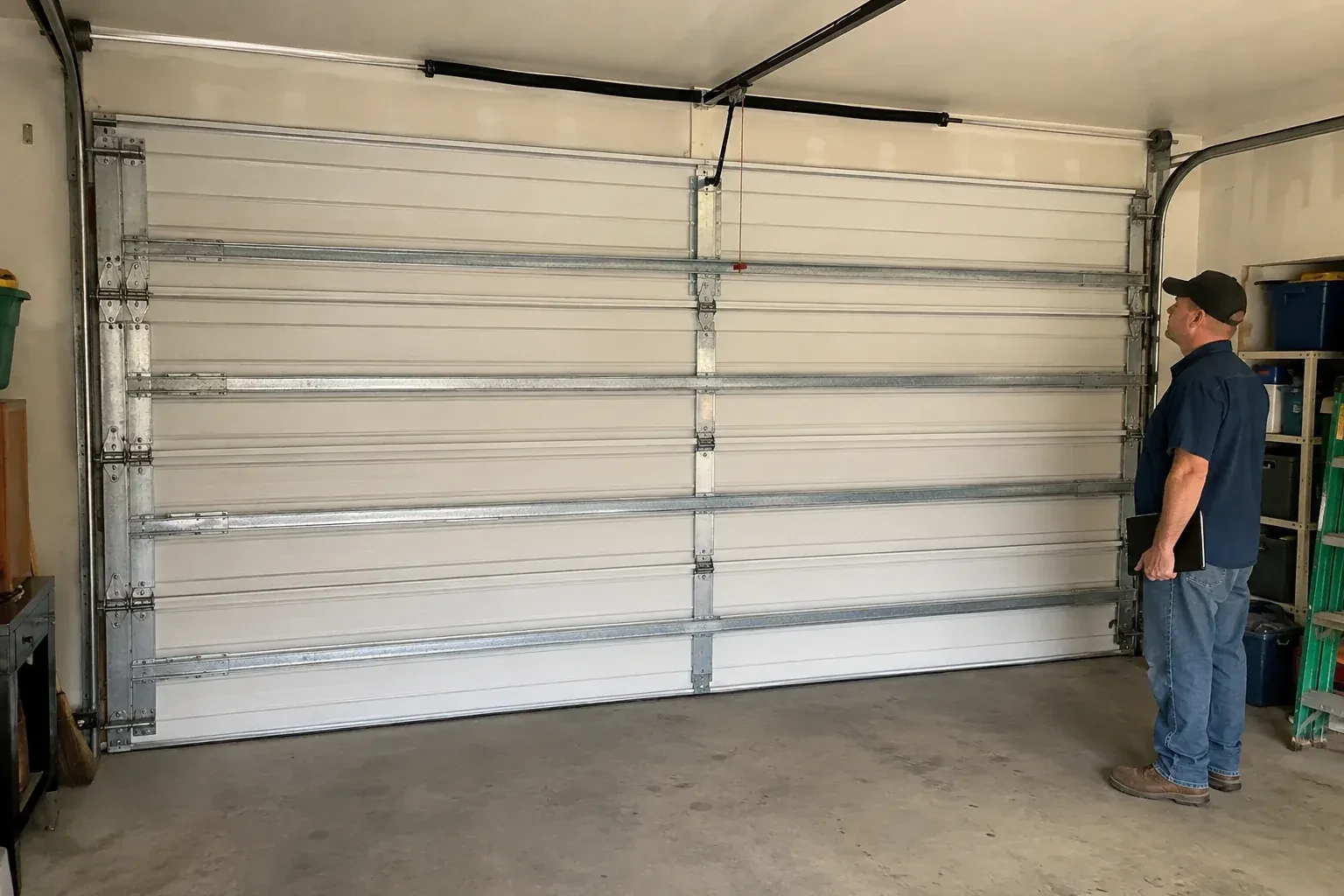
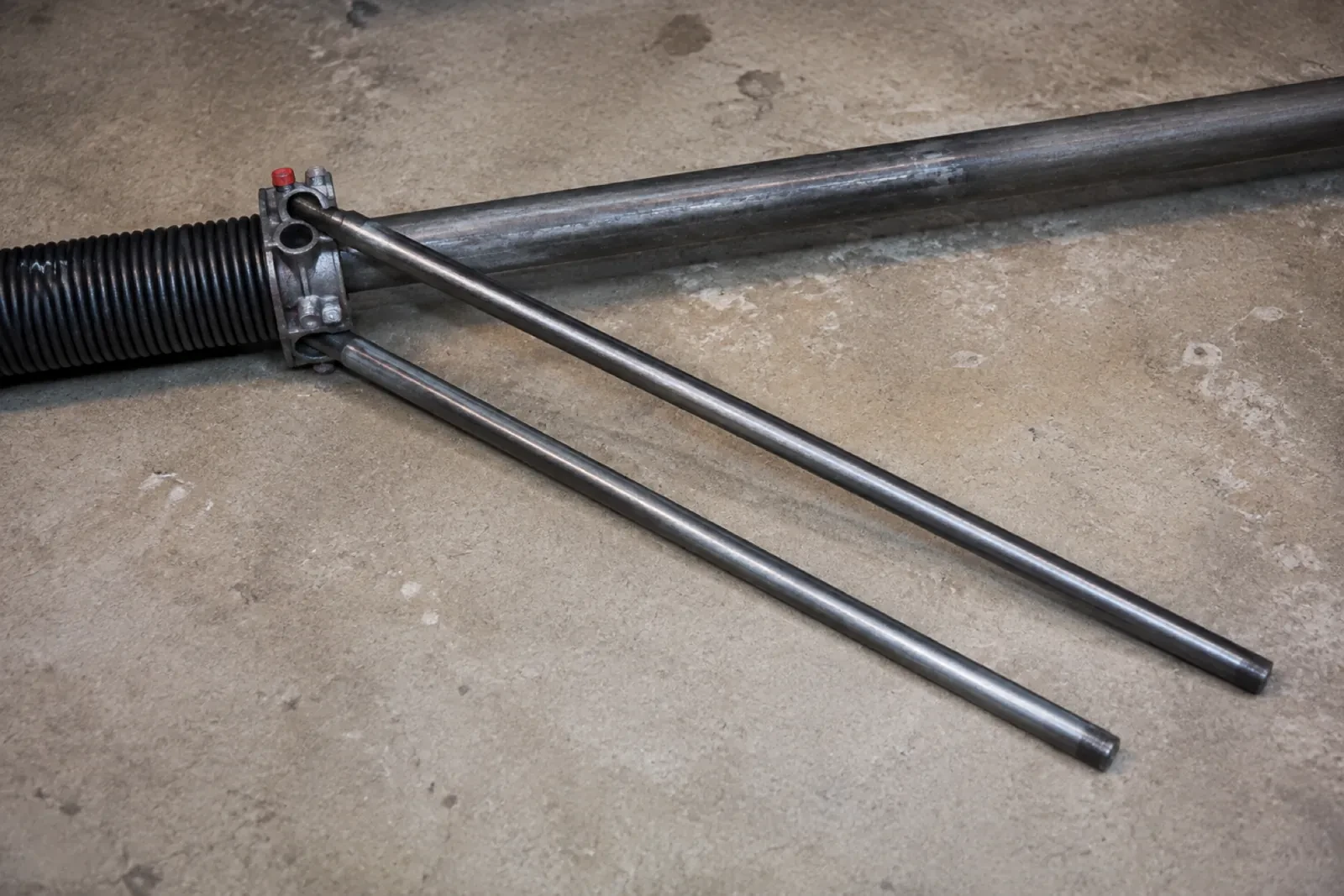
The counterbalance system is the part of the door people never see and rely on completely. Springs, cables, drums, bearings and brackets share one load, and this group covers keeping that load carried safely.
Replacing a door is a chance to fix everything at once: insulation that keeps the garage warmer, panels that suit the house, a quieter opener and fresh tracks and springs sized to the new weight. This group covers the whole job.
Every morning the door announces itself to the whole street: a long metallic squeal as it climbs, a rattle at the top, and a groan on the way back down.
WhyWhat you get back is a door that runs its full height without a catch, hesitation or bang, with every roller seated in its channel and both sides rising together.
The motor runs, the chain rattles along the rail, and the door does not move a millimetre.
WhyFor a household here, the most valuable feature is often the simplest: a message that says the door has been open for ten minutes on a January night.
A planned exterior renovation has made the old door stand out for the wrong reasons.
Cold affects several things at once. Old lubricant thickens into a drag on every hinge and bearing. Steel contracts slightly, so a track that was snug becomes tight. Rubber seals stiffen and the bottom seal can freeze to the slab. The opener then reads all this extra resistance as an obstruction and stops or reverses. A fall tune-up with a low-temperature lubricant, silicone on the seals and correctly set force goes a long way toward smooth winter mornings.
How can I tell that the bottom seal needs replacing?
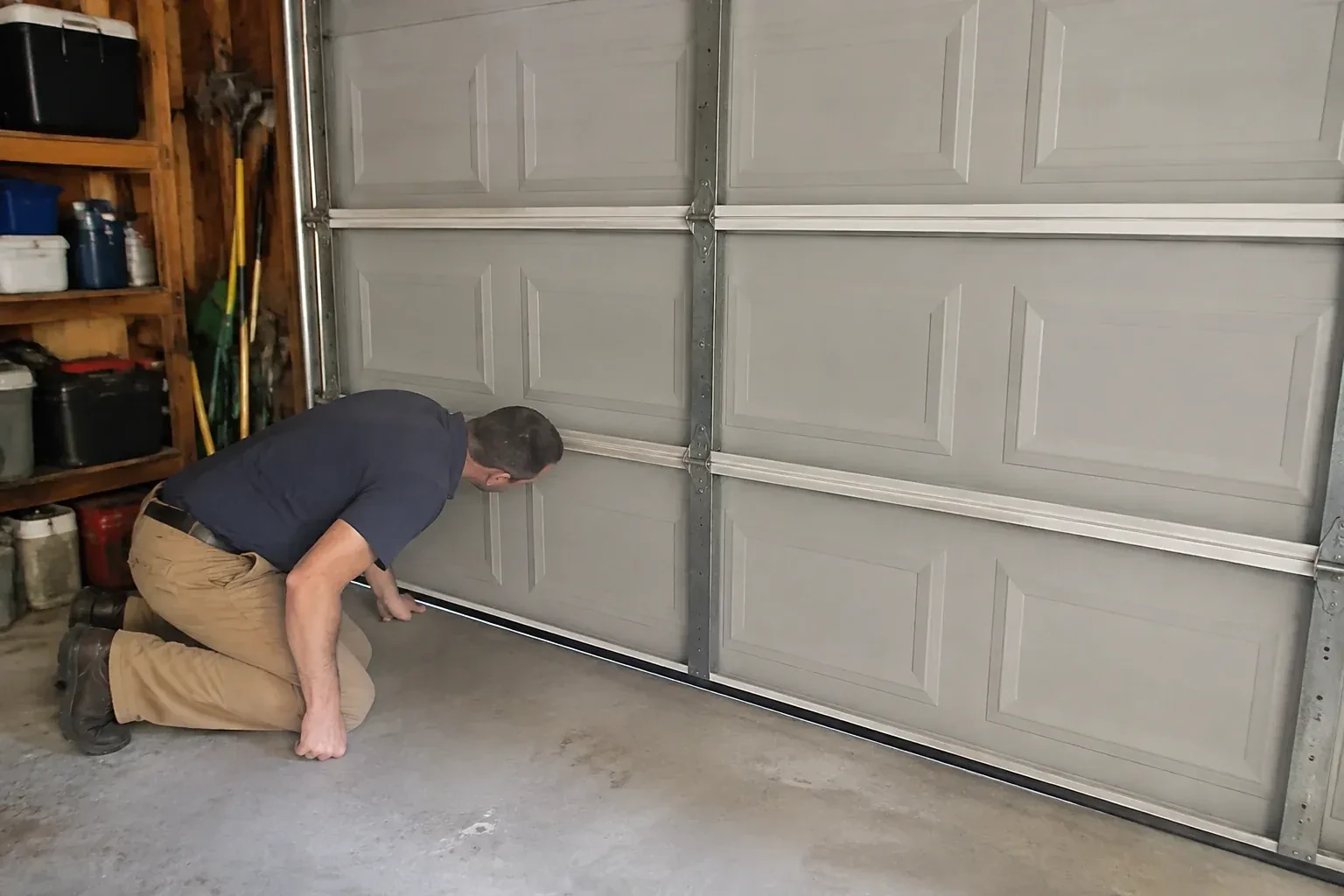
Close the door, turn off the lights and look along the floor from inside. Daylight showing, a strip that feels hard or cracks when pressed, a bulb that has flattened and stays flat, an end hanging out of its channel, chew marks or missing pieces are all signs. So are leaves, snow or a puddle inside the door after weather. Any one of these means the seal has stopped doing its job.
My door rubs the frame on one side. Is that a track problem?
Often, yes. The vertical track is meant to stand a fraction further from the jamb at the top than the bottom, so the closed door seals on its stop and swings clear as it rises. If a bracket has loosened or the track was set flat to the wood, the door drags along the stop moulding every trip. Resetting the spacing and taper, and tightening the brackets into sound wood, usually ends the rub.
Should I lubricate the chain, the rail or the track?
Rollers, hinges, bearings and springs benefit from a garage door lubricant once or twice a year. The chain, belt or screw-drive rail is a separate question, since each drive type calls for its own product and schedule from the opener's manual rather than one rule for every unit. The track itself should stay clean and dry, because lubricant there collects grit and makes rollers slide instead of turning. The technician can point out the spots on your door at the end of the visit.
What is the learn button and where is it?
It is a small button on the head unit, usually under the light cover on the same side as the antenna wire, sometimes on the back. Pressed briefly, it opens a window in which a remote or keypad can be added. Erasing every stored control follows that model's own sequence, which on some current openers needs more than one button. Some wall-mounted controls carry a second learn button that works the same way, and a connected app or account is managed on its own.
Can I give a contractor or cleaner access for a day?
Most apps allow guest or scheduled access: a user invited for a set window, or a one-time code, that expires on its own. That is a better arrangement than lending a remote or sharing the family keypad code, because there is nothing to chase back afterwards and the history shows exactly when the door was used. The technician shows you how to create and revoke such access during the visit.
How is the correct spring system selected?
Counterbalance parts are chosen from the new door's actual size, completed weight, track arrangement and hardware configuration, using the door system's specifications. Torsion and extension layouts use different components and space. Once installed, controlled adjustment and manual balance checks confirm how the spring system supports the door through its travel.
How is the required wind pressure determined?
The value comes from the applicable building-code process and project information, often with input from a designer or municipal building official. Reference wind pressure, exposure, building height, opening size, wall location, importance category, and internal pressure can contribute. A street address or a general weather description alone is not a complete design basis.
Should the operator be adjusted when the door feels heavy?
The mechanical door should be assessed before operator force, clutch or travel settings are changed. Extra resistance can come from spring imbalance, cable trouble, worn rollers, track contact or an engaged lock. Once the door moves freely and is correctly balanced, the operator can be set to that sound baseline and its limits and protective devices can be checked.
What gets tested before the door returns to use?
Testing follows the repaired system and can include full travel, curtain tracking, bottom-bar level, open and closed limits, manual effort, brake action, controls, locks, interlocks and protective-device response. Several controlled cycles help reveal repeated contact or noise. The completed record names the checks performed instead of relying on a general statement that the door operates.
Request a visit
We work in Whitchurch-Stouffville the way a good tradesman works on his own house: replace parts in matched pairs so wear stays even, use the spring size the door actually needs rather than the closest one on the shelf, and tidy the garage before leaving. Small habits like these are why doors stay fixed.