Repairs · Whitchurch-Stouffville
Garage Door Perimeter Weatherstrip
With the door closed and the garage lights off, a thin bright line runs down the whole left side of the opening.
In plain words
The skill in this job is in the position of the fin. It should touch the door with a small, even deflection, so that it seals when the door is closed and springs clear as the door lifts. Set too far off, it leaves a standing gap; pushed too hard, it drags, folds under and tears within a season. The header piece goes on first, fastened from the centre outward so it stays straight, and the sides are fitted tight beneath it so the fins overlap at the corners. Fasteners are spaced evenly in sound wood, and any joint where water could get behind the stop is caulked.
How the visit goesThe new door went in last year and looks perfect, but the old wooden stop and its tired seal were left in place. Along the top there is a gap you could slide a finger into, and the cold pours through it.
Garage Door Perimeter Weatherstrip
How the visit goes
Probing the jambs and header
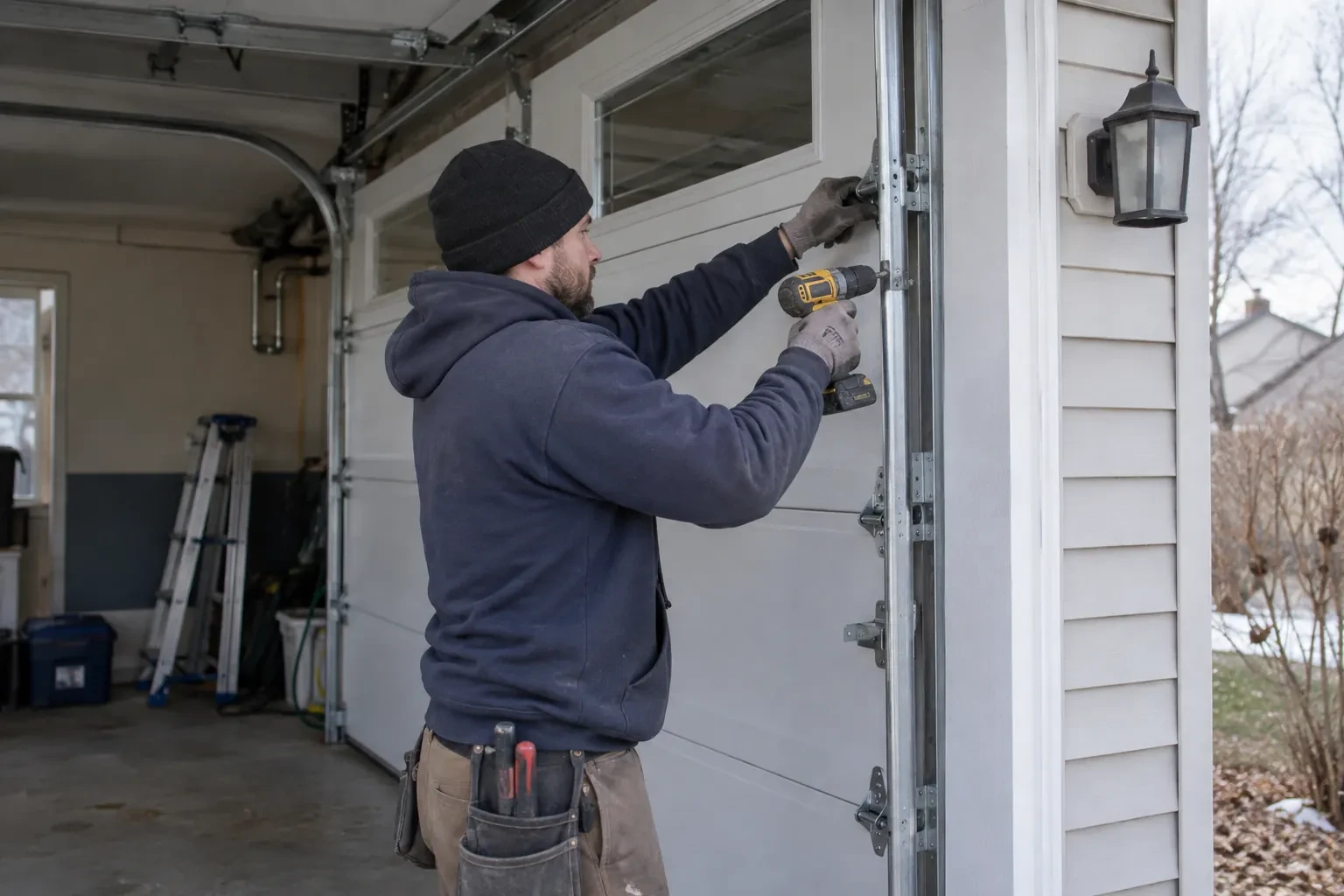
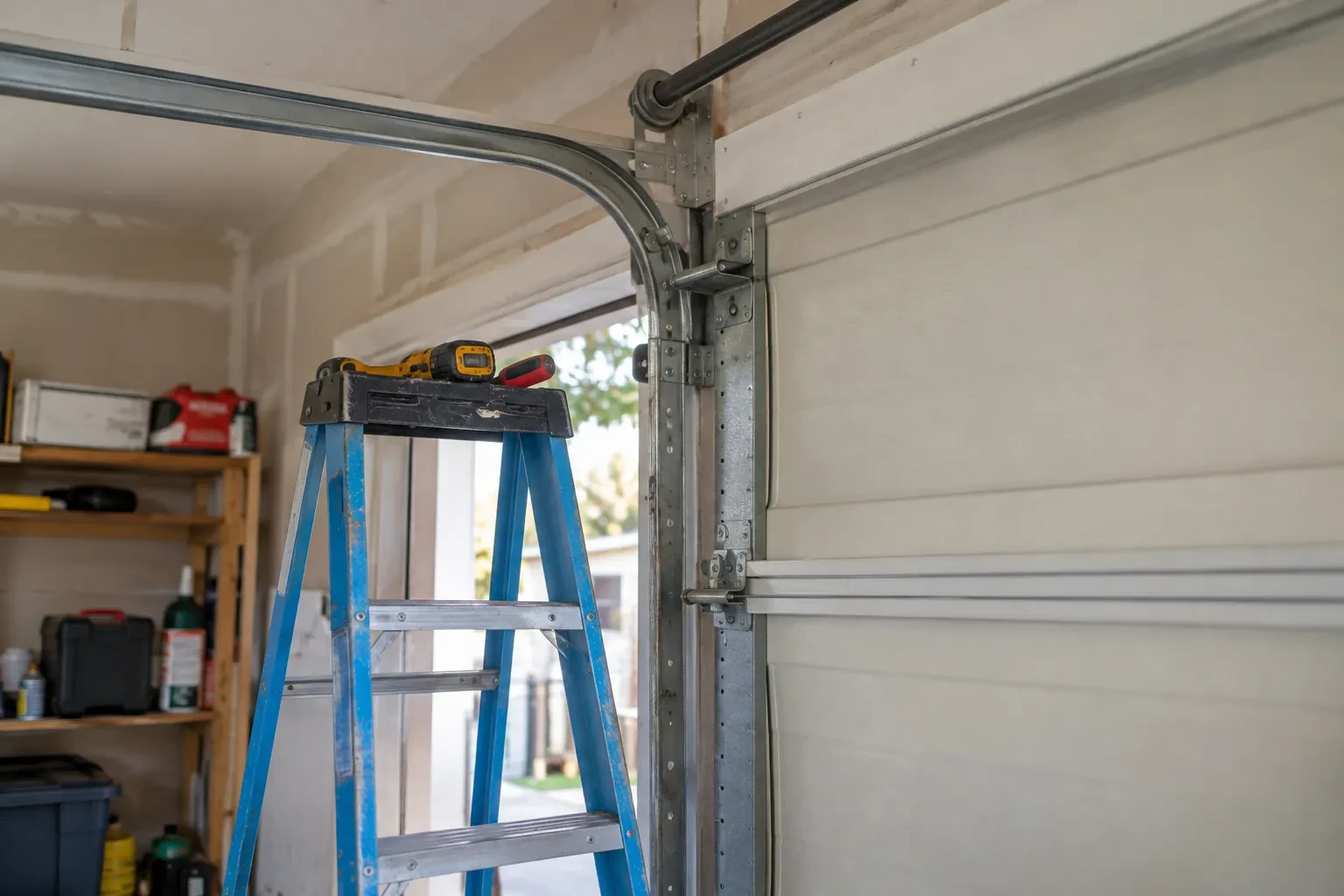
The strip is only as secure as the wood behind it, so the jambs are probed with an awl along their length and especially the lowest part, where slush and salt sit all winter. Soft, dark or crumbling wood is marked for repair. The header is checked for sag and for gaps opening between it and the top section. Where the jambs are clad in aluminum or vinyl, the technician looks for what the cladding hides and for where the seal can be fastened through to solid material. This step often adds a splice of new lumber or PVC trim to the job, and it is what makes the new seal stay put.
Setting the fin against the door
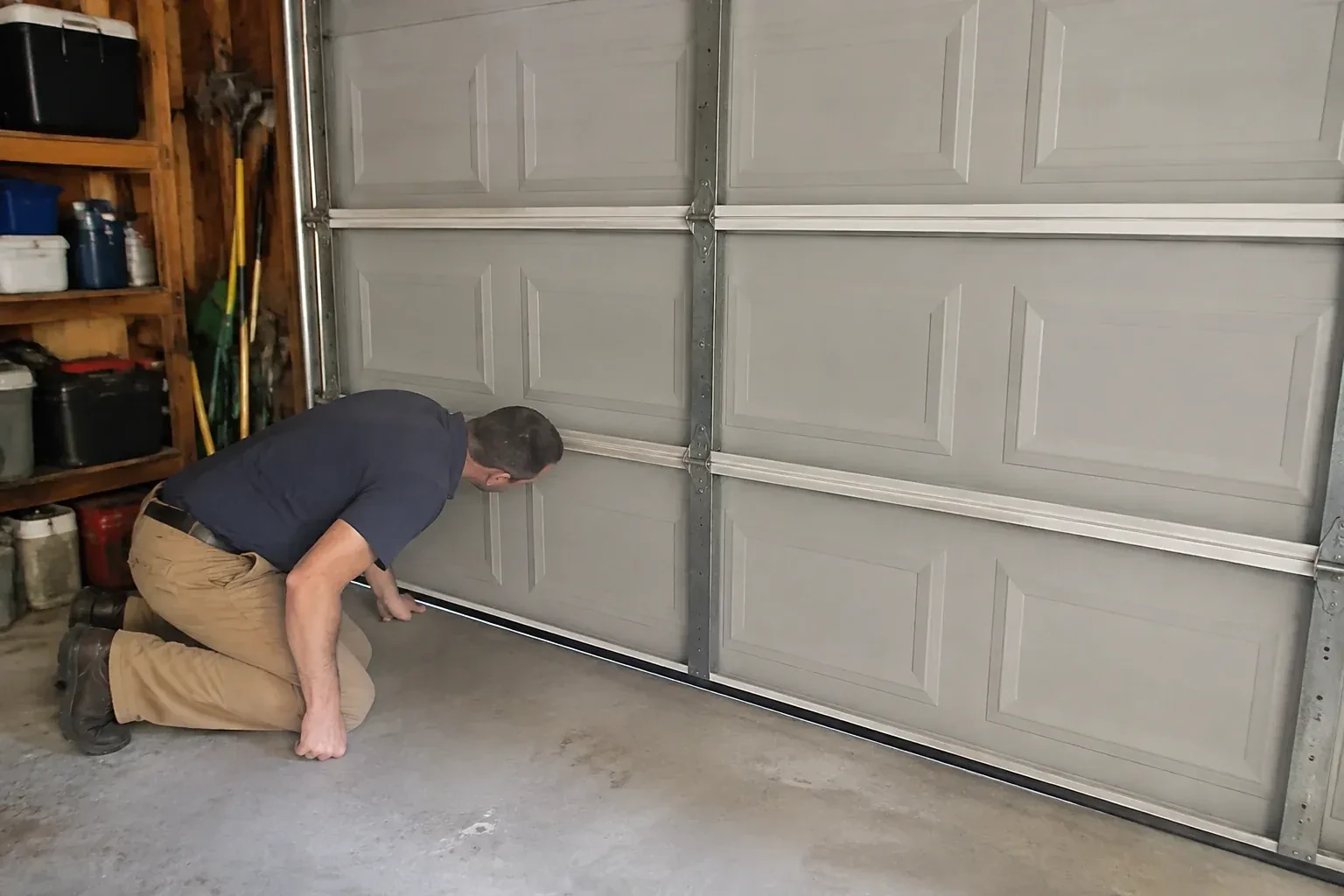
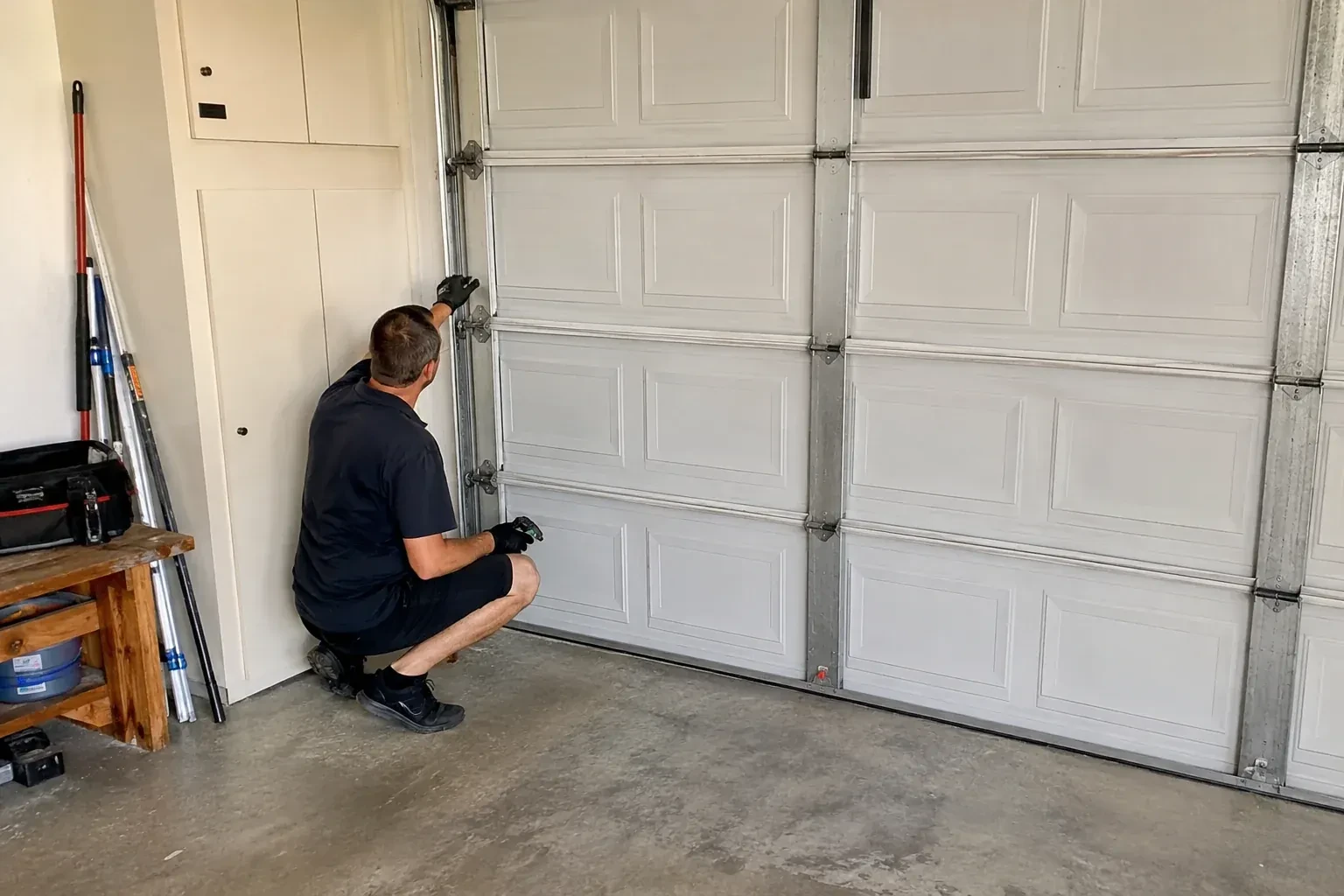
Getting the fin's contact right is the heart of the work. The technician holds each length against the closed door and adjusts it until the fin bends toward the door just enough to seal without pushing back. A fin set too far off leaves a standing gap that shows as daylight; one set too hard drags the door, folds under on the way down and wears through well before its time. Contact is checked at several points along each side, since a jamb is rarely dead straight, and the fastener positions follow the door face rather than the wood behind it.
Corners that stay closed to pests
With the header and side fins overlapped, the small square holes that mice and wasps used are gone. Keep them that way by checking the four corners each autumn, when animals are looking for warmth, and pressing any lifted corner back into place. The point where the side seal meets the bottom seal on the door is worth a look too, since the bottom seal wears on its own schedule. A clear threshold, with leaves swept away from the door, removes the shelter pests use to work at a corner. Sealing the perimeter is one of the simpler parts of keeping a garage pest-free.
Garage Door Perimeter Weatherstrip
In the van
Tape measure, level and square
Flexible vinyl fin seal
Utility knife and mitre saw
Galvanized or stainless trim nails
Silicone spray lubricant
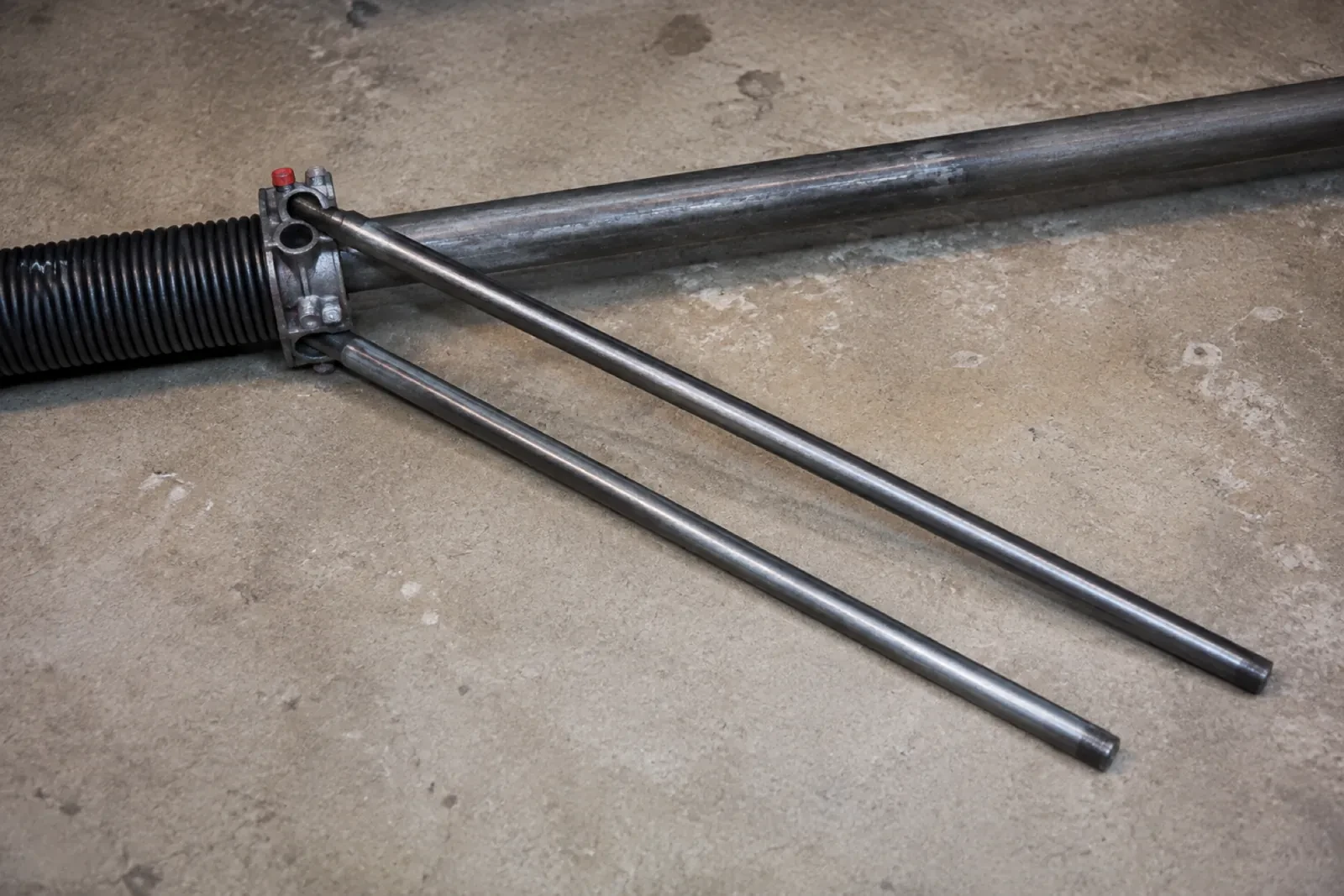
Garage Door Perimeter Weatherstrip
What affects the quote
Adding a brush or foam seal to the sides as well as the stop
Some households want only the top and side stop replaced, while others add a brush or foam seal along the same run for a tighter fit against wind-driven snow. That extra material and the time to fit it are agreed before the old stop comes off.
Jamb material
Wood jambs take nails; steel or aluminum-clad jambs need screws and sometimes a backing piece, and masonry openings need a different fixing altogether, each with its own time and hardware.
Doing the bottom seal at the same time
When the bottom seal on the door is also worn, renewing it during the same visit is offered as a separate line and saves the cost of a second call.
What to have ready
- Is the bottom seal on the door also worn?
- Is your garage attached to the house, and is it heated?
- Where do you see daylight, drafts or snow: sides, top, or corners?
Garage Door Perimeter Weatherstrip: questions
QuestionsShould I choose a fin on the wood stop or a one-piece vinyl stop?
If the wood stop is sound, straight and not buried in paint, a new fin nailed to its face is the simpler choice and keeps the look of the trim. If the stop is cracked, soft or has been painted many times, a one-piece vinyl stop replaces it entirely, needs no paint and cannot rot. The technician checks the stop and recommends one or the other on site.
Does new weatherstrip make the door any quieter when it opens and closes?
A little, though it is not the main reason to do it. A fresh bottom seal cushions the door's contact with the floor, and snug side and top seals stop the panel rattling against loose or worn stops. Most of the noise people notice from a garage door comes from rollers, hinges and the opener chain or belt rather than the seals, so a technician checking the weatherstrip will usually point out those parts too if they are the louder culprit.
How do I stop the seal freezing to the door in an ice storm?
Wipe the fin with a silicone spray or a silicone lubricant on a cloth in late autumn and once or twice through the winter. The film cuts the odds of meltwater bonding the fin to the cold door face, though a hard freeze can still catch it. Avoid oil-based products, which soften vinyl. If the door does freeze to the seal, let the sun or a little warm water free it, dry the spot afterwards, and avoid forcing the opener.
Related services
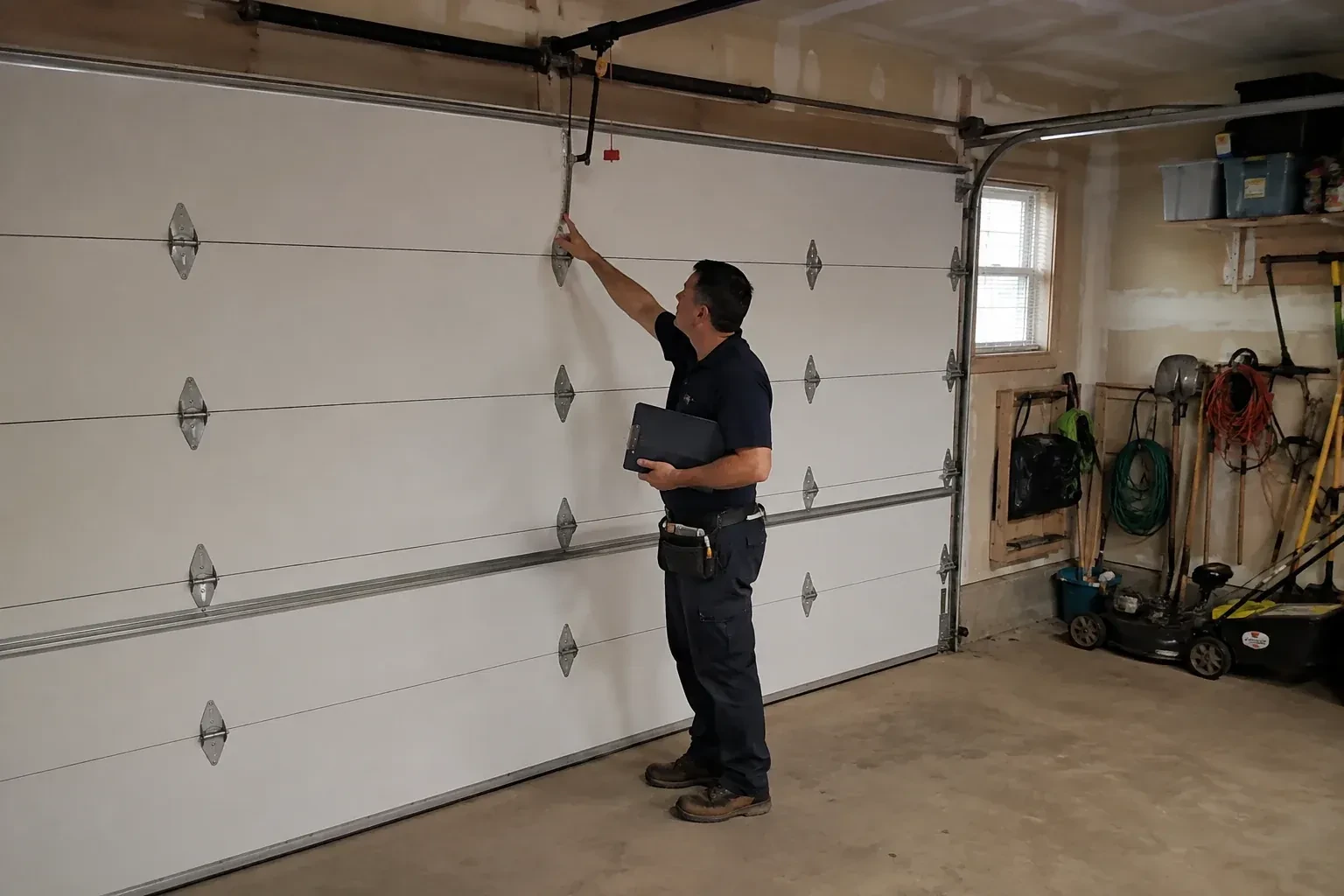
- Garage Door Tune-UpOn windy nights the door rattles in its frame, there is a line of daylight along one side, and the bottom seal has gone hard and flat.
- Off-Track Garage Door ResetYou tapped the door with the bumper while backing in, barely a nudge, and now the bottom corner has swung inward.
- Garage Door Panel ReplacementAfter an overnight freeze the door stuck to the slab, the opener strained, and something gave.