Repairs · Whitchurch-Stouffville
Garage Door Bottom Seal Replacement
There are mouse droppings along the wall behind the recycling bins, and at one bottom corner of the door the vinyl has a neat chewed notch the width of a thumb.
In plain words
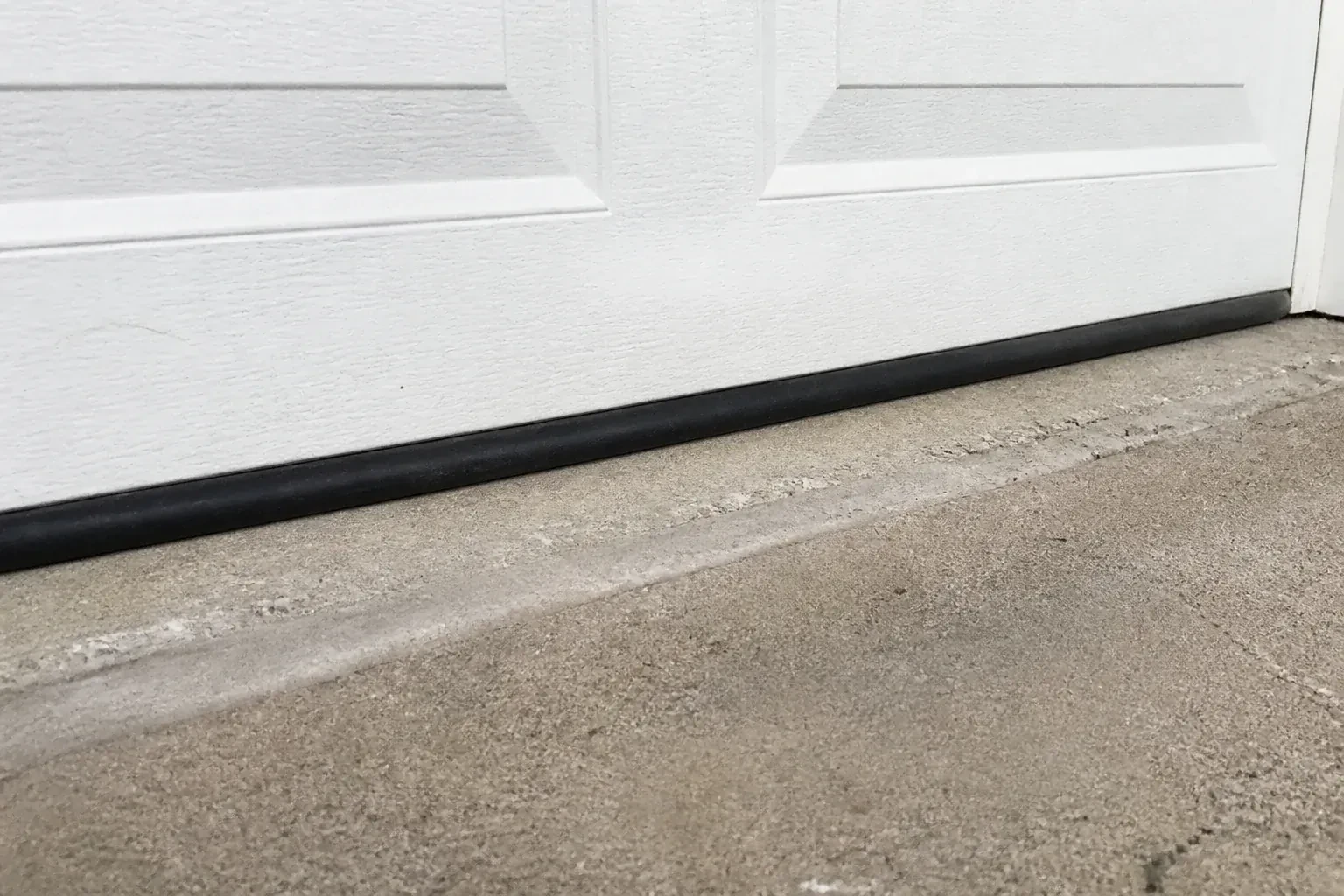
Not every gap under a garage door is the seal, so the service begins with finding out what the gap is. A strip of light the whole width usually means a seal that has flattened or hardened. A gap at one corner only points to a door hanging out of level or a slab that has settled there. A gap in the middle suggests a bowed bottom section or a crowned floor. Reading these before choosing a seal means the new strip is sized to fill the space that is really there, and any door or floor issue is named and dealt with rather than hidden behind a thicker bulb.
How the visit goesWith the door closed and the lights off, a bright line of daylight runs along the floor from one side to the other. Leaves and grit have blown in under it and gathered in a neat drift against the back wall.
Garage Door Bottom Seal Replacement
How the visit goes
How the opener meets the floor
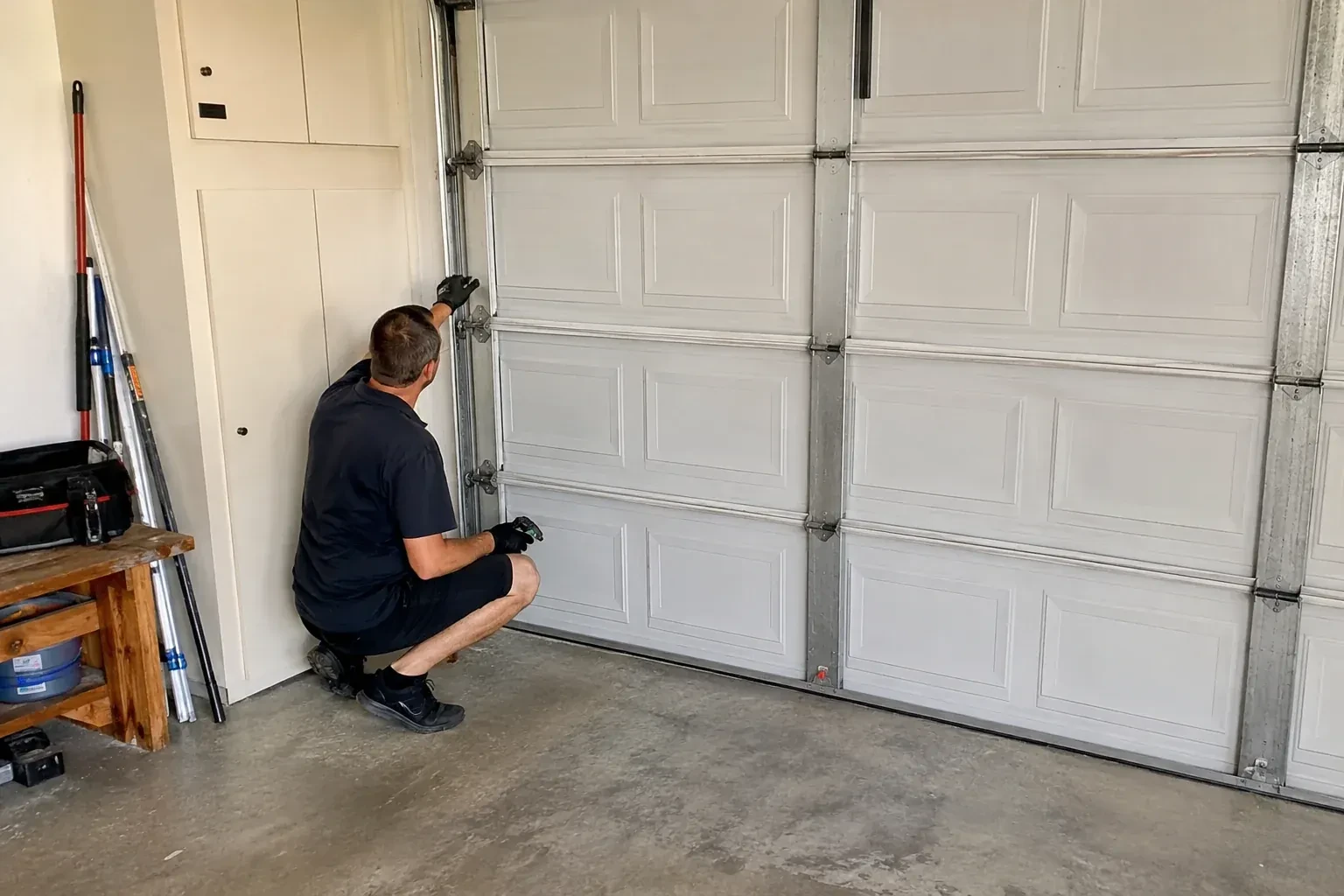
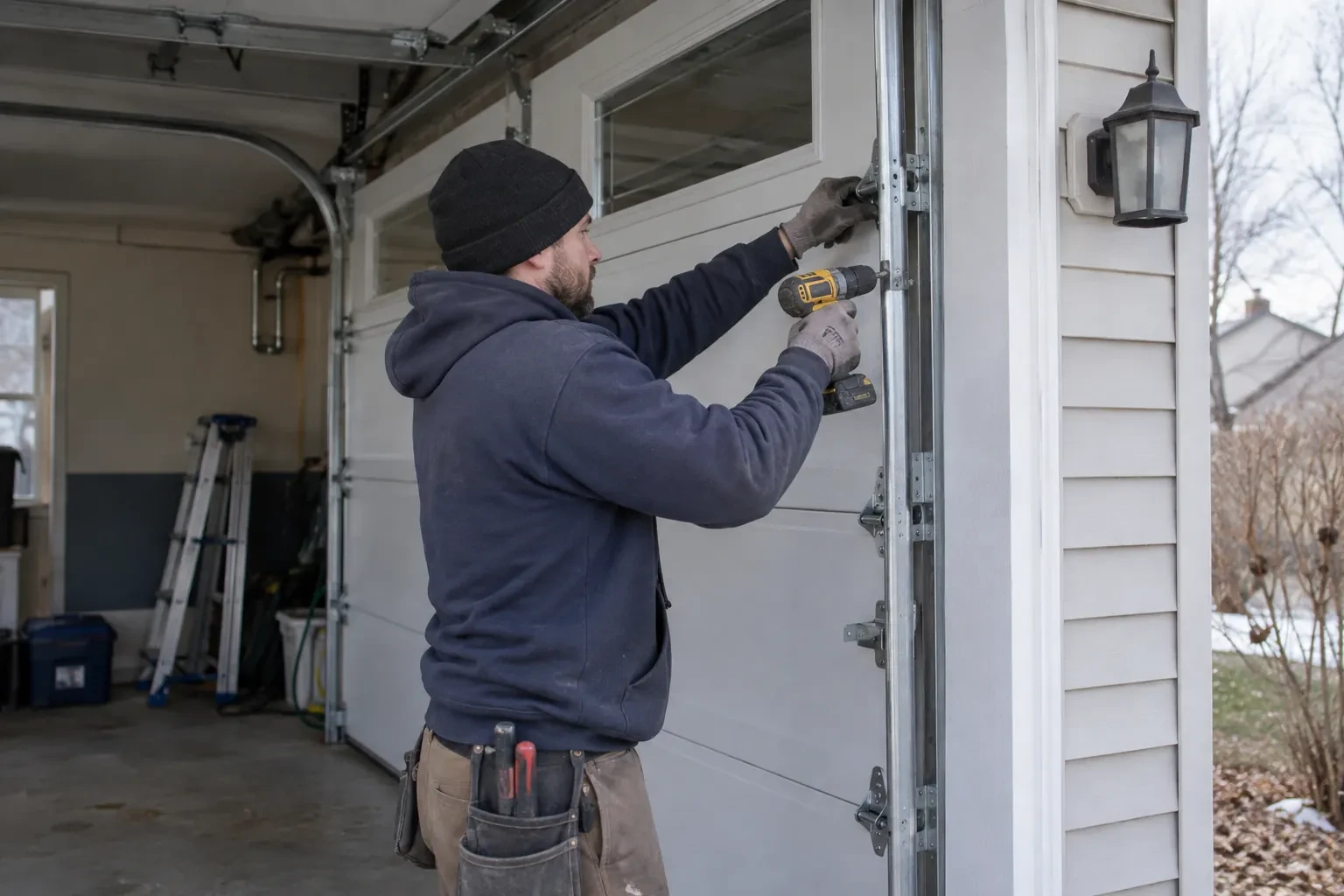
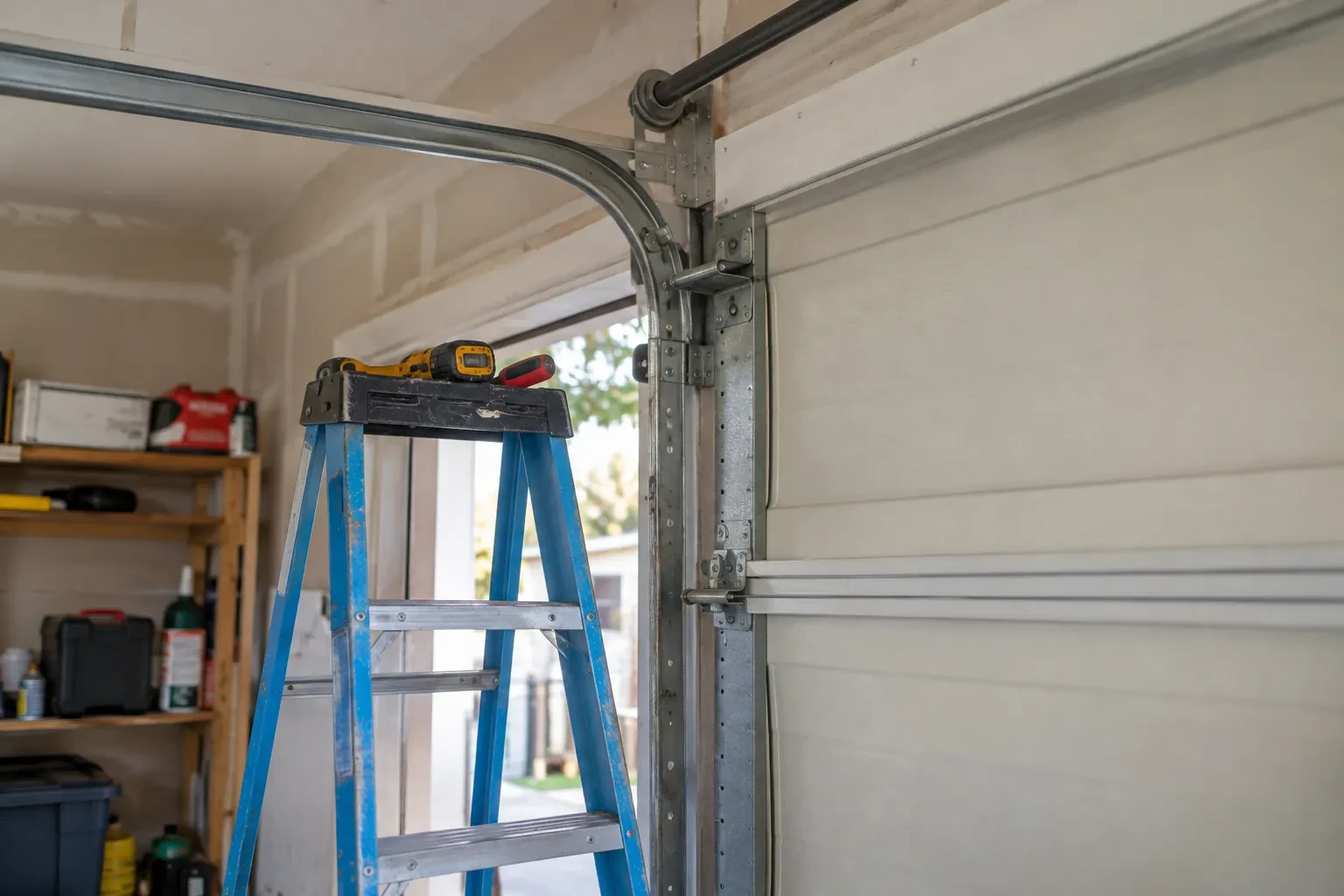
Before the old seal comes off, the technician watches the door close under power. Where the door stops, how firmly it lands, and whether the bottom section flexes as it settles all show how the down limit and force are set. A door that stops short leaves a gap regardless of the seal; one set to press hard flattens a new seal in a season and can bow the section. The current settings are noted so they can be reset once the new, taller strip is in place, and the photo eyes and reversing behaviour are checked at the same time so the finished door is tested against a known starting point.
Cutting the new seal to length
The replacement is cut from a roll to the door width plus a small allowance at each end, using heavy shears or a knife, and the profile is checked against the retainer before any feeding begins. The technician confirms the T or bead edges match the channels and that the bulb height will fill the gap measured earlier without being squashed flat. Where the floor dips at one end, a slightly taller profile is chosen rather than relying on the opener to press harder. Cutting a little long means the ends can be trimmed to the door and finished cleanly once the seal is in.
Keeping the new seal from freezing down
The habit that does the most for a bottom seal in a cold climate is a wipe of silicone spray along the seal face each autumn and again mid-winter. It leaves a film that meltwater struggles to bond to, so the strip lifts off the slab cleanly on a frosty morning. Avoid petroleum-based sprays, which soften vinyl. If the door does freeze to the floor, leave the remote alone: free the seal by hand with gentle warmth from a hair dryer or by working a plastic scraper along the line, then run the door. A minute of patience keeps the new seal whole.
Garage Door Bottom Seal Replacement
In the van
Bead-style bottom seal
Wire brush and scraper
Bulb or U-style bottom seal
T-style bottom seal
Seal end caps
Garage Door Bottom Seal Replacement
What affects the quote
Opener adjustment
Resetting the down limit and force and repeating the reversing test after a taller seal is fitted is a short step that the quote names whenever the door has an opener.
Wood door nail-on strip
A wood door with a nailed strip takes a different product and more fastening time than a channel seal, and adding a retainer to a wood rail is a further option to consider.
Bottom section repairs
A rusted, dented or bowed steel bottom rail, or a rotted wood rail, is pointed out and any repair or reinforcement offered as an option beside the seal work.
What to have ready
- Is the old seal hard and cracked, torn, hanging loose, or missing?
- Are the side and top weather strips also worn or torn?
- Does the driveway slope toward the garage, or does water pool at the door?
Garage Door Bottom Seal Replacement: questions
QuestionsWhat happens during the visit?
The technician maps the gap with the door closed, checks the door is level and the bottom section straight, and identifies the retainer and profile. The opener is disconnected and the door clamped at working height. The old seal comes out, the channels are cleaned, a new seal is cut and fed in, and any retainer work is done. The door is then closed under power, the opener reset, and the reversing and photo-eye tests run.
How can I tell that the bottom seal needs replacing?
Close the door, turn off the lights and look along the floor from inside. Daylight showing, a strip that feels hard or cracks when pressed, a bulb that has flattened and stays flat, an end hanging out of its channel, chew marks or missing pieces are all signs. So are leaves, snow or a puddle inside the door after weather. Any one of these means the seal has stopped doing its job.
Is this something I can do myself?
Many homeowners do, and a technician's value lies in the parts that go wrong: identifying the exact profile so the seal seats, freeing a strip that has fused into its channel, spotting a retainer or door-level problem behind the gap, and resetting the opener's limit and force so the door lands gently and still reverses on an obstruction. If you would rather have it measured, fitted and tested in one go, that is what the visit is for.
Related services
- Garage Door Tune-UpOn windy nights the door rattles in its frame, there is a line of daylight along one side, and the bottom seal has gone hard and flat.
- Off-Track Garage Door ResetYou tapped the door with the bumper while backing in, barely a nudge, and now the bottom corner has swung inward.
- Garage Door Panel ReplacementAfter an overnight freeze the door stuck to the slab, the opener strained, and something gave.