Openers · Whitchurch-Stouffville
Belt-Drive Opener Repair
The door used to glide up with a soft hum.
In plain words
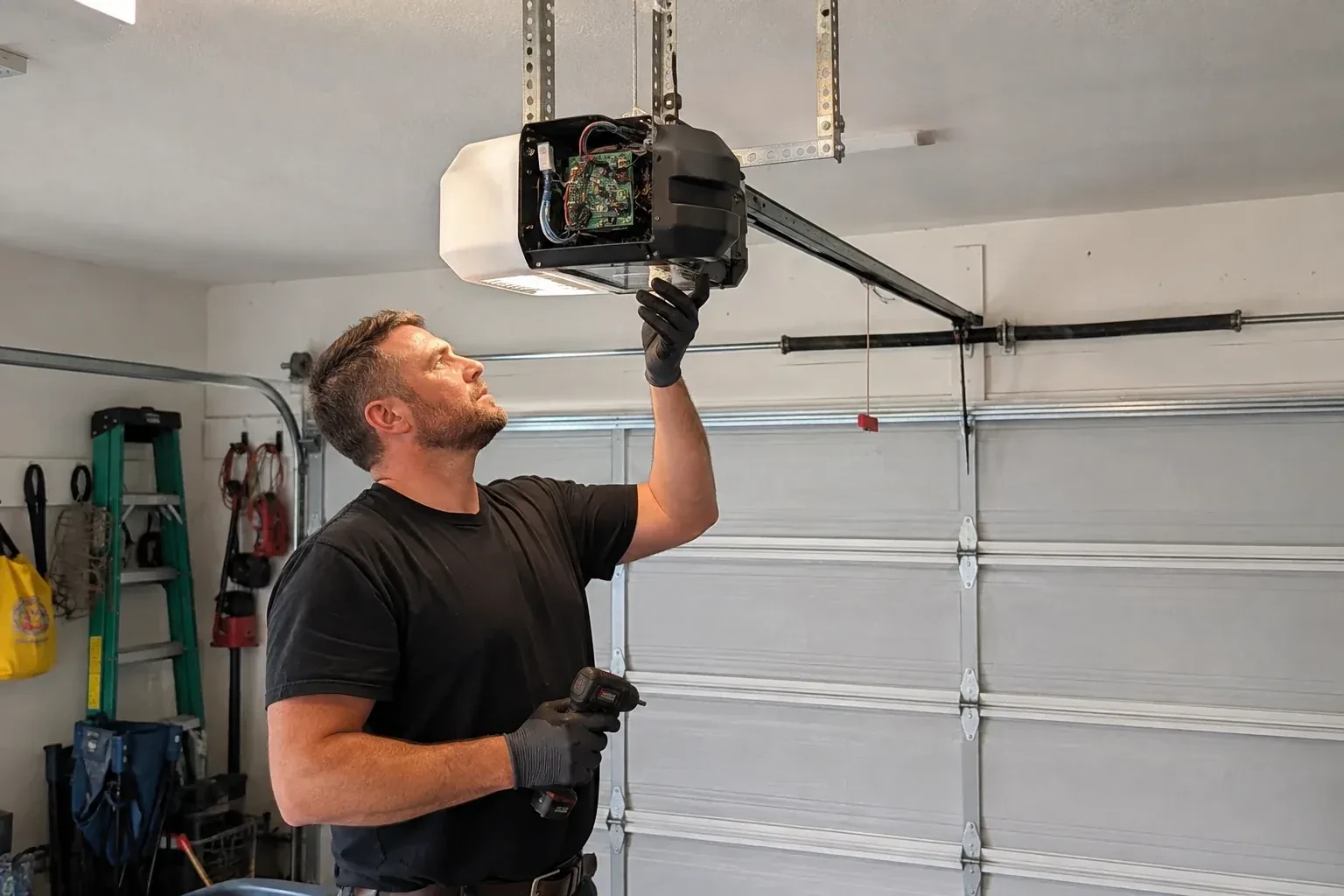
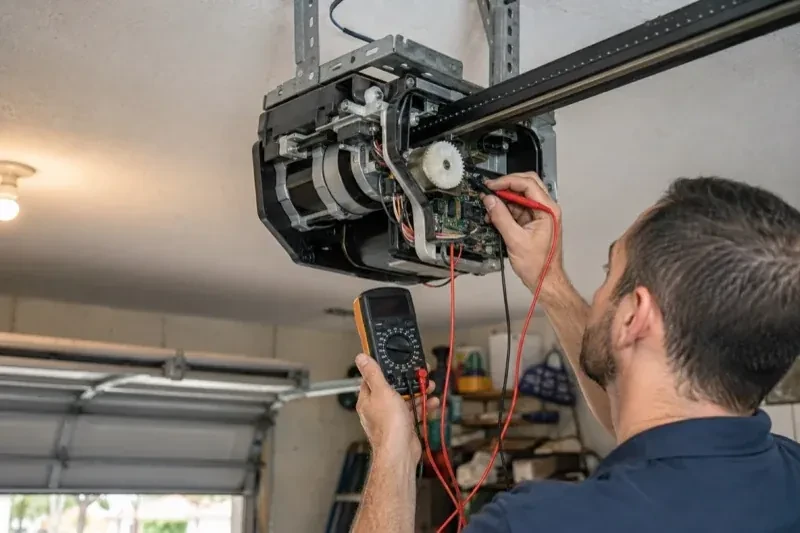
The most common belt-drive repair is the simplest: the belt has stretched over thousands of cycles and hangs slack under the rail. On its way up it slaps the rail and skips a tooth or two on the sprocket. Tension lives at the trolley, where a threaded shaft, a spring and a square nut set how much the belt is pulled taut. The technician sets that spring to the maker's stated length, confirms a little give at mid-span, then runs the door and listens. If the belt has stretched past what the adjuster allows, or the rubber has aged, a new belt goes in instead.
How the visit goesThe belt looks fine from a distance, but up close the rubber has cracked across the back in dozens of places and, in one spot, you can see the steel cords showing through.
Belt-Drive Opener Repair
How the visit goes
The trolley and its release
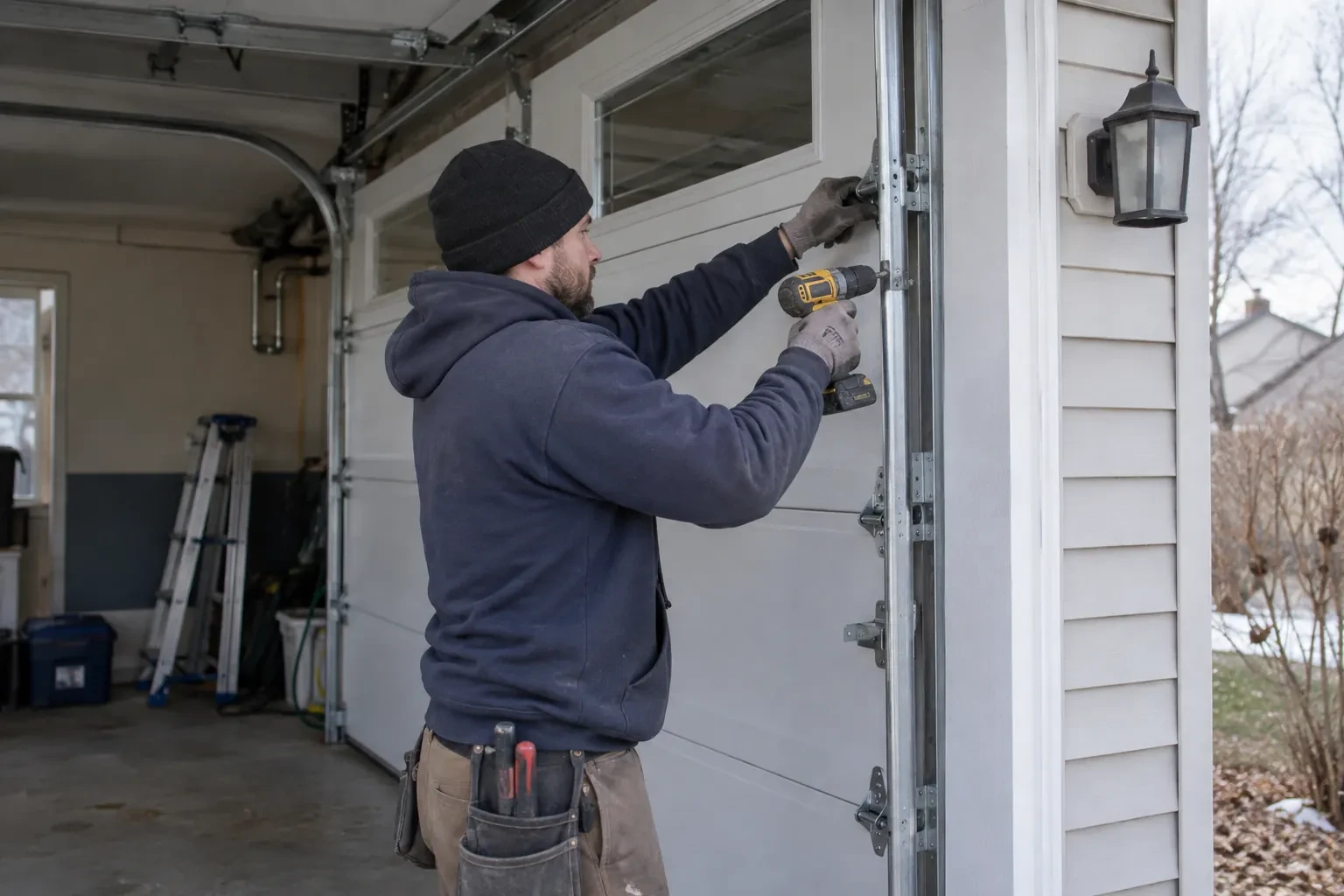
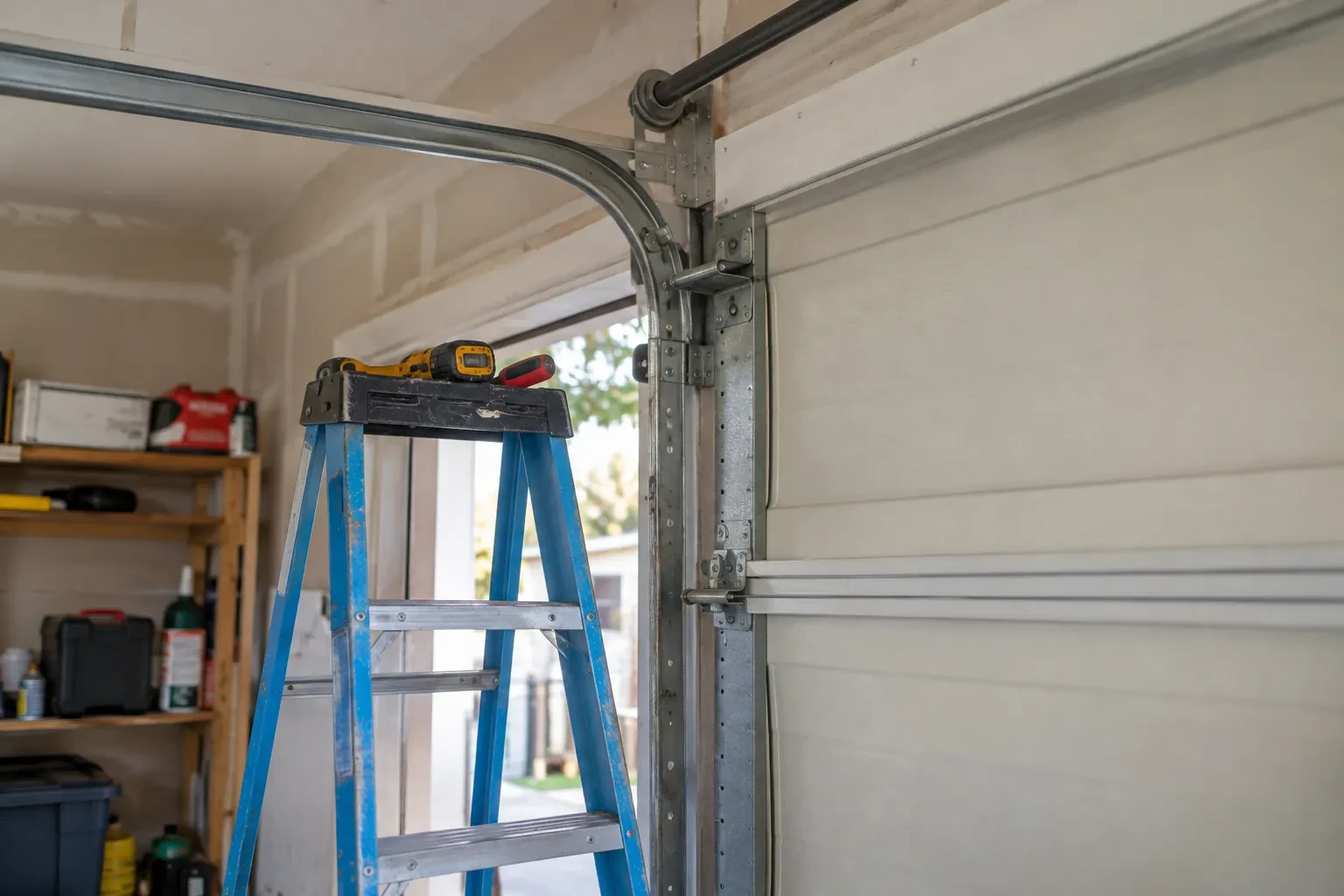
The trolley turns the belt's pull into movement of the door and takes every start and stop. The technician checks its two halves: the inner half the belt is fixed to, and the outer half the door arm hangs from. The release lever should part them cleanly when the cord is pulled and lock them together again when the operator runs or the cord is pulled a second time. Cracks in the housing, a lever gummed with old grease, play on the rail, or a trolley sitting hard against a stop bolt are all noted. Whether trolley and motor are in step is checked too, since a belt that has been off the sprocket often leaves them disagreeing.
Re-tensioning a belt that has stretched
With the operator unplugged and the trolley released from the door, the technician turns the square nut on the inner trolley a little at a time, drawing the belt up until the tension spring reaches the length the maker specifies. Each turn lifts the belt slightly. They press the belt at mid-span to feel for the small give that means it is neither slack nor strained, then reconnect the trolley and run the door by motor, listening at the sprocket for the rattle that says the belt is still loose or has gone too tight. A belt that will not reach its spring length with the adjuster at its limit has stretched too far and is replaced instead.
Ready for the cold
If the garage is detached or unheated, the belt has still been tensioned to the opener maker's specified measurement, and the door hardware carries a cold-rated lubricant for the season. Expect the operator to sound a little different at minus twenty; rubber stiffens and the hum deepens, which is normal. If the door reverses on a bitter morning before it has moved, the bottom seal is frozen to the slab and the force setting is protecting the belt and the door. Free the seal by breaking the ice along the threshold, then press the button again. Wiping the seal with silicone before winter stops it bonding to the concrete in the first place.
Belt-Drive Opener Repair
In the van
Idler pulley and bearing
2x4 offcut for the reversal test
Inner and outer trolley
Rail joint brackets and stop bolts
Photo-eye sensor pair
Belt-Drive Opener Repair
What affects the quote
Height of the ceiling
Where the operator hangs under a tall or vaulted ceiling, the sprocket and idler are reached from taller ladders and the work at the head takes longer.
When you call
An evening, weekend or holiday visit costs the same amount as a weekday one for a belt-drive repair. The technician looks at the belt, trolley and rail once on site, and the exact figure follows from what is actually found, not from the day of the week.
Belt length and type
A belt for an 8 ft door rail is longer than one for a 7 ft rail, and belts differ by maker and tooth pitch, so the part named on the quote follows the operator's model.
What to have ready
- Are there plastic shavings or grease on top of the motor housing?
- How wide is the door, and is it a single or a double?
- What is the belt doing: sagging, slapping, clicking, frayed, or hanging loose?
Belt-Drive Opener Repair: questions
QuestionsI pulled the red cord during a power cut. Could that have caused this?
It can, if the door was open or out of balance when it was released. The release itself disconnects the trolley from the belt, so a falling door does not throw its weight onto the drive; the real risk is the door itself crashing down and damaging the tracks, hinges or panels. Nothing about the cord itself is harmful; it is designed to be used. The habit to keep is to release the door only when it is closed.
Should the belt be lubricated?
No. The belt is meant to run clean and dry; oils and sprays soften the rubber and gather grit in the teeth, which wears the sprocket. Lubricant belongs on the door instead: hinges, rollers and springs get a garage-door lubricant once a year. The gear inside the motor head takes a light grease when it is serviced, and that is the technician's job.
Why does my belt drive clatter like a chain drive now?
Sprocket noise on a belt drive almost always means tension is wrong in one direction or the other. A slack belt skips teeth on the sprocket and slaps the rail; a belt pulled too tight grinds on the sprocket and strains the motor bearings. Both sound harsh. Setting the tension spring to its proper length, and checking that the sprocket and idler pulley are not worn, brings the quiet back.
Related services
- Chain-Drive Opener RepairThe chain hangs in a loop under the rail and slaps against it on every cycle.
- Garage Door Opener ReplacementYou want the ceiling back.
- Photo-Eye Sensor Alignment or ReplacementSince shelving went up along the garage wall, the door will not close and both sensor lights are dead.