Springs · Whitchurch-Stouffville
Torsion Spring Replacement
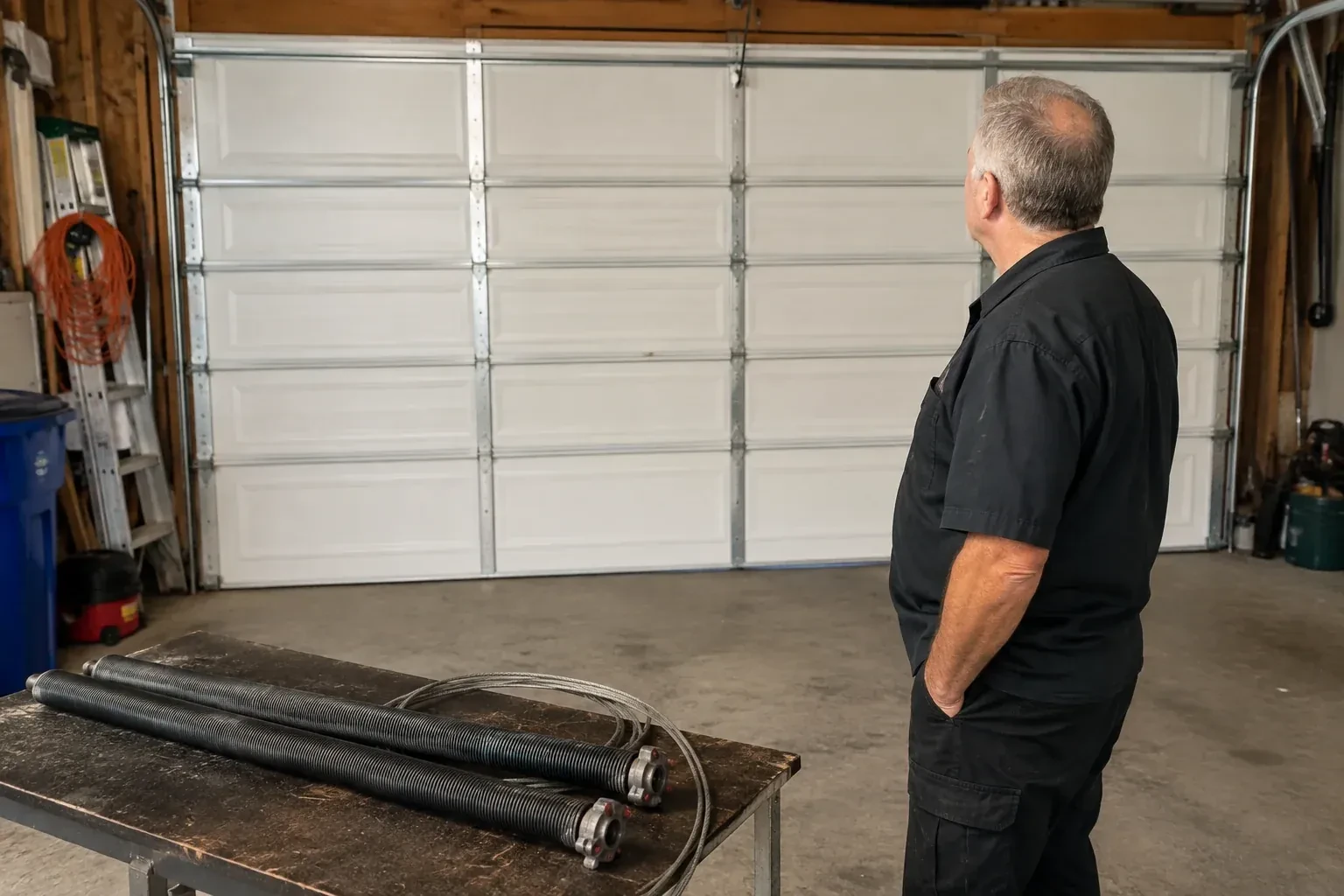
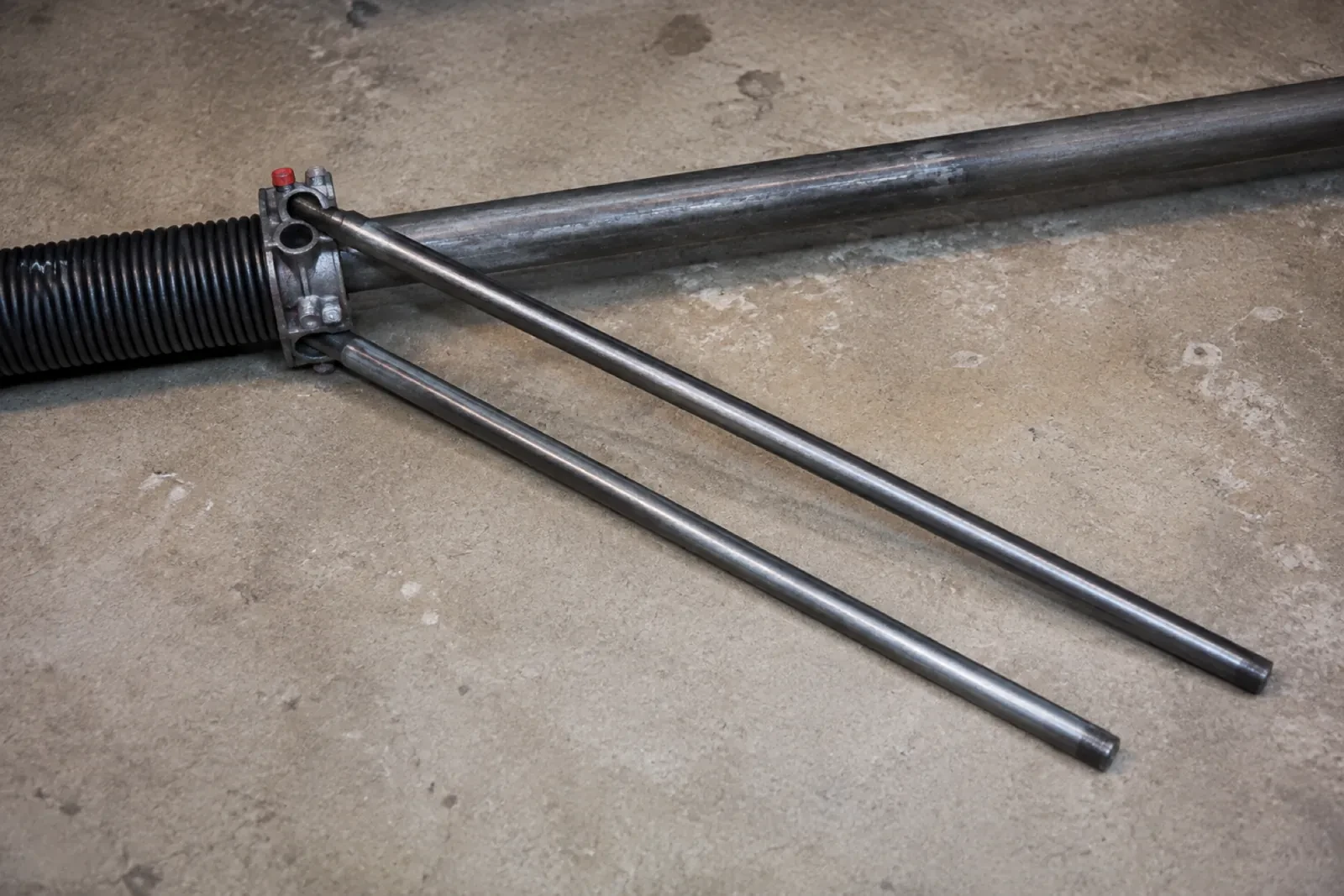
Looking up at the coil above the door, you can see a clean split with a gap of several centimetres between the two halves.
In plain words
The finished result is a door that behaves the way a good garage door should: it lifts by hand with light effort, stays where you leave it at mid-height, closes softly and lets the opener run with little strain. Reaching that point involves measuring the door, choosing a matched spring, winding it to the correct turns and testing the balance through the full travel. The technician then runs the opener's reversal test and lubricates the moving parts. You are left with a record of the spring installed, so future service starts from known specifications.
How the visit goesNothing broke outright, but the door has grown heavier each winter, opens more slowly and squeals as it moves. The springs on an older door have lost tension and the coils show pitting, so the system is asking for attention before it fails.
Torsion Spring Replacement
How the visit goes
Checking what the spring anchors to
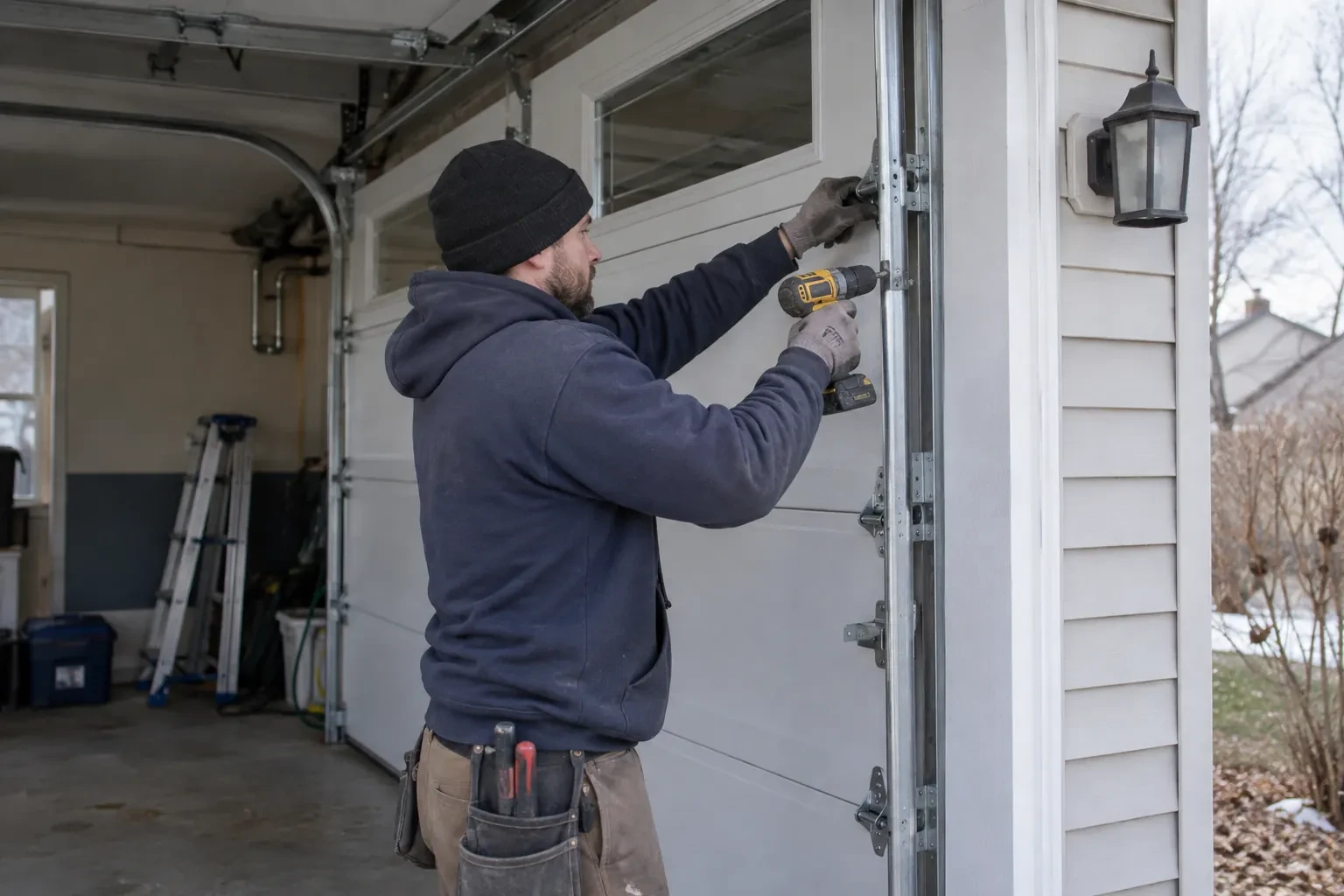
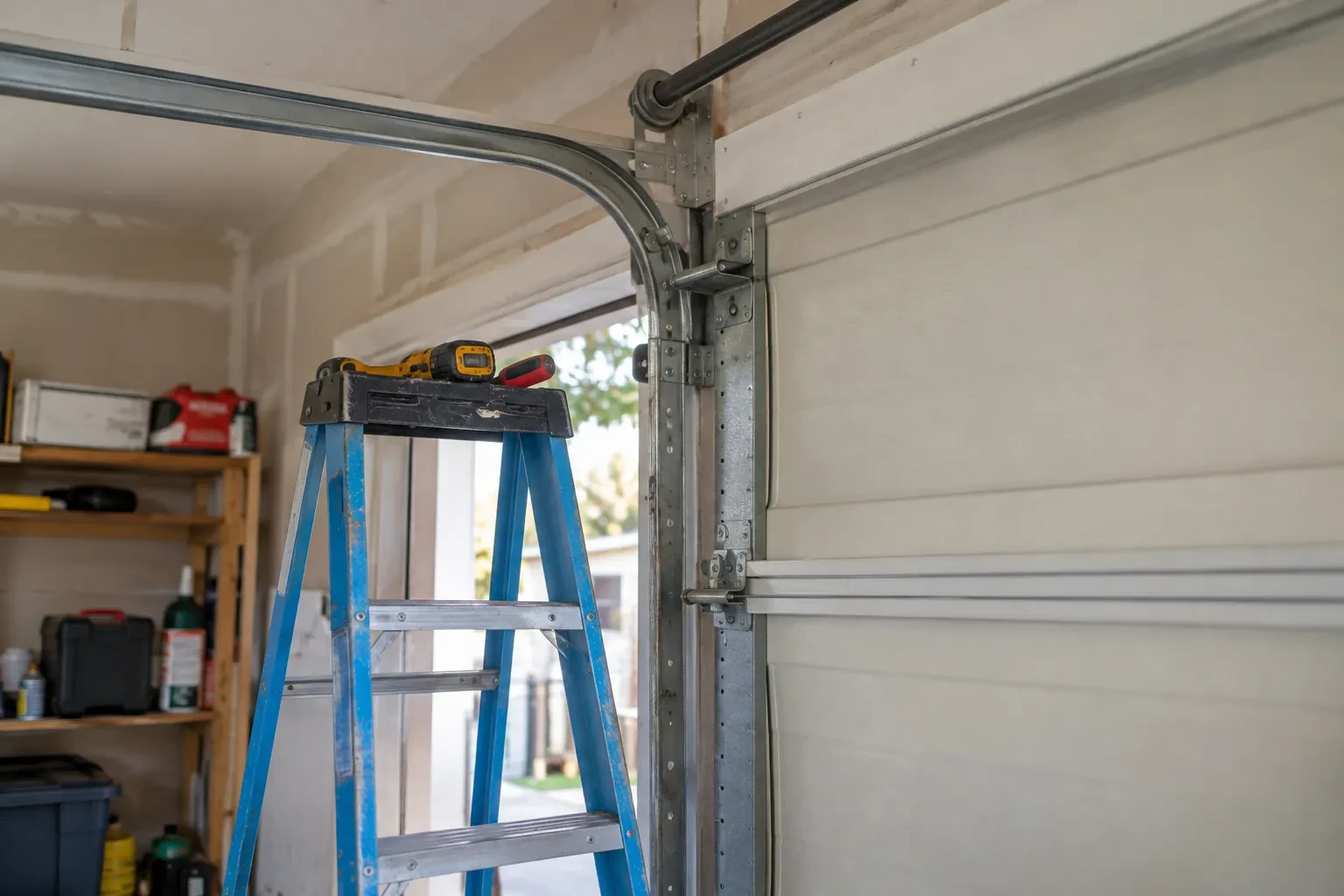
A torsion spring pushes against a centre bracket bolted to the header above the door, and that anchor takes the full reaction force every cycle. The technician checks that the bracket is fastened into solid framing with proper lag bolts, that the header wood has not split or softened with moisture, and that the end bearing plates on each side are square and tight to the jamb. Loose or corroded fasteners are noted for replacement. A sound anchor keeps the shaft level and the spring pulling straight, which protects both the new spring and the bearings that carry it.
Finishing the job properly
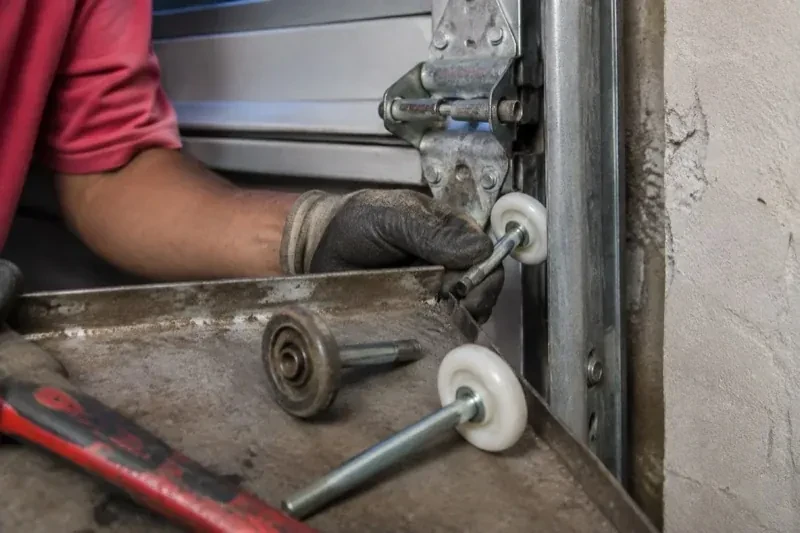
After the balance and opener tests pass, the technician lubricates the new spring coils, bearings, hinges and roller bearings with a garage-door lubricant, leaving the track clean so the rollers run true. The old spring and any replaced parts are removed from the site. The customer is shown how the door should feel by hand, where the manual release is and how to use it, and what was installed, including the spring specification for future reference. A final look confirms clamps are off, tools are clear of the tracks and the area beneath the shaft is tidy.
Through the seasons
The new spring has been set for the door as it is today, and the seasons are part of its life. Cold mornings make steel and grease a little stiffer, so the door may feel marginally slower in deep winter while still balanced; lubrication in autumn helps. Slush and road salt carried in on tires settle on the bottom brackets and cable ends, so a rinse and a light spray in spring slow corrosion where the cables anchor. Summer humidity is easier on hardware but rewards a dry, clean track. Small seasonal habits like these let the spring reach its full rated cycle count.
Torsion Spring Replacement
In the van
Lift cables
Centre bearing bracket and bearing
Stationary cone bolts and nuts
Wire gauge and tape measure
Locking pliers for the track
Torsion Spring Replacement
What affects the quote
Drum type and lift configuration
Standard-lift drums are the common case. High-lift, vertical-lift or low-headroom arrangements use different drums, cable lengths and turn counts, which changes the parts and the time involved.
Anchoring to the header
A centre bracket with pulled lag bolts, a split header or a corroded bracket needs refastening, reinforcing or replacement before the spring can be wound, which is included when found.
Opener reconnection and testing
Resetting force and travel limits and running the reversal and photo-eye tests are part of the visit. An opener with worn gears or a slipping trolley uncovered during testing becomes a separate item.
What to have ready
- Did you hear a loud bang before the door stopped working?
- Is the door currently closed, open, or stuck partway?
- Is there a working power outlet near the opener and clear space under the shaft?
Torsion Spring Replacement: questions
QuestionsWhat should I do before the technician arrives?
Keep the door closed and leave it alone, move any vehicle you can reach out of the way or at least clear the space in front of the door inside the garage, and make sure there is room for a ladder beneath the shaft. Note whether there is one spring or two and whether a cable is loose. A photo of the spring area, the drums and the opener helps the technician bring the right parts.
Why is my door sitting crooked since the spring broke?
On a two-spring door, one intact spring keeps pulling on its side while the broken side goes slack, so the door lifts unevenly and a cable can jump its drum. The technician levels the door, reseats the cables in their drum grooves and evens the tension after the new spring is fitted. Rollers and track are checked for damage from the crooked travel so the door runs square again.
Can I keep using the opener until the technician arrives?
The kindest thing for the door is to leave it where it is and use another entrance. An opener is designed to move a door the springs have already made light; asking it to lift a full-weight door strains the trolley and gear drive and can crease the top section. Keeping the door still and clear of people until the spring is replaced protects the rest of the system from extra repairs.
Related services
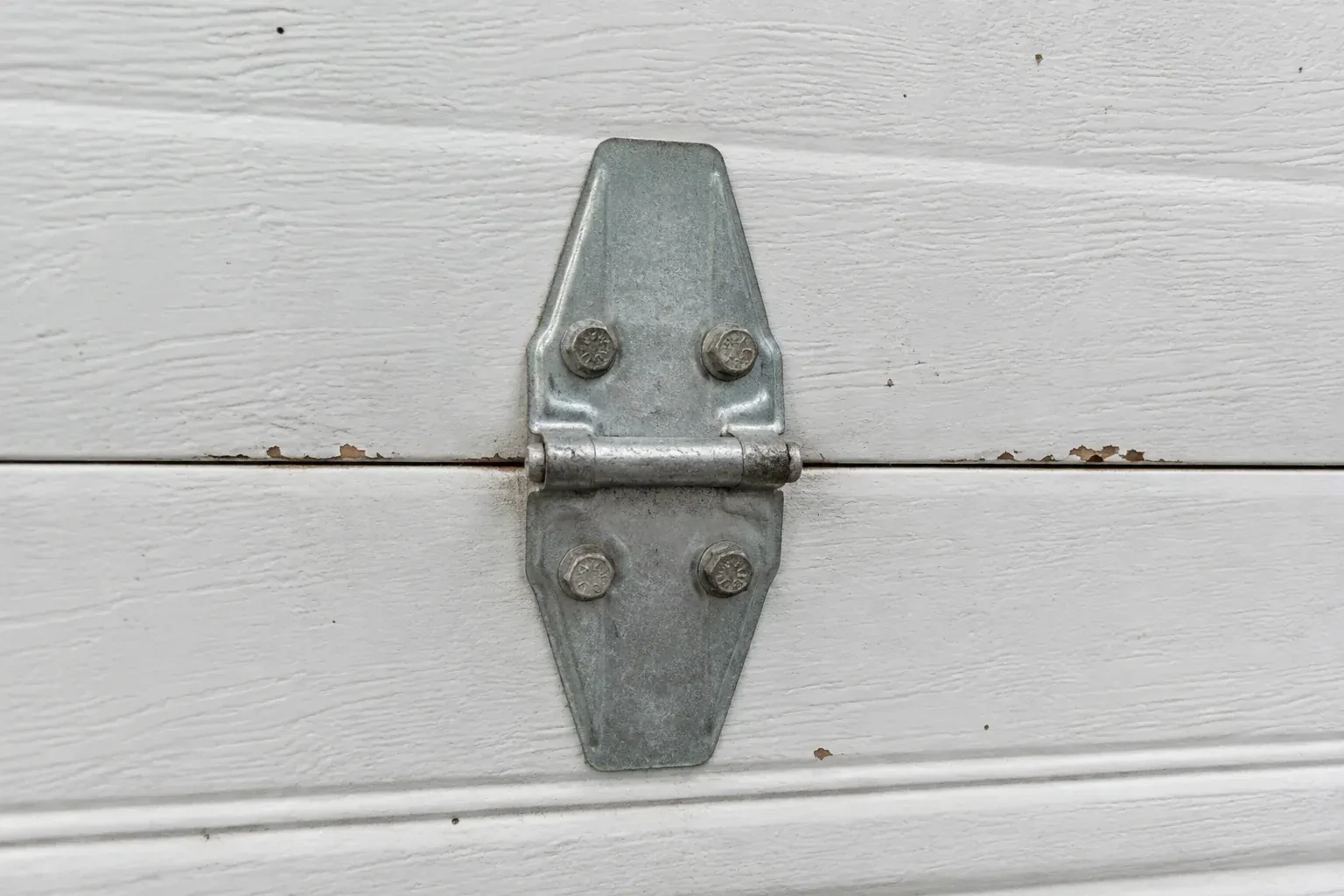
- Garage Door Hinge ReplacementWatching from inside as the door opens, you can see the gap between the second and third panels open up on one side as they turn the corner into the ceiling, then close again.
- Garage Door Track Repair or ReplacementHalfway up, the door lurches and one roller rides onto the lip of the channel.
- Garage Door Cable ReplacementAfter years of slushy winters the cables look thinner near the bottom brackets, with rust streaks running down the door where they attach.