Springs · Whitchurch-Stouffville
Garage Door Roller Replacement
The door is the one the builder installed and has never had a part changed.
In plain words
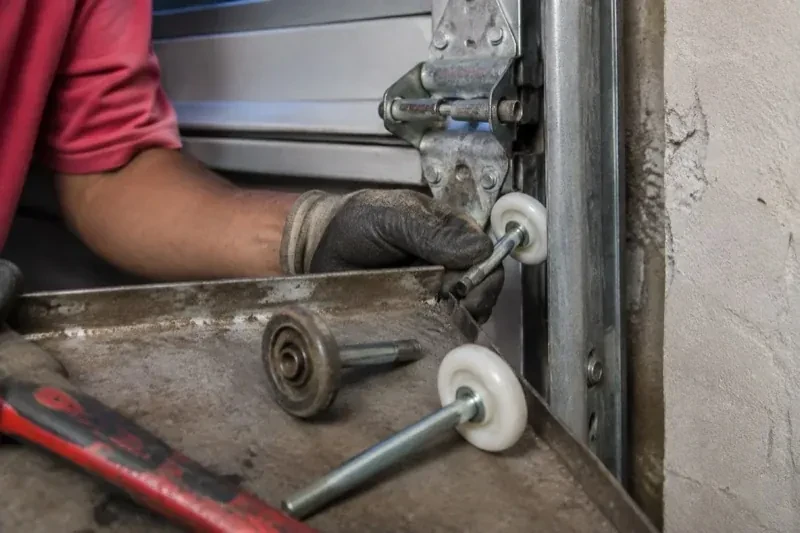
Most of the noise a garage door makes comes from its rollers. Steel wheels on a steel track are loud by nature and grow louder as their bearings dry out and pit, and the plastic wheels fitted to many new doors have no bearings at all, so they simply grind as they wear. Moving to nylon rollers with sealed ball bearings changes the sound of a door more than any other single part, because the nylon tire absorbs vibration instead of passing it into the track and the ceiling. The same visit lubricates the hinges and squares the track so the quiet lasts.
How the visit goesNew springs went in last year and the door balances well, yet it still clicks along the ceiling track like a train over rail joints. The wheels are the originals, worn to an oval, and the noise follows them from one end of the travel to the other.
Garage Door Roller Replacement
How the visit goes
Counting hinges and measuring stems
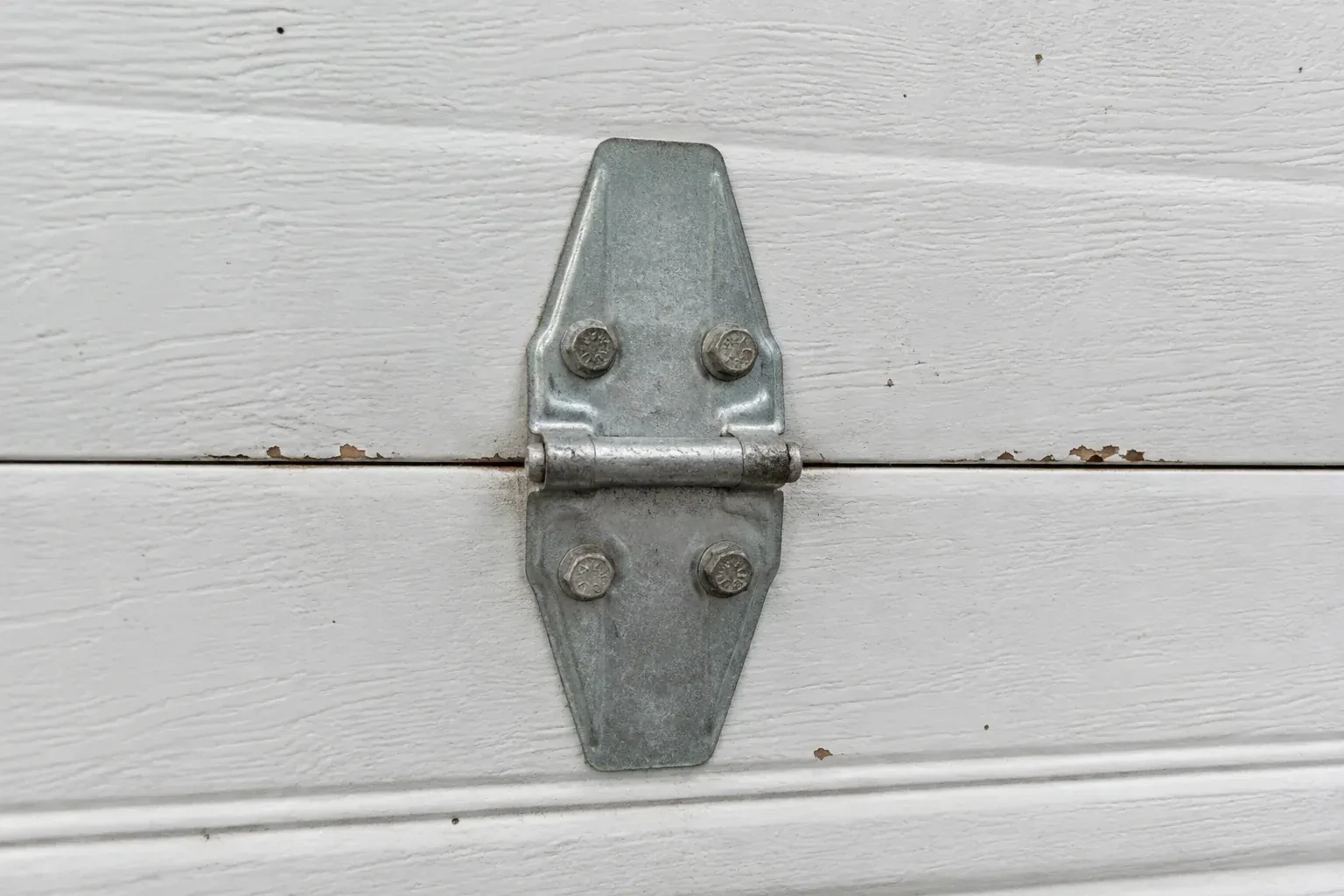
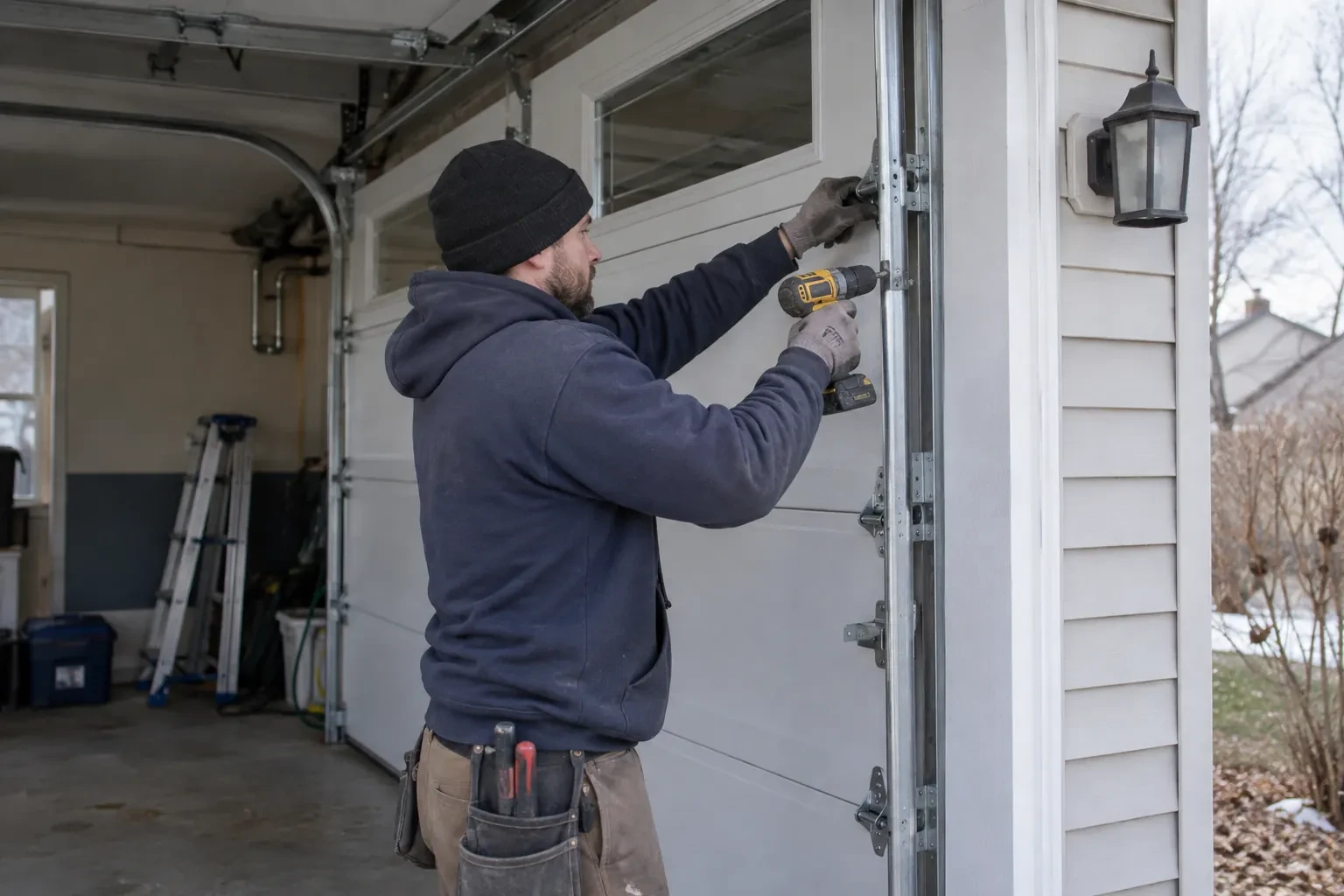
The right replacement depends on numbers taken from your door, not from a catalogue. The wheel diameter is measured across its face: residential track takes a two-inch wheel, while commercial track can take a two-inch or a three-inch wheel depending on the system. The stem is measured from the wheel to its end, and the hinges at each end stile are counted, because a single hinge takes a four-inch stem while two hinges stacked together on a heavier door call for a seven- or ten-inch stem that reaches through both. Stem diameter is confirmed too, since most doors built since the 1980s share one standard size but older doors may not. These measurements decide which set goes in.
Top rollers and the adjustable fixtures
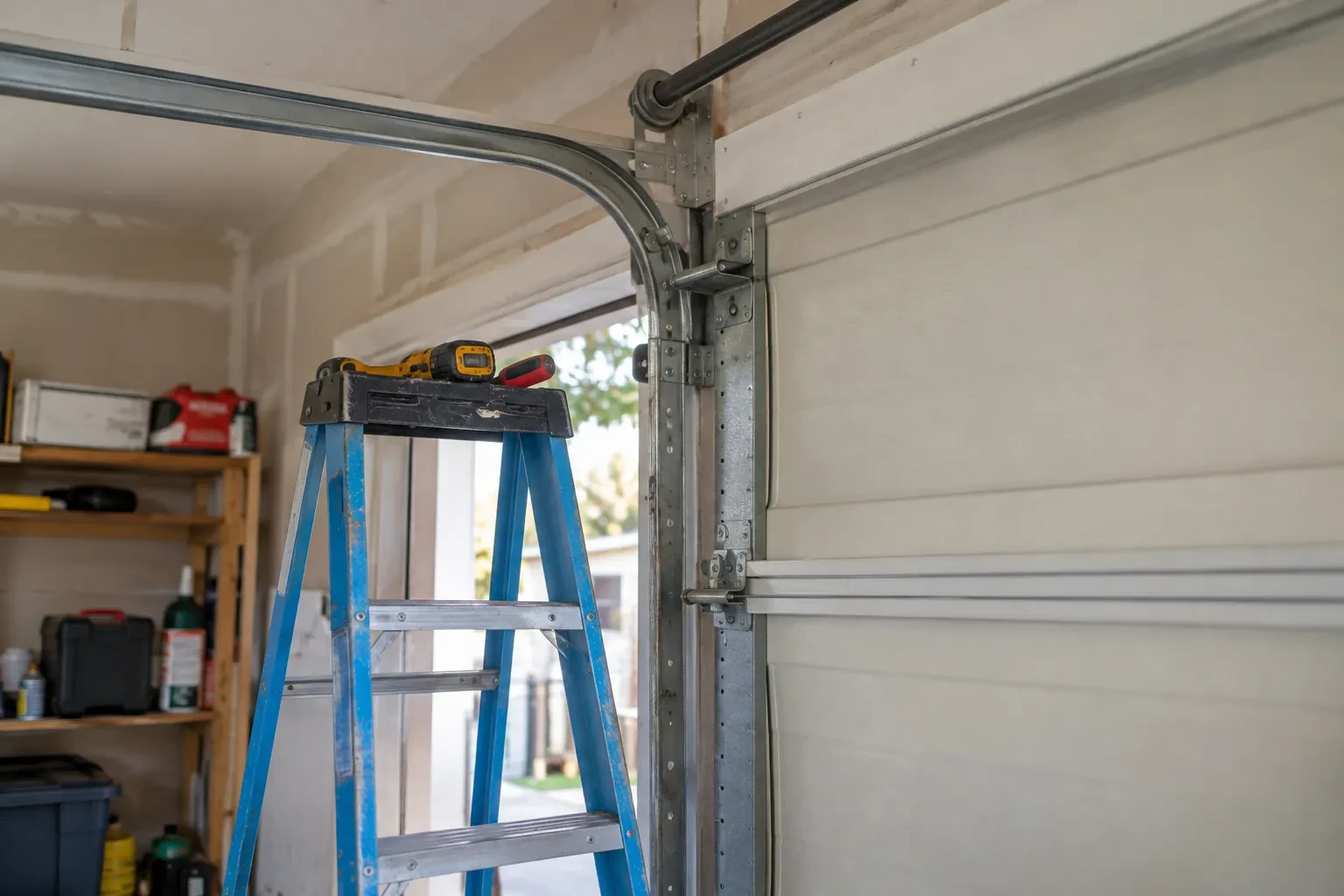
The top rollers sit in fixtures that slide in and out on the top section rather than in fixed hinges. The technician loosens the fixture, swaps the roller and then sets the fixture position with care, because that adjustment is what pushes the top section snug against the header seal when the door closes and keeps the wheel riding in the track rather than binding against it as the door starts to open. On heavy doors the top rollers do the most work of any on the door, so this is also where a higher load rating or a longer stem earns its place.
Hardware tightened along with the wheels
Roller replacement is a natural moment to go over the rest of the door, and you leave with more than new wheels. Every hinge fastener has been checked and snugged, loose jamb brackets have been tightened, worn hinges have been replaced with the correct numbered ones, and the top fixtures and bottom brackets have been inspected and, where corroded or bent, changed. The track has been cleared of salt and grit and squared to the door. This kind of once-over is what industry guidance means by regular service, and it is much of the reason a door feels solid again after the visit.
Garage Door Roller Replacement
In the van
Three-inch rollers for commercial track
Adjustable top fixtures
Sealed-bearing nylon rollers
1-1/2 inch reversal test block
Two-inch nylon ball-bearing rollers
Garage Door Roller Replacement
What affects the quote
Track alignment and repair
Realigning jamb brackets, straightening a dented lip or replacing a damaged length of track is separate from the roller work and quoted as such when the inspection finds it.
Balance adjustment first
If the door drifts when released at halfway, the spring system needs adjusting before new rollers are fitted so they do not wear early; that adjustment is quoted as its own line.
Number of sections and rollers
A four-section door carries ten rollers and a five-section door twelve; taller doors with more sections, or doors fitted with extra rollers at the top, add to the set, and the quote follows the count.
What to have ready
- Can we reach both tracks, or is there shelving or a car in the way?
- Do any wheels look chipped, crooked, or sitting on the lip of the track?
- Are the wheels white plastic, bare steel, or a coloured nylon tire?
Garage Door Roller Replacement: questions
QuestionsShould I replace rollers when the springs are replaced?
It is a common and sensible pairing. Rollers and springs are the two most frequently replaced parts on a door and wear on similar timelines, so a door that has used up its springs has usually worn its rollers too. Doing both in one visit means the door is secured and the opener disconnected once, and the bottom brackets, which are handled for spring work anyway, receive new rollers while they are accessible. Ask for the rollers to be checked whenever spring work is booked.
How long do garage door rollers last?
It depends on what they are made of and how often the door moves. Builder-grade plastic wheels with no bearings often show wear after only a few years. Steel and nylon rollers with seven to thirteen ball bearings are typically rated for ten to fifteen thousand cycles, roughly the life of a torsion spring, which for many households means seven to ten years. Sealed-bearing nylon rollers are rated far higher. A door used many times a day, or one living with salt and slush, shortens all of those.
How do winter and road salt affect rollers?
Slush carried in on the tires collects in the foot of the track and refreezes overnight, so wheels skid across ice ridges instead of turning and wear flat spots; cold thickens old grease so bearings stiffen and the opener strains; and the salt in that slush corrodes steel stems, bearings and the bottom brackets first. This is why the lowest rollers often look the worst and why sealed-bearing nylon rollers, and a clear, dry lower track, are recommended for garages that see a car every winter day.
Related services
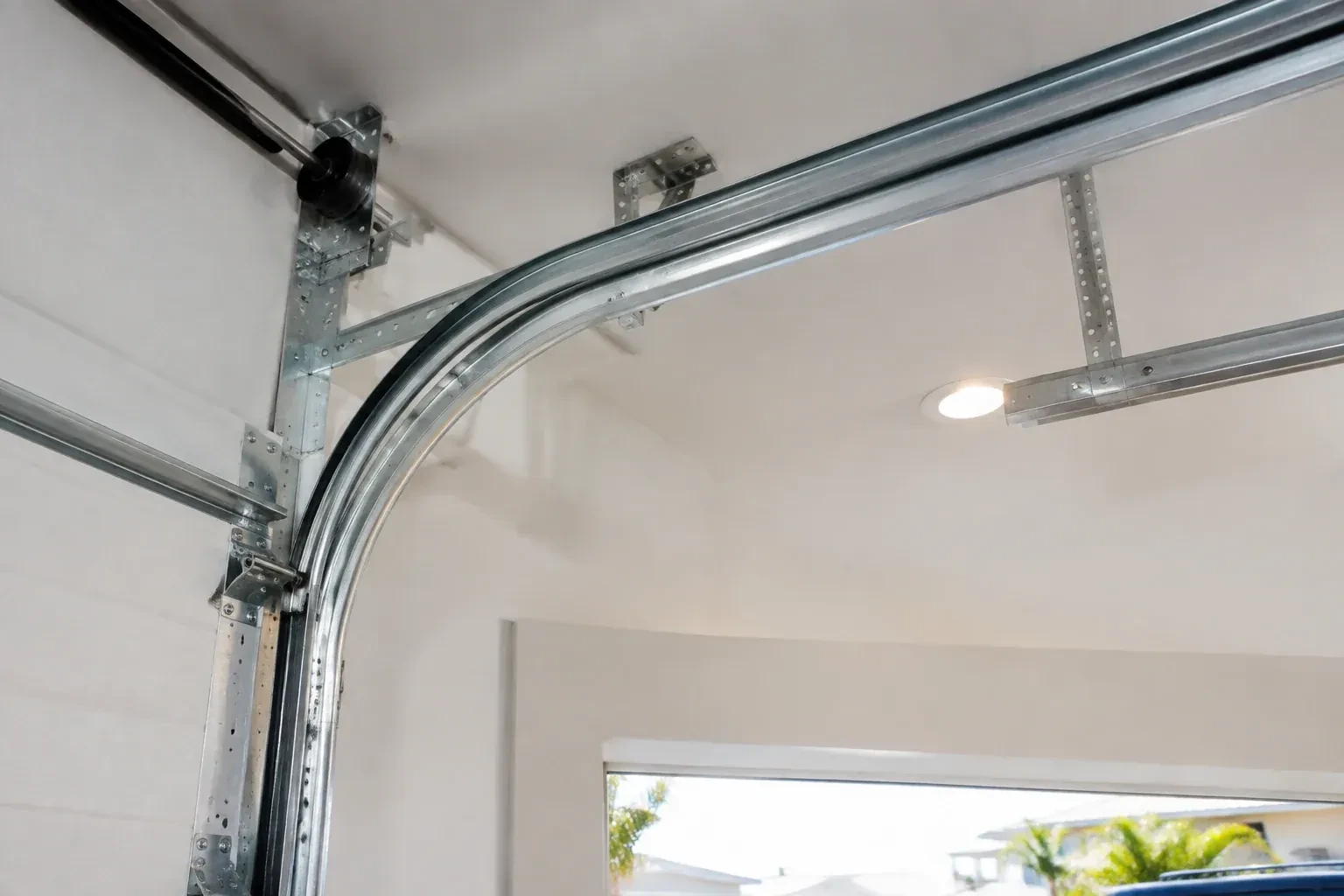
- Garage Door Track Repair or ReplacementHalfway up, the door lurches and one roller rides onto the lip of the channel.
- Garage Door Cable ReplacementAfter years of slushy winters the cables look thinner near the bottom brackets, with rust streaks running down the door where they attach.
- Torsion Spring ReplacementLooking up at the coil above the door, you can see a clean split with a gap of several centimetres between the two halves.